
Roof problems contribute to water damage throughout your home by allowing water infiltration that spreads to ceilings, walls, insulation, and foundations, while also disrupting the drainage systems that protect your basement and foundation from water damage.
A compromised roof doesn’t just cause localized leaks—it triggers a cascade of water management failures that can affect your entire home. For Toronto and GTA homeowners, understanding how roof problems connect to broader water damage helps you recognize why prompt roof and drainage maintenance protects far more than just your roofing. When roof issues combine with the GTA’s intense rainfall and freeze-thaw cycles, the resulting water damage can extend from your attic all the way down to your foundation, making the connection between roofing and complete home protection essential to understand.
The Connection Between Your Roof and Complete Water Management
Your roof functions as the first line of defense in an integrated water management system that protects your entire home. Understanding this connection reveals why roof problems create widespread consequences.
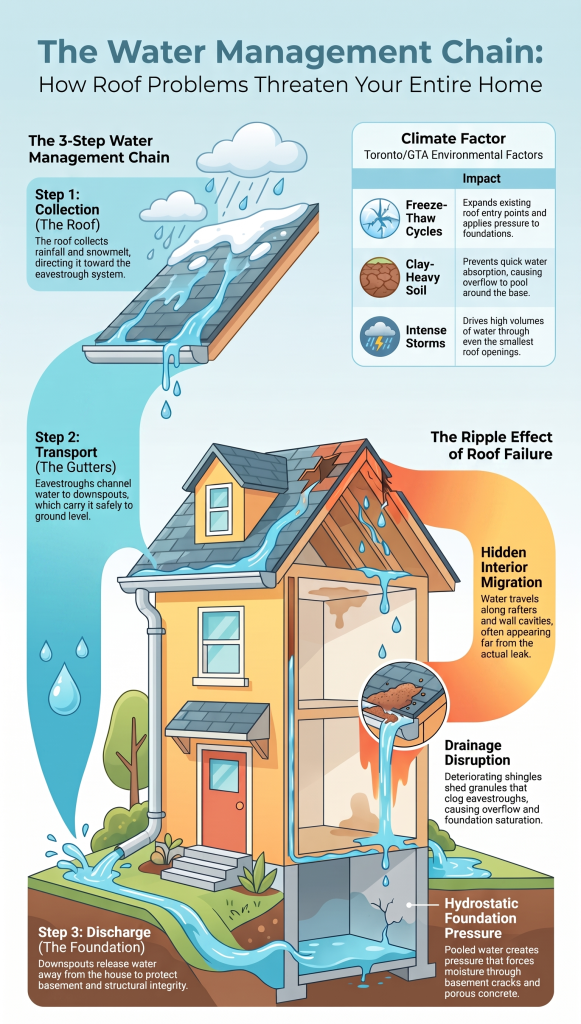
The Water Management Chain
Water flows through a connected system:
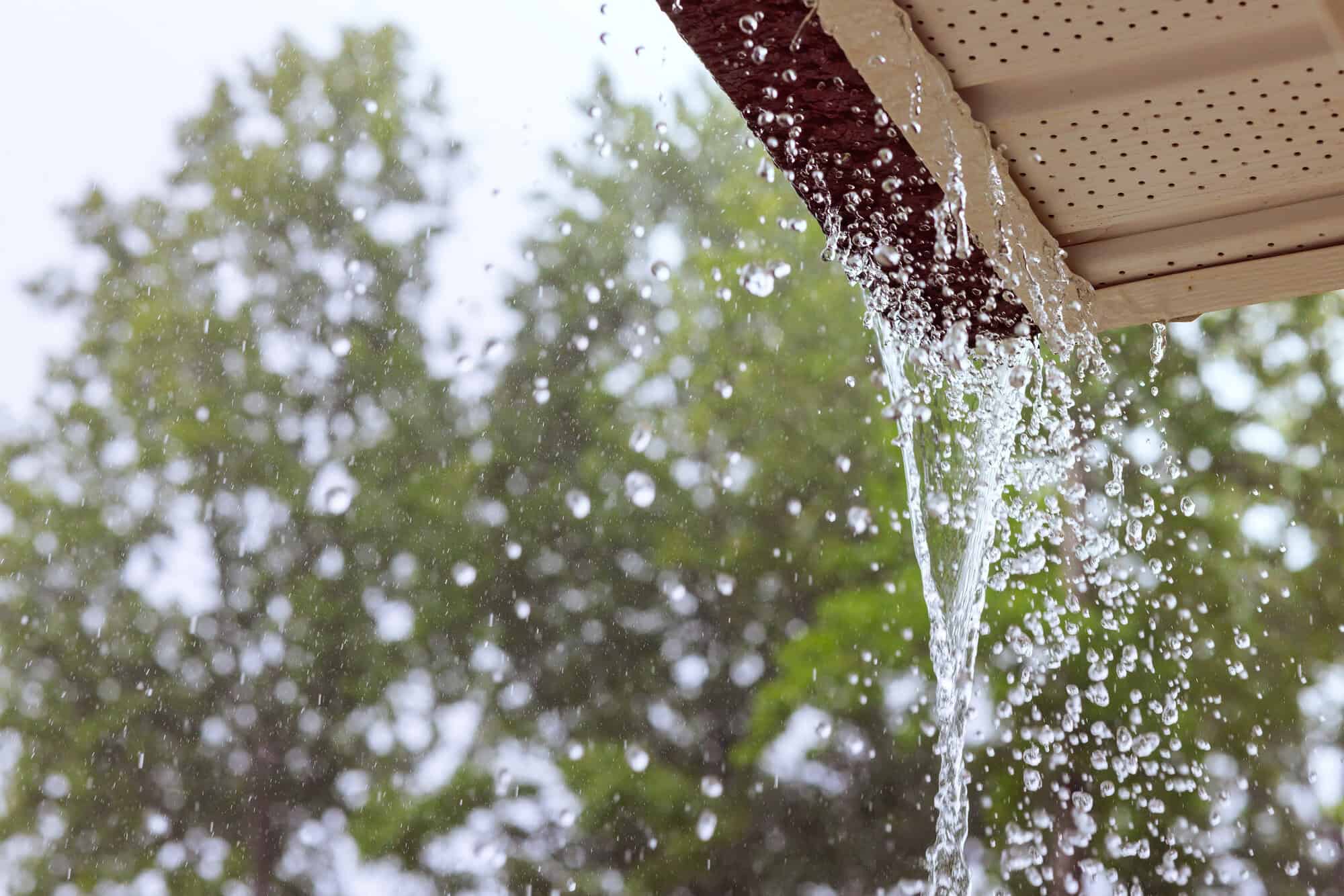
Collection: Your roof collects rainfall and snow melt, directing it toward your eavestrough system.
Transport: Eavestroughs channel water to downspouts, which carry it to ground level.
Discharge: Downspouts release water away from your foundation, protecting your basement and structural integrity.
When your roof functions properly, this system efficiently manages thousands of gallons of water, keeping it away from vulnerable areas. When roof problems develop, they disrupt this entire chain—water escapes the intended path and finds its way into places that cause damage.
How Roof Problems Break the Chain
Roof issues compromise water management in multiple ways:
Direct infiltration: Damaged roofing allows water to enter your home directly, bypassing the drainage system entirely.
Drainage disruption: Roof problems often damage or overwhelm eavestrough systems, compromising their ability to manage water.
Concentrated flow: Roof damage can create concentrated water flow that overwhelms specific drainage points, causing overflow and foundation exposure.
For GTA homeowners, this interconnection means roof problems rarely stay contained—they ripple through your home’s water management system, creating damage far from the original roof issue.
Interior Water Damage from Roof Leaks
The most obvious consequence of roof problems is interior water damage, which spreads further than many homeowners realize.
How Roof Leaks Spread
Water entering through roof leaks doesn’t stay in one place:
Following structural paths: Water infiltrating your roof travels along rafters, joists, and structural elements before becoming visible, often appearing far from the actual leak location.
Ceiling damage: Roof leaks commonly manifest as ceiling stains, sagging, or water damage—sometimes rooms away from where water actually entered.
Wall infiltration: Water can travel down wall cavities, damaging drywall, insulation, and structural components while remaining hidden until significant damage occurs.
Progressive spread: A small roof leak that goes unaddressed spreads water damage across increasingly large areas with each subsequent storm.
Hidden Damage Concerns
Roof leaks cause damage you may not immediately see:
Insulation degradation: Wet insulation loses effectiveness and becomes a breeding ground for mold. Damaged insulation in attics and walls compromises energy efficiency while creating health concerns.
Structural deterioration: Ongoing moisture exposure weakens wooden structural elements, potentially compromising your home’s integrity over time.
Mold growth: Roof leaks create the moisture conditions that promote mold growth in attics, walls, and ceilings—creating health hazards and requiring expensive remediation.
Electrical hazards: Water infiltration near electrical systems creates serious safety hazards requiring immediate professional attention.
The Toronto Climate Factor
The GTA’s conditions accelerate interior water damage:
Freeze-thaw infiltration: Toronto’s freeze-thaw cycles worsen roof leaks. Water enters through damaged areas, freezes and expands, then thaws—progressively enlarging entry points and worsening infiltration.
Ice dam contribution: Winter ice dams force water under shingles, creating leaks that damage interior spaces. This uniquely cold-climate problem affects many Toronto homes.
Heavy rain volume: Intense GTA storms drive large water volumes through even small roof openings, accelerating interior damage.
How Roof Problems Affect Your Drainage System
Beyond direct leaks, roof problems compromise the eavestrough and downspout systems that protect your foundation.
Damaged Roofing Impacts on Eavestroughs
Roof and eavestrough problems often connect:
Granule accumulation: Deteriorating asphalt shingles shed granules that wash into eavestroughs, causing clogs that force overflow. This overflow saturates foundations, connecting roof deterioration to foundation problems.
Flashing failures: Damaged flashing where roofs meet eavestroughs allows water to bypass gutters, running behind them and down fascia boards—damaging both the structure and drainage function.
Debris from damage: Roof damage creates debris that clogs eavestroughs, compromising drainage capacity when it’s needed most.
Concentrated Water Flow Problems
Roof problems can create damaging water concentration:
Damaged valley drainage: Roof valleys channel significant water volumes. Damage to valley areas can direct concentrated flow to specific eavestrough sections, overwhelming their capacity.
Improper runoff patterns: Roof damage alters how water flows off your roof, sometimes concentrating discharge at points where drainage systems can’t handle the volume.
Overflow consequences: When roof problems overwhelm eavestroughs, the resulting overflow pours directly onto foundations—connecting roofing issues to basement leaks and foundation damage.
Foundation and Basement Damage from Roof Problems
The connection between roof problems and foundation damage surprises many homeowners, but it represents one of the most serious consequences of roof issues.
The Path from Roof to Foundation
Roof problems reach your foundation through predictable pathways:
Overflow saturation: When roof problems cause eavestrough overflow, water saturates the soil around your foundation. This concentrated saturation creates hydrostatic pressure that forces water into basements.
Compromised discharge: Roof problems that overwhelm or damage drainage systems prevent proper water discharge away from foundations, allowing water to pool where it causes foundation damage.
Direct flow: In some cases, roof damage directs water flow directly toward foundation-vulnerable areas, bypassing drainage systems entirely.
Foundation Damage Consequences
Water reaching your foundation causes serious problems:
Hydrostatic pressure: Saturated soil around foundations exerts pressure that forces water through cracks, cove joints, and porous concrete into basements.
Progressive deterioration: Repeated water exposure deteriorates foundation concrete and mortar, widening cracks and creating new infiltration points.
Structural implications: Long-term foundation water exposure can affect soil bearing capacity and foundation stability, potentially causing settling and structural problems.
The GTA’s Vulnerability
Toronto’s conditions amplify foundation risks:
Clay soil challenges: The GTA’s clay-heavy soil doesn’t absorb water quickly, so roof-related overflow pools around foundations, maintaining the saturation that damages foundations.
Freeze-thaw amplification: Water reaching foundations freezes and expands during Toronto winters, creating additional pressure and progressive foundation damage.
Intense rainfall: The GTA’s heavy storms deliver large water volumes that, when mismanaged due to roof problems, quickly overwhelm foundation defenses.
Common Roof Problems That Lead to Water Damage
Understanding specific roof problems helps you recognize and address issues before they cause widespread damage.
Shingle and Surface Problems
Missing or damaged shingles: Gaps in your roof’s protective surface allow direct water infiltration. Toronto’s storm winds frequently damage or remove shingles.
Aging and deterioration: As roofing materials age, they lose effectiveness. Cracked, curling, or brittle shingles allow water infiltration.
Granule loss: Asphalt shingles losing protective granules become vulnerable to water damage while shedding material that clogs drainage systems.
Flashing and Seal Failures
Damaged flashing: Flashing seals vulnerable roof areas—around chimneys, vents, and valleys. Damaged flashing creates entry points for water infiltration.
Deteriorated seals: Seals around roof penetrations degrade over time, allowing water entry at these vulnerable points.
Valley problems: Roof valleys channel significant water. Problems in valley areas create major infiltration risks.
Structural and Drainage Issues
Ponding water: Flat or low-slope roof sections that don’t drain properly allow water to pool, accelerating deterioration and infiltration.
Ice dam damage: Toronto’s winters create ice dams that force water under shingles, causing leaks and damage.
Inadequate drainage integration: Roofs that don’t properly direct water to eavestrough systems create drainage problems affecting your entire home.
Preventing Roof-Related Water Damage
Protecting your home from roof-related water damage requires understanding roofing and drainage as an integrated system.
Regular Inspection and Maintenance
Proactive attention prevents damage:
Periodic roof inspection: Regular professional roof assessment identifies problems before they cause water damage. Catching issues early prevents the cascade of damage that develops when roof problems go unaddressed.
Eavestrough maintenance: Keeping eavestroughs clean and functional ensures they can manage roof water even when minor roof issues develop.
Post-storm checks: After significant storms, inspecting both roof and drainage systems catches storm damage before it causes ongoing problems.
Integrated System Approach
Effective protection addresses the complete system:
Roof and drainage coordination: Understanding that your roof and drainage systems work together helps you maintain both for comprehensive protection.
Downspout discharge management: Ensuring proper water discharge away from foundations protects against the foundation damage that roof-related overflow causes.
Complete water management: Addressing your roof, eavestroughs, downspouts, and grading as an integrated system provides the best protection against water damage.
When to Call Professionals
Certain situations require expert attention:
Suspected roof leaks: A roofing contractor can safely assess and repair roof problems that cause water infiltration.
Drainage problems: When roof issues affect your drainage system, professional assessment identifies comprehensive solutions.
Foundation concerns: Water reaching your foundation warrants professional evaluation of both roof and drainage contributions to the problem.
The Integrated Solution for Toronto Homes
Understanding how roof problems contribute to water damage reveals an important truth: protecting your home from water damage requires addressing your roof and drainage systems together, not in isolation. A roof leak damages more than your ceiling—it can compromise your drainage system and ultimately threaten your foundation. Similarly, drainage problems can worsen roof issues by allowing water to back up and infiltrate.
For Toronto and GTA homeowners, this integrated understanding matters significantly. The region’s intense rainfall, freeze-thaw cycles, and clay soil create conditions where roof and drainage problems quickly compound, spreading water damage throughout homes. The homeowner who addresses a roof problem while ignoring its drainage implications—or who fixes drainage while overlooking contributing roof issues—often finds water damage continuing despite their efforts.
The most effective approach treats your home’s water management as the integrated system it truly is. Your roof, eavestroughs, downspouts, grading, and foundation all work together to protect your home from water damage. Weakness in any component affects the whole, which is why comprehensive assessment and maintenance provide the best protection.
At Ontario Downspout Service, we understand the critical connection between roofing and drainage in protecting Toronto homes from water damage. While our specialty is drainage—eavestroughs, downspouts, and foundation protection—our decade-plus experience throughout the GTA has shown us how intimately roof problems and drainage issues connect. We recognize that effective water damage prevention requires understanding this complete system.
Our approach considers how your roof interacts with your drainage system, ensuring that the water your roof sheds is properly managed all the way from roof edge to appropriate discharge away from your foundation. When roof problems contribute to drainage issues or foundation water damage, we help homeowners understand the complete picture and coordinate appropriate solutions—whether that involves working alongside a roofing contractor for roof repairs or addressing the drainage components that protect your foundation.
Concerned about water damage affecting your home? Contact Ontario Downspout Service for a comprehensive drainage assessment. We’ll evaluate how your roof drainage, eavestrough system, and downspouts work together to protect your home, identifying any weaknesses that could allow water damage and recommending solutions that provide complete protection throughout Toronto’s demanding seasons.