Toronto’s increasingly intense storms can reveal drainage problems that stay hidden during dry weather, and catching these issues early prevents minor concerns from becoming expensive repairs. A systematic post-storm inspection helps GTA homeowners identify flooding risks, spot developing roof leaks, and address clogged eavestroughs before the next downpour arrives. Knowing exactly what to check—and what warning signs matter—empowers you to protect your foundation, keep your basement dry, and know when to call a contractor for professional attention.
After a heavy rainstorm, homeowners should check for roof leaks, inspect eavestroughs and downspouts for clogs or damage, examine the foundation and basement for water infiltration, and look for signs of pooling or drainage issues around the home.
Why Post-Storm Inspections Matter in Toronto
Heavy rain stresses every part of your home’s exterior water management system. While a well-maintained home handles storms without problems, weaknesses in your drainage infrastructure often reveal themselves only during and immediately after significant rainfall.
Toronto’s climate makes these inspections particularly important. The GTA increasingly experiences intense summer thunderstorms delivering 30-50mm of rain in short periods, along with heavy spring rains combined with snow melt. These conditions push drainage systems to their limits, exposing problems that gentler weather masks.
The window immediately after a storm is ideal for inspection because evidence of drainage issues is freshest. Water stains are still wet, pooling is still visible, and overflow patterns remain apparent. Waiting days or weeks means losing valuable diagnostic information that helps identify exactly where and why problems occurred.
Most importantly, post-storm inspections catch problems early. A small roof leak addressed promptly costs far less than the extensive damage that develops when water infiltrates unnoticed over multiple storms.
Checking Your Roof for Damage and Leaks
Your roof takes the brunt of every storm, making it a priority for post-storm inspection.
Interior Signs of Roof Leaks
Start inside your home, where roof leaks often reveal themselves first:
Ceiling stains: Look for water stains, discoloration, or dark spots on ceilings, particularly on upper floors. Even small stains indicate water infiltration requiring attention.
Attic inspection: If accessible, check your attic for signs of water intrusion—wet insulation, water stains on rafters, or daylight visible through the roof deck.
Wall discoloration: Water stains running down interior walls can indicate roof leaks that travel along structural elements before becoming visible.
Musty odors: New musty smells after a storm may indicate water infiltration in walls, ceilings, or attic spaces.
Exterior Roof Assessment
From the ground, safely examine your roof:
Missing or damaged shingles: Look for shingles that are missing, lifted, cracked, or displaced. Toronto’s storm winds frequently damage roofing materials.
Debris accumulation: Note branches, leaves, or debris on your roof that could damage roofing or block drainage.
Flashing problems: Where visible, check that flashing around chimneys, vents, and roof valleys remains intact.
Granule accumulation: Excessive shingle granules in eavestroughs or at downspout discharge points indicate roof wear that storms accelerate.
Avoid climbing onto your roof, especially when wet. If you suspect roof leaks or damage but can’t safely assess it, a roofing contractor can conduct a thorough inspection.
Inspecting Eavestroughs and Downspouts
Your eavestrough system is central to storm water management, making it essential to inspect after heavy rain.
Signs of Clogged Eavestroughs
Clogged eavestroughs cause many post-storm problems:
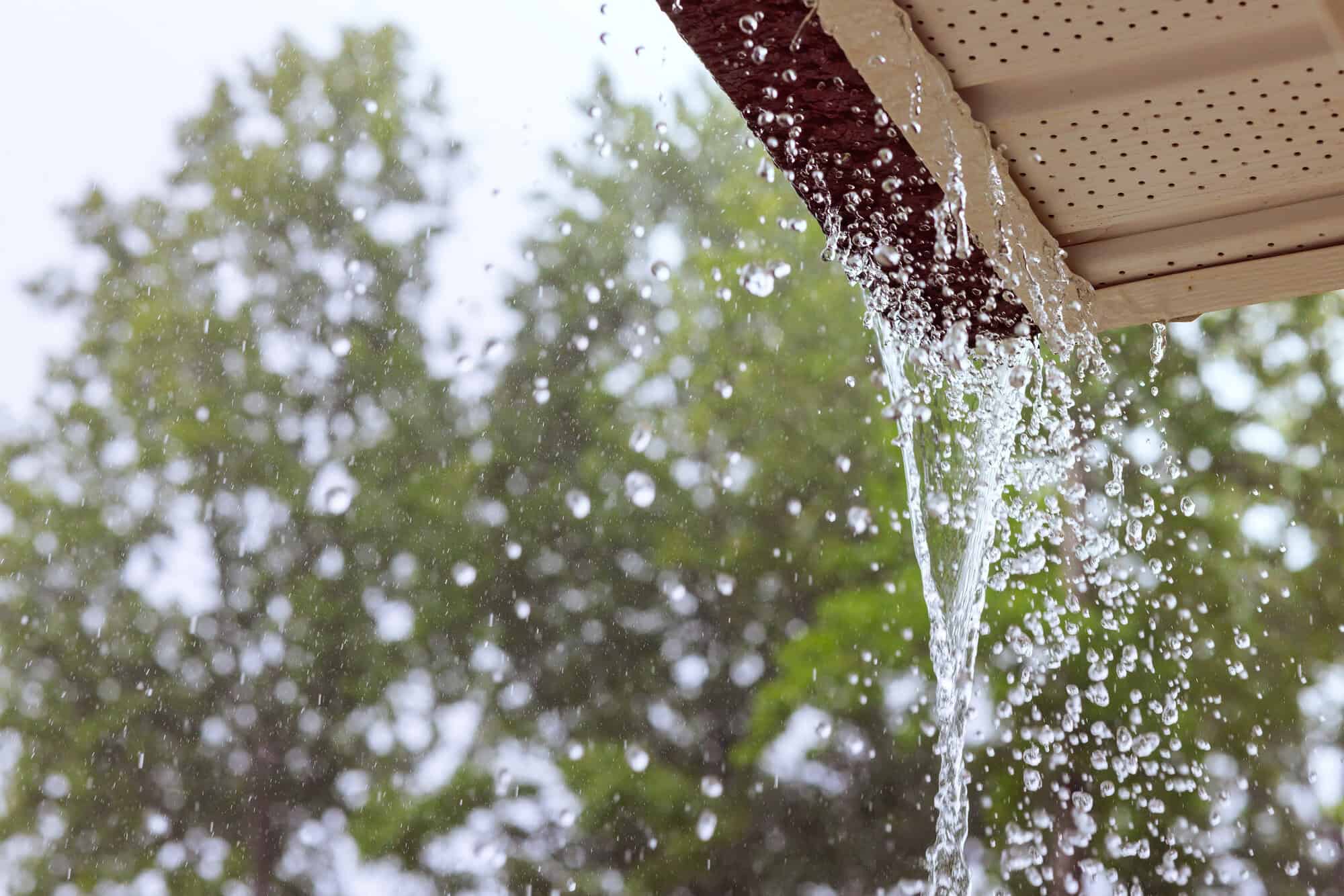
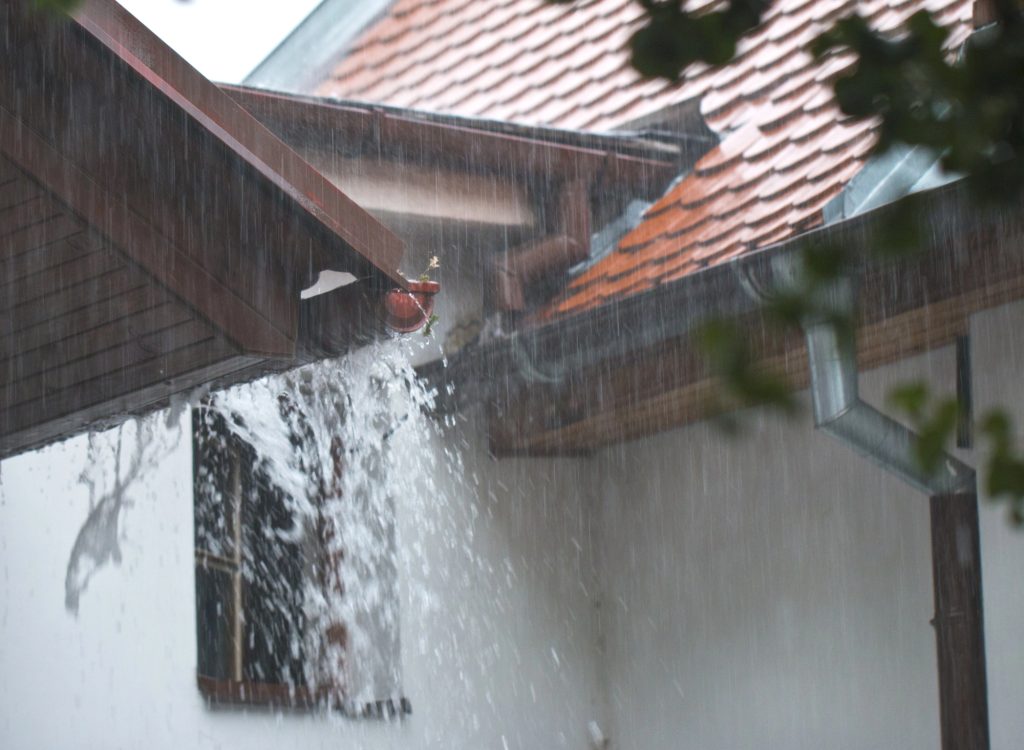
Overflow evidence: Look for signs that water overflowed your eavestroughs during the storm—water stains on siding, erosion beneath gutter lines, or debris marks showing where water spilled over.
Standing water: After rain stops, check whether water remains standing in your eavestroughs. Properly functioning gutters drain completely; standing water indicates clogs or improper slope.
Visible debris: Look for leaves, twigs, and organic matter accumulated in gutter channels. Clogged eavestroughs can’t handle storm water, forcing overflow that threatens your foundation.
Sagging sections: Note any eavestrough sections that sag or pull away from your fascia. The weight of storm water and debris can stress and damage mounting systems.
Downspout Function Check
Downspouts require equal attention:
Discharge verification: Confirm downspouts are directing water away from your foundation. Check that extensions remain connected and properly positioned—storms and the activity around them frequently disconnect extensions.
Backup signs: Look for evidence that water backed up at downspout connections during the storm, indicating capacity problems or blockages.
Damage assessment: Check for dented, crushed, or disconnected downspout sections that could compromise drainage function.
Discharge point examination: Verify that water discharging from downspouts flows away from your home rather than pooling near the foundation.
Examining Your Foundation and Basement
The most critical post-storm inspection involves checking for water infiltration that threatens your home’s structure.
Basement Inspection
Your basement reveals whether storm water breached your defenses:
Water infiltration: Check for any water on basement floors, along walls, or at floor-wall joints. Even minor dampness indicates drainage issues requiring attention.
Wall moisture: Examine foundation walls for wet spots, water stains, or moisture, particularly after the storm when evidence is freshest.
Efflorescence: Look for white, powdery deposits on foundation walls—these indicate water moving through the concrete, signaling exterior water pressure.
Window well water: Check basement window wells for standing water, which can leak into basements through these vulnerable foundation penetrations.
Musty odors: New dampness smells suggest moisture intrusion even when visible water isn’t apparent.
Foundation Exterior Assessment
Outside, examine your foundation perimeter:
Pooling water: Look for standing water near your foundation. Water pooling within 6 feet of your home indicates drainage problems that threaten your basement and foundation.
Soil erosion: Check for channels, grooves, or washed-away soil along your foundation—signs of concentrated water flow from overflow or poor drainage.
Settling or cracks: Note any new foundation cracks or signs of soil settling that heavy rain might reveal or worsen.
Grading problems: Assess whether the ground slopes away from your foundation. Storms can reveal grading issues that direct water toward your home rather than away.
Assessing Yard Drainage and Flooding
Beyond your immediate foundation, storm water reveals broader drainage issues across your property.
Surface Water Problems
Heavy rain exposes yard drainage deficiencies:
Standing water: Note areas where water pools and remains after the storm. Persistent standing water indicates drainage problems that may affect your foundation or create other issues.
Flooding patterns: Observe where water accumulated during the storm and how it moved across your property. This information helps identify drainage improvements.
Erosion evidence: Look for soil erosion, washed-out mulch, or displaced landscaping that indicates problematic water flow.
Saturated areas: Identify consistently soggy areas that suggest drainage issues or high water tables affecting your property.
Toronto’s Clay Soil Factor
The GTA’s clay-heavy soil influences post-storm conditions:
Slow absorption: Because clay doesn’t absorb water quickly, pooling and standing water persist longer in Toronto yards than in areas with sandy soil.
Foundation pressure: Water that can’t absorb into clay soil pools around foundations, creating the hydrostatic pressure that forces water into basements.
Drainage importance: Toronto’s soil conditions make proper drainage—directing water away from your home—especially critical for foundation protection.
Creating a Post-Storm Inspection Checklist
A systematic approach ensures you don’t miss important warning signs after heavy rain.
Immediate Priorities
Right after the storm, focus on:
- Checking for active water infiltration in your basement
- Identifying any roof leaks showing interior signs
- Verifying downspout extensions remain connected and functional
- Noting any immediate flooding or water pooling requiring urgent attention
Follow-Up Inspection
Once immediate concerns are addressed:
- Examining eavestroughs for clogs, overflow evidence, and damage
- Assessing your roof for missing shingles or storm damage
- Checking foundation walls and perimeter for water problems
- Evaluating yard drainage and identifying persistent standing water
Documentation
For any problems you find:
- Photograph damage or water infiltration for insurance purposes
- Note the conditions that produced problems (storm intensity, duration)
- Record the locations and patterns of any drainage issues
- Keep records that help contractors diagnose and address problems
When to Call a Professional Contractor
While homeowners can conduct basic post-storm inspections, certain findings warrant professional attention.
Situations Requiring Expert Assessment
Recurring basement water: If your basement shows water infiltration after storms despite your inspection efforts, professional drainage assessment identifies underlying causes.
Roof leaks: Suspected roof leaks require professional evaluation, as diagnosing and repairing roof problems safely demands expertise and proper equipment.
Persistent drainage issues: When you identify drainage problems—chronic pooling, foundation water, overflow—but aren’t sure how to solve them, a drainage contractor provides solutions.
Foundation concerns: New foundation cracks, settling, or significant water infiltration warrant professional structural and drainage assessment.
System inadequacy: If storms repeatedly overwhelm your eavestroughs or downspouts, professional assessment can determine whether capacity upgrades would solve the problem.
What a Drainage Contractor Provides
Professional assessment offers comprehensive evaluation:
Complete system analysis: Experienced contractors evaluate your entire drainage system—roof, eavestroughs, downspouts, grading, and foundation—identifying how components interact and where problems originate.
Accurate diagnosis: Rather than treating symptoms, professionals identify root causes of storm-related water problems.
Effective solutions: Contractors recommend solutions matched to your specific problems, whether that’s cleaning clogged eavestroughs, upgrading capacity, improving downspout discharge, or addressing grading.
Preventive planning: Beyond fixing current problems, professionals help you prepare for future storms through appropriate drainage improvements.
Protecting Your Home Through Proactive Attention
Post-storm inspections represent an essential part of home maintenance in Toronto’s demanding climate. The GTA’s intense rainfall, clay soil, and freeze-thaw cycles create conditions where drainage problems develop quickly—and where early detection prevents expensive damage.
The systematic approach outlined here—checking your roof, eavestroughs, downspouts, foundation, and yard after significant storms—helps you catch problems while they’re still minor and manageable. A clogged eavestrough cleaned promptly prevents the foundation saturation that leads to basement leaks. A roof leak caught early prevents the extensive interior damage that develops when water infiltrates unnoticed. Drainage issues identified quickly can be addressed before they threaten your foundation.
For many Toronto homeowners, the connection between storm water and foundation protection becomes clear only after experiencing water problems. Taking a proactive approach—inspecting after storms and addressing issues promptly—protects your home before problems escalate.
At Ontario Downspout Service, we help GTA homeowners address the drainage problems that heavy storms reveal. Our decade-plus experience with residential water management throughout Toronto means we understand exactly how storms stress drainage systems and where problems typically develop. As a drainage contractor focused on foundation protection, we approach post-storm concerns comprehensively—evaluating your complete water management system rather than addressing isolated symptoms.
Whether you’ve discovered clogged eavestroughs, suspect roof leaks are affecting your home, or found signs of drainage issues after a heavy rainstorm, we can assess your situation and recommend effective solutions. Our focus on 6-inch heavy-gauge aluminum eavestroughs and complete drainage systems means we can address both immediate problems and the underlying capacity issues that make storms particularly damaging.
Concerned about problems a recent storm revealed? Contact Ontario Downspout Service for a comprehensive drainage assessment. We’ll evaluate your roof drainage, eavestrough function, downspout capacity, and foundation protection to identify what’s needed to keep your home protected through Toronto’s next heavy rainstorm.
Ontario Downspout Service is a licensed, insured, and 10-time Best of Homestars award-winning residential drainage specialist serving Toronto and the GTA. We help homeowners identify and resolve drainage issues, prevent basement leaks, and protect foundations throughout the Greater Toronto Area.