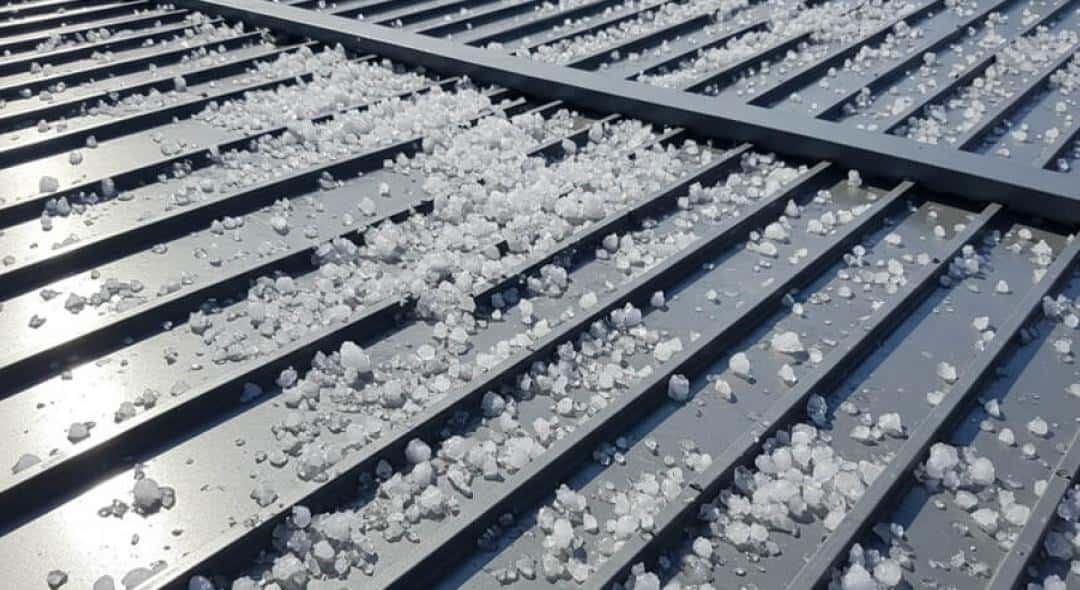
Metal roofing, impact-resistant asphalt shingles, and slate are the most hail-resistant roofing materials available to Toronto homeowners. While the Greater Toronto Area doesn’t experience hail as frequently as prairie provinces, severe thunderstorms do produce damaging hail that can compromise roof integrity and, more critically, destroy the eavestrough and drainage systems that protect your home’s foundation. Understanding which roofing materials withstand hail impact helps homeowners make informed decisions that protect both their roof investment and the complete water management system beneath it.
Understanding Hail Risk in Toronto and the GTA
Many Toronto homeowners underestimate local hail risk because severe hailstorms make headlines in Alberta and Saskatchewan more often than in Ontario. However, Environment Canada data shows that the GTA experiences multiple hail events annually, particularly during summer thunderstorm season from May through August.
Toronto’s Hail Patterns
Southern Ontario’s hail typically occurs when:
- Warm, humid air masses from the Great Lakes meet cooler systems
- Severe thunderstorm complexes develop during hot summer afternoons
- Lake-effect weather patterns intensify storm cells
- Spring and early summer storms produce the largest hailstones
While golf-ball-sized hail is less common in Toronto than in prairie regions, even quarter-sized hail traveling at terminal velocity can cause significant damage to roofing materials, especially older or deteriorating systems.
The Hidden Cost of Hail Damage
The immediate concern after a hailstorm is roof damage—cracked shingles, punctured membranes, or dented metal. However, homeowners often overlook the more serious consequence: damage to eavestroughs, downspouts, and drainage systems.
Hail impacts can:
- Dent or puncture aluminum eavestrough systems
- Knock downspouts out of alignment
- Crack gutter seams and create leak points
- Dislodge granules from asphalt shingles, which then clog drainage systems
- Damage roof flashing that protects eavestrough connections
A damaged drainage system fails to manage roof water properly, leading to foundation problems, basement leaks, and structural issues that far exceed the cost of the roof itself.
Most Hail-Resistant Roofing Materials for GTA Homes
When evaluating roofing materials for hail resistance, consider both the roof surface and how each material integrates with your home’s drainage infrastructure.
Metal Roofing: Superior Hail Performance
Metal roofing systems offer the best hail resistance available to residential homeowners:
Steel and Aluminum Standing Seam: These systems withstand hail impacts that would destroy asphalt shingles. While large hail may cause cosmetic denting, the roof’s waterproof integrity remains intact. Metal roofs also shed water efficiently, reducing strain on eavestrough systems.
Advantages for Toronto homes:
- 40-70 year lifespan outlasts several asphalt roof replacements
- Excellent snow and ice shedding in winter months
- Reduced granule debris entering drainage systems
- Compatible with standard eavestrough configurations
Considerations:
- Higher upfront cost ($12,000-$25,000 for typical Toronto homes)
- Professional installation required—improper installation compromises drainage integration
- Some insurance companies offer premium discounts for metal roofing
Impact-Resistant Asphalt Shingles: UL 2218 Class 4 Rating
Not all asphalt shingles are equal when facing hail. Impact-resistant (IR) shingles undergo testing where steel balls are dropped from specific heights to simulate hail impacts.
UL 2218 Class 4 shingles—the highest impact rating—can withstand 2-inch steel balls dropped from 20 feet without cracking. These shingles feature:
- Reinforced backing materials (typically SBS polymer modified asphalt)
- Enhanced granule adhesion to reduce drainage system clogging
- Improved flexibility that absorbs impact energy
Advantages for GTA homeowners:
- Moderate cost ($8,000-$15,000 for typical installations)
- Familiar appearance matching neighborhood aesthetics
- Many insurance companies offer 10-30% premium discounts
- Better granule retention means cleaner eavestrough systems
Limitations:
- Still vulnerable to severe hail (golf-ball size or larger)
- 25-30 year lifespan requires eventual replacement
- Must be properly integrated with eavestrough systems to prevent ice damming
Slate and Tile: Maximum Durability
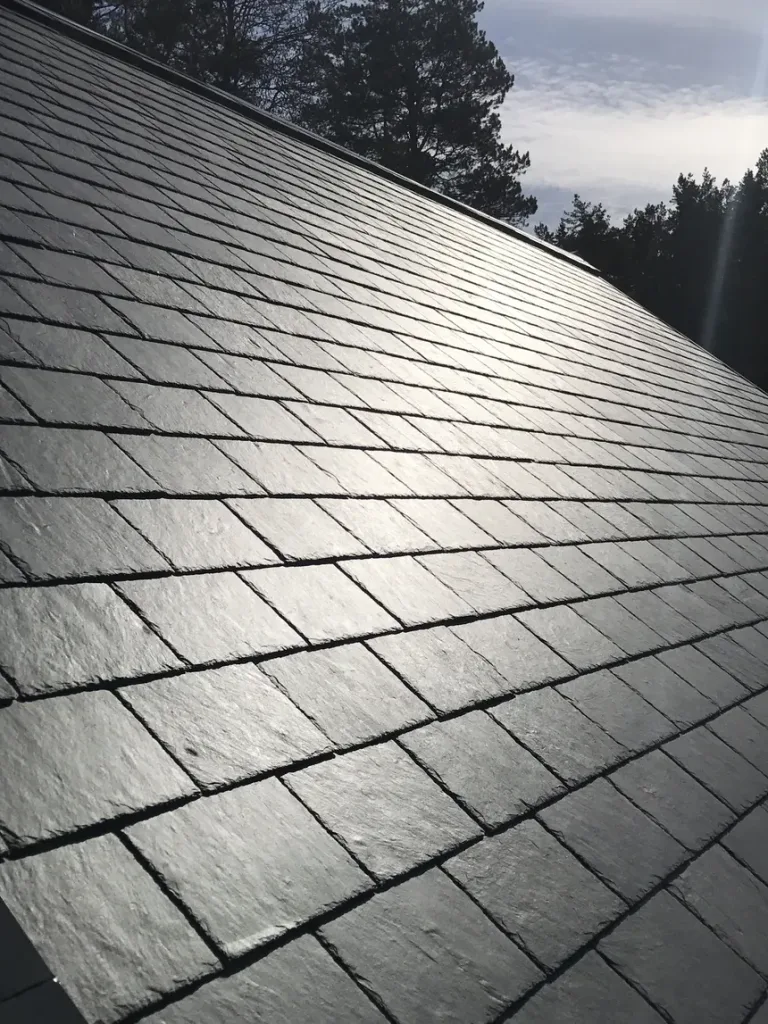
Natural slate and concrete or clay tiles offer exceptional hail resistance, though they’re less common in Toronto residential construction.
Natural slate is nearly impervious to hail damage and can last over 100 years. However, it requires:
- Reinforced roof framing to support the weight
- Specialized installation expertise (limited contractors in the GTA)
- Significant investment ($25,000-$40,000+)
- Custom eavestrough mounting to handle the roof’s weight and water flow patterns
Concrete and clay tiles provide good hail resistance but can crack under severe impacts. They’re more common in Mediterranean-style homes and require similar structural considerations as slate.
For most Toronto homeowners, these premium materials exceed both budget and structural capabilities of typical residential construction.
Materials to Avoid in Hail-Prone Areas
Standard 3-tab asphalt shingles offer minimal hail resistance:
- Thin construction makes them vulnerable to impact damage
- Older shingles become brittle and crack easily
- Heavy granule loss after hail events clogs eavestroughs
- Shorter lifespan (15-20 years) means more frequent replacement
Wood shakes and shingles, while attractive, split and crack under hail impact and aren’t recommended if hail resistance is a priority.
How Hail Damage Affects Your Complete Drainage System
Most homeowners focus exclusively on roof damage after hailstorms, but the greater risk often lies in compromised drainage infrastructure.
Eavestrough Vulnerability
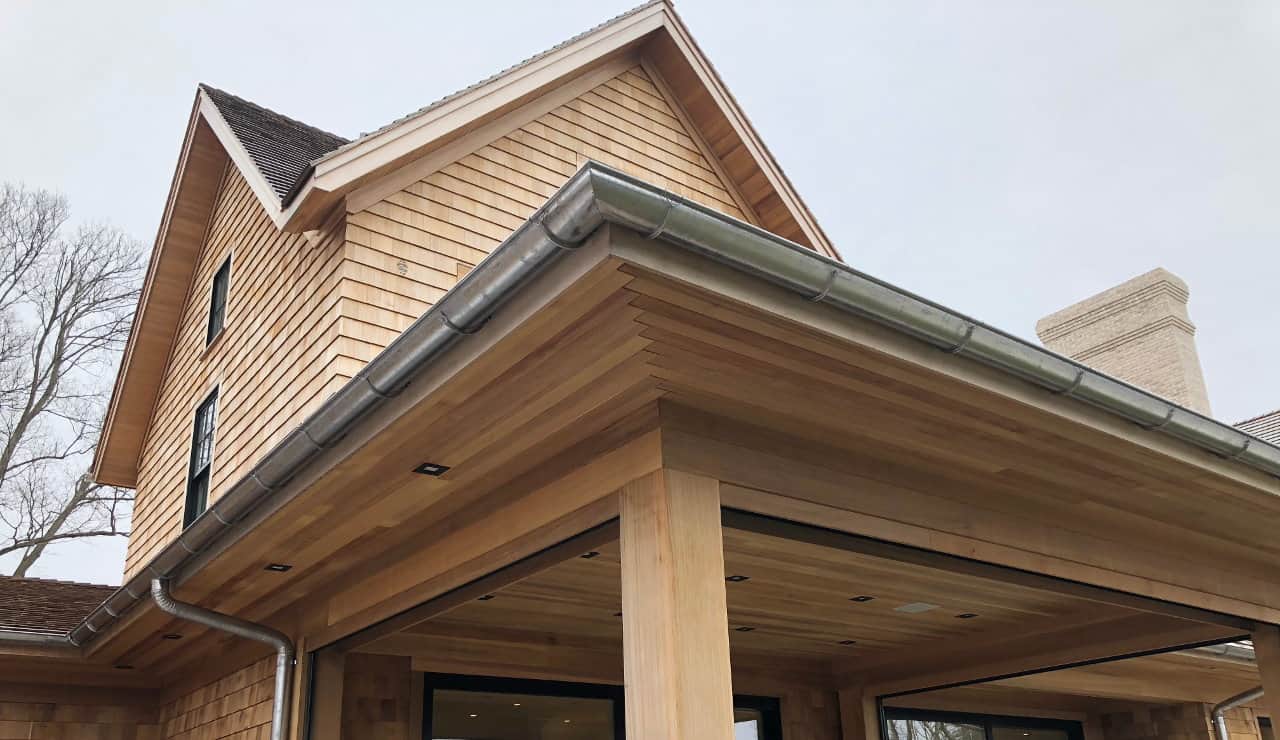
Aluminum eavestrough systems—standard in Toronto homes—are particularly susceptible to hail damage:
Denting and puncturing: Even moderate hail can create dents that trap water and debris, leading to premature corrosion and failure. Severe hail can puncture aluminum entirely, creating immediate leak points.
Seam separation: Hail impacts stress sectional eavestrough systems at seam points, causing separations that leak water directly against your home’s fascia and walls.
Slope disruption: Significant hail can knock eavestrough sections out of proper pitch, causing water to pool instead of flowing toward downspouts.
Downspout System Compromise
Hail damage to downspouts creates drainage failures that threaten your foundation:
- Dented downspout sections restrict water flow
- Impact damage can separate downspout sections from mounting brackets
- Downspout extensions get knocked loose, depositing water too close to foundations
- Elbow connections at downspout bases become misaligned
When roof water can’t flow efficiently through downspouts away from your home, you risk:
- Basement water infiltration
- Foundation settling and cracking
- Landscaping erosion
- Ice buildup in winter months
The Granule Problem
Hail strips protective granules from asphalt shingles. These granules wash into your eavestrough system during the next rainfall, creating multiple problems:
- Clogged eavestrough channels reduce flow capacity
- Granules settle in downspout elbows, causing blockages
- Accumulated debris prevents proper drainage
- Organic material mixed with granules promotes corrosion
After significant hail events, professional eavestrough cleaning becomes essential—even if your roof appears intact.
Choosing the Right Hail-Resistant Roof for Toronto’s Climate
Hail resistance shouldn’t be your only consideration when selecting roofing materials. Toronto’s climate presents multiple challenges that your complete roofing and drainage system must address.
Year-Round Weather Factors
Winter freeze-thaw cycles: Your roofing material must handle repeated freezing and thawing without cracking. This same durability that protects against freeze-thaw also improves hail resistance.
Heavy snow loads: Toronto building code requires roofs to support substantial snow weight. Materials that handle snow loads typically perform better against hail impacts.
Summer heat and UV exposure: Intense summer sun degrades roofing materials over time, making them more vulnerable to hail damage. Quality materials resist UV degradation.
Spring rainfall intensity: Heavy spring rains test your eavestrough capacity. Roofing materials that shed water efficiently reduce drainage system strain.
Integration with Drainage Systems
Your roof doesn’t work in isolation—it’s part of a complete water management system. When choosing hail-resistant roofing:
Consider eavestrough compatibility: Some roofing materials require specific eavestrough configurations or additional drip edge protection.
Evaluate ice dam prevention: Hail-resistant materials should also resist ice damming, which stresses both roofs and eavestrough systems during Toronto winters.
Plan for water volume: Metal roofs shed water more quickly than asphalt shingles. Your eavestrough system must handle increased flow rates, potentially requiring larger downspouts or additional discharge points.
Assess long-term maintenance: Materials requiring frequent inspection and maintenance increase the chance of discovering drainage system problems early.
Professional Assessment After Hail Events
If your Toronto area home experiences a hailstorm, professional assessment protects your investment and insurance claim rights.
What Inspectors Should Evaluate
A comprehensive post-hail inspection examines:
Roof surface damage: Cracked, punctured, or missing shingles; dented metal panels; broken tiles or slate
Eavestrough system integrity: Dents, punctures, seam separations, and mounting bracket damage
Downspout functionality: Flow restrictions, alignment issues, and extension displacement
Flashing condition: Damage to valley flashing, wall flashing, and eavestrough integration points
Soffit and fascia: Impact damage that compromises eavestrough mounting surfaces
Insurance Considerations
Most homeowner insurance policies in Ontario cover hail damage, but successful claims require:
- Prompt damage reporting (typically within one year)
- Professional documentation of damage scope
- Clear differentiation between hail damage and normal wear
- Evidence that damage affects roof function, not just appearance
Many insurance companies now offer premium discounts for impact-resistant roofing materials—up to 30% in some cases. When replacing an older roof, upgrading to Class 4 impact-resistant shingles or metal roofing may qualify you for long-term savings that offset the initial investment.
Protecting Your Complete Exterior System
Choosing hail-resistant roofing materials protects your home, but remember that your roof is just one component of your exterior water management system. Even the most durable roof fails to protect your home if the eavestrough and downspout systems don’t function properly.
After severe weather, or when planning a roof replacement, consider a comprehensive drainage system evaluation alongside roofing assessment. Professional drainage contractors can identify problems that general roofing inspectors might miss—particularly issues affecting foundation protection and basement leak prevention.
At Ontario Downspout Service, we approach exterior system evaluation from a drainage-first perspective. Our experience with residential water management in the GTA means we understand how roofing material choices affect eavestrough performance, downspout capacity, and complete drainage system function. Whether you’re assessing hail damage or planning a preventive roof replacement, we can help you understand how your roofing decisions impact long-term foundation protection.
Concerned about hail damage to your roof or drainage system? Contact Ontario Downspout Service today for a comprehensive exterior water management assessment. We’ll evaluate your roof, eavestrough, and downspout systems together to ensure your home has complete protection against Toronto’s variable weather conditions.
Ontario Downspout Service is a licensed, insured, and 10-time Best of Homestars award-winning residential drainage specialist serving Toronto and the GTA. We help homeowners protect their foundations and prevent water damage through expert eavestrough, downspout, and drainage solutions.