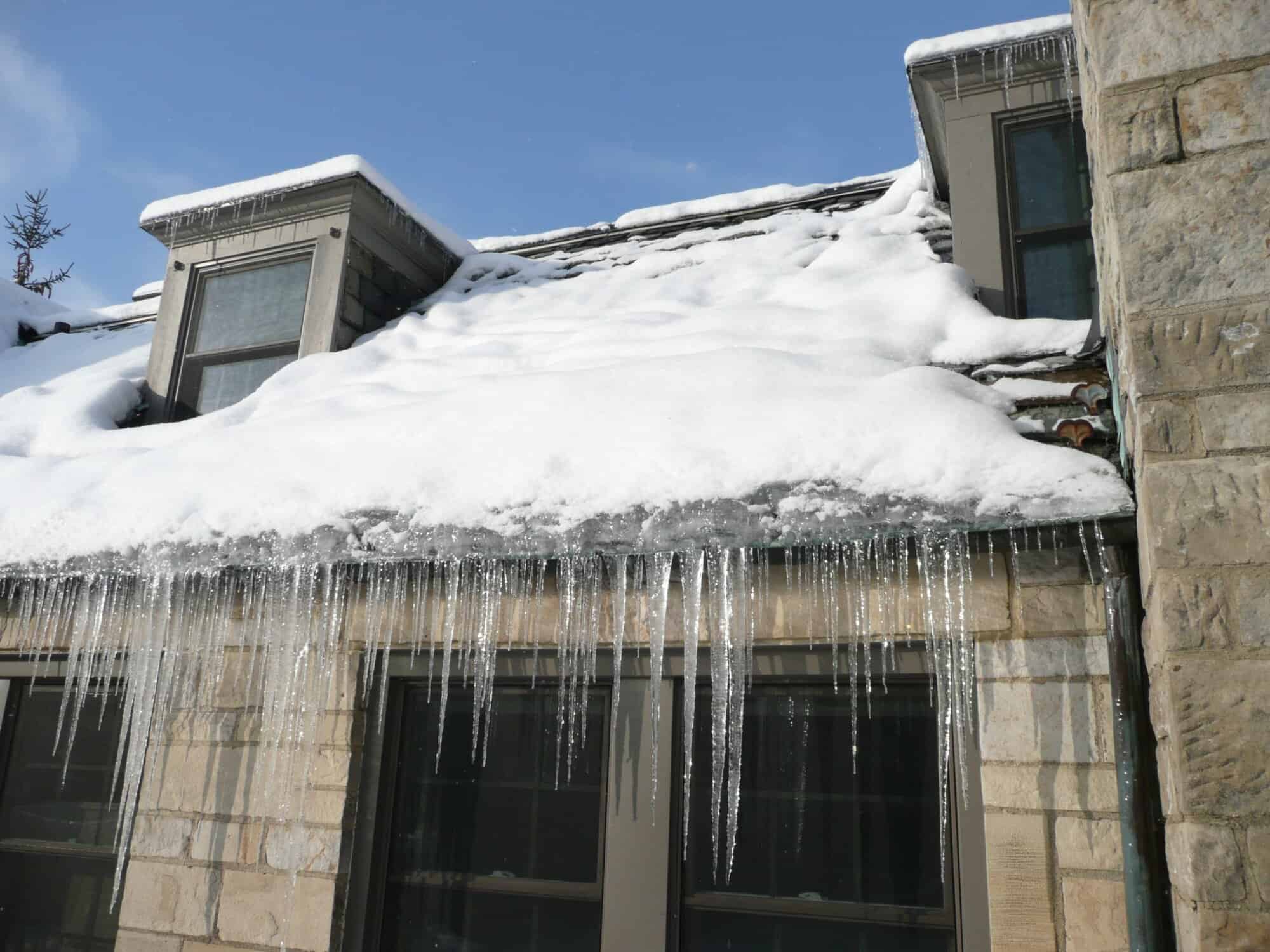
When temperatures drop and snow begins to accumulate, your roof faces conditions it doesn’t encounter during any other season. The freeze-thaw cycles, heavy snow loads, and extreme temperature fluctuations create a perfect storm for water infiltration. What makes winter leaks particularly troublesome is that they often originate from issues that wouldn’t cause problems during warmer months—ice formations, frozen drainage systems, and thermal expansion all conspire to let water find its way into your home.
Understanding Toronto’s Winter Climate and Your Roof
The Greater Toronto Area experiences some of the most challenging winter conditions for residential roofing systems in Canada. With average temperatures hovering around -7°C in January and February, combined with significant snowfall that can exceed 130 cm annually, Toronto homes face constant freeze-thaw cycles throughout the winter months.
Unlike regions with consistently freezing temperatures, the GTA’s fluctuating winter weather creates unique problems. A typical Toronto winter might see temperatures swing from -15°C one day to above freezing the next. This pattern causes snow to melt during warmer periods, only to refreeze when temperatures drop again overnight. These cycles put tremendous stress on your roofing system and create conditions where water can penetrate areas that remain perfectly watertight during summer.
Understanding how these local climate patterns affect your specific roof system is the first step in preventing costly winter water damage. Most winter leaks aren’t caused by dramatic failures but rather by the cumulative effect of frozen water interfering with your home’s normal drainage pathways.
Ice Dams: The Primary Culprit Behind Winter Roof Leaks
What Are Ice Dams and How Do They Form?
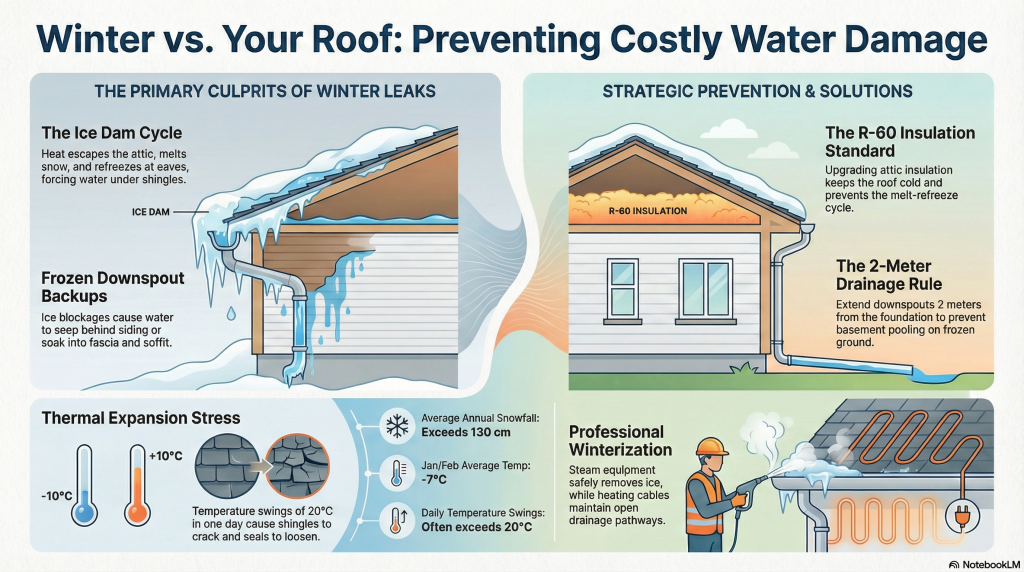
Ice dams represent one of the most common and damaging winter roofing issues affecting Toronto homeowners. An ice dam forms when heat escaping from your home’s interior warms the roof surface, causing snow to melt. This melted water runs down the roof until it reaches the colder eaves, where it refreezes. Over time, this process creates a ridge of ice along the roof’s edge that prevents proper drainage.
As more snow melts, the water backs up behind this ice barrier. With nowhere to go, the water begins to seep under your shingles, through the roof deck, and eventually into your home’s interior. The damage often appears as water stains on ceilings, peeling paint, or water dripping from light fixtures—sometimes in rooms far from where the ice dam actually exists.
In Toronto’s older neighborhoods, where many homes lack a correct vapor barrier and feature inadequate attic insulation by modern standards, ice dams become particularly problematic. The heat loss through poor vapor barrier and insufficiently insulated spaces creates ideal conditions for continuous ice dam formation throughout the winter.
Ice Dam Removal and Prevention Strategies
Professional ice dam removal requires specialized knowledge. While it might be tempting to knock away ice formations yourself, improper removal techniques can cause significant damage to your shingles, gutters, downspouts, windows, AC units and walkways . Professional contractors protect windows and walkways and understand how to safely remove the ice without causing harm to your home or roofing materials.
Prevention proves far more effective than removal. Proper vapor barrier, attic insulation and ventilation work together to keep your roof surface cold, preventing the temperature differential that creates ice dams. Ontario’s building code (Ontario Building Code Section 9.19) specifies minimum insulation requirements, but many older Toronto homes fall short of these standards. Upgrading attic insulation to R-60 or higher can dramatically reduce ice dam formation.
Heating cables installed along roof edges and in valleys provide an additional layer of protection. These low-voltage systems create channels for meltwater to drain properly, even when ice begins to form. For homes prone to severe ice damming, heating cables offer a cost-effective solution that prevents damage before it starts. Strategic placement of these cables along eavestroughs and critical roof areas maintains open drainage pathways throughout mild Toronto winters.
Frozen and Broken Downspouts: Your Drainage System’s Achilles Heel
How Frozen Downspouts Cause Interior Damage
Your downspouts serve a critical function: channeling water away from your home’s foundation and walls. When temperatures drop below freezing, any water remaining in your downspout system freezes solid. This ice blockage prevents melting snow from draining properly during warmer periods or when heated air from your home melts roof snow.
With blocked downspouts, water backs up into your eavestrough system. The additional weight from accumulated ice and standing water can cause eavestrough sections to sag or pull away from your fascia boards. More critically, this backed-up water finds alternative routes—often seeping behind your siding, soaking into fascia and soffit materials, or even finding its way through small gaps around windows and doors.
Toronto’s frequent temperature fluctuations exacerbate this problem. A mild afternoon might melt significant snow, creating substantial water flow that then refreezes overnight in your downspout system. By mid-winter, some downspouts become completely filled with ice, rendering your entire drainage system ineffective precisely when you need it most.
Downspout Repair and Winterization
Regular inspection of your downspout system before winter arrives can prevent many cold-weather problems. Look for sections that don’t drain completely, as these areas will freeze first. Ensure all joints are properly sealed and that downspouts maintain proper slope for drainage.
Professional downspout repair addresses more than just visible damage. Experienced contractors evaluate your entire drainage system to identify vulnerable areas. This might include reinforcing mounting brackets, sealing joints with appropriate cold-weather caulking, or reconfiguring sections that hold water.
For homes with chronic freezing issues, several solutions exist. Heating cables can be installed inside downspouts to maintain open drainage pathways. Alternatively, some homeowners benefit from switching to larger diameter downspouts that are less prone to complete ice blockage. In extreme cases, modifying downspout placement or adding additional downspouts can distribute water flow and reduce the likelihood of ice buildup in any single location.
Damaged Roofing Materials and Winter Vulnerability
Temperature-Related Roofing Failures
Roofing materials expand and contract with temperature changes. While a few degrees make little difference, the dramatic swings experienced during Toronto winters—sometimes 20°C or more in a single day—put tremendous stress on roofing components.
Asphalt shingles become brittle in cold temperatures, making them susceptible to cracking and breaking. Small cracks that developed during previous seasons can expand during freeze-thaw cycles, creating pathways for water infiltration. Metal flashing around chimneys, skylights, and roof valleys also expands and contracts, potentially loosening the seals that keep water out.
Wind-driven snow and ice can work their way under damaged or lifted shingles, sitting directly on your roof deck. When temperatures rise, this snow melts, and the water has nowhere to go but through your roof deck into your attic space. By the time you notice interior damage, the problem has often persisted through multiple freeze-thaw cycles.
Identifying and Addressing Pre-Winter Damage
Fall roof inspections prove invaluable for Toronto homeowners. A thorough examination can identify vulnerable areas before winter weather arrives. Look for missing or damaged shingles, compromised flashing, or areas where previous repairs may have failed.
Professional roofing contractors evaluate not just obvious damage but also the overall condition of roofing materials. Shingles nearing the end of their service life may still appear functional in summer but fail under winter conditions. Granule loss, curling edges, or shingles that have lost flexibility all indicate potential winter vulnerability.
Addressing these issues before the first significant snowfall prevents emergency repairs during the coldest months. Emergency winter roofing work costs significantly more than preventative fall repairs, and working conditions make it difficult to ensure proper installation of materials designed to be installed in warmer temperatures.
Foundation Pooling and Improper Water Management
The Connection Between Roof Drainage and Foundation Damage
Your roof’s drainage system doesn’t end at the downspout outlet—proper water management extends to ensuring meltwater moves away from your home’s foundation. Many winter leaks that appear in basements actually originate from roof drainage systems that discharge too close to the foundation.
During winter, frozen ground prevents proper absorption of meltwater. If your downspouts discharge within two meters of your foundation, this water can pool against your basement walls. Even small amounts of water can seep through foundation cracks or the joint where your foundation meets the foundation wall, causing basement dampness or flooding.
The problem intensifies during mid-winter thaws, common in the GTA. A sudden warm spell can melt large volumes of roof snow quickly, overwhelming inadequate drainage systems. If this water cannot properly drain away from your home, it seeks entry points—often through foundation walls or basement window wells.
Creating Proper Drainage Solutions
Effective winter drainage requires planning that accounts for frozen ground and snow accumulation. Downspout extensions should direct water at least two meters from your foundation, ideally to areas with natural slope away from your home.
For properties where proper grading proves difficult, alternative solutions exist. Buried drainage pipes connected to your downspouts can channel water to more appropriate locations. Some Toronto homeowners install rain barrels or dry wells, though these require special consideration for winter use to prevent freezing.
Foundation waterproofing, required by Ontario Building Code for new construction, provides additional protection. However, many older Toronto homes lack modern waterproofing systems. Exterior excavation and waterproofing represents a significant investment, making proper surface water management even more critical for these properties.
Protecting Your Toronto Home This Winter
Winter roof leaks rarely develop overnight—they result from the cumulative effect of multiple vulnerabilities in your home’s exterior envelope and drainage systems. Ice dam removal, heating cables, and downspout repair all play crucial roles in preventing winter water damage, but the most effective approach combines multiple strategies tailored to your specific home.
Toronto’s unique climate demands particular attention to roof and drainage maintenance. The freeze-thaw cycles, heavy snow loads, and temperature extremes that characterize GTA winters create conditions where even minor issues can develop into significant problems. Regular professional inspections, preventative maintenance, and addressing problems before winter arrives provide the best protection for your home and your investment.
If you’re experiencing winter roof leaks or want to prevent problems before they start, don’t wait for the next thaw to reveal new damage. Ontario Downspout Service has helped thousands of GTA homeowners protect their homes from winter weather. Our team understands the specific challenges Toronto homes face and can provide comprehensive solutions—from ice dam removal to complete drainage system evaluation. Contact us today for a thorough assessment of your home’s winter readiness. With decades of experience and 10 “Best of Homestars” awards, we have the expertise to keep your home dry all winter long.