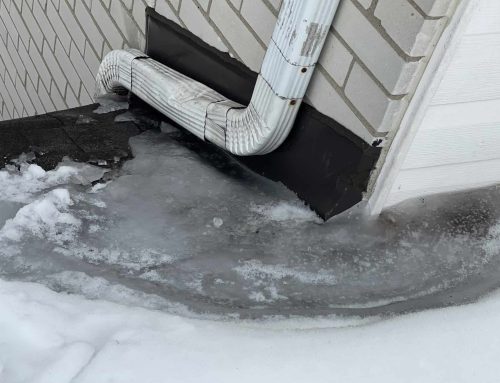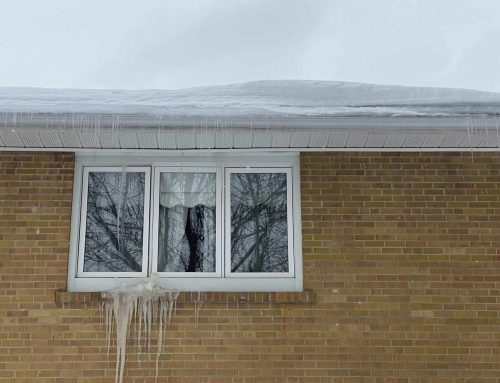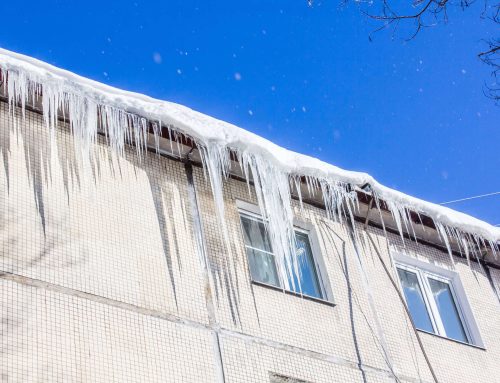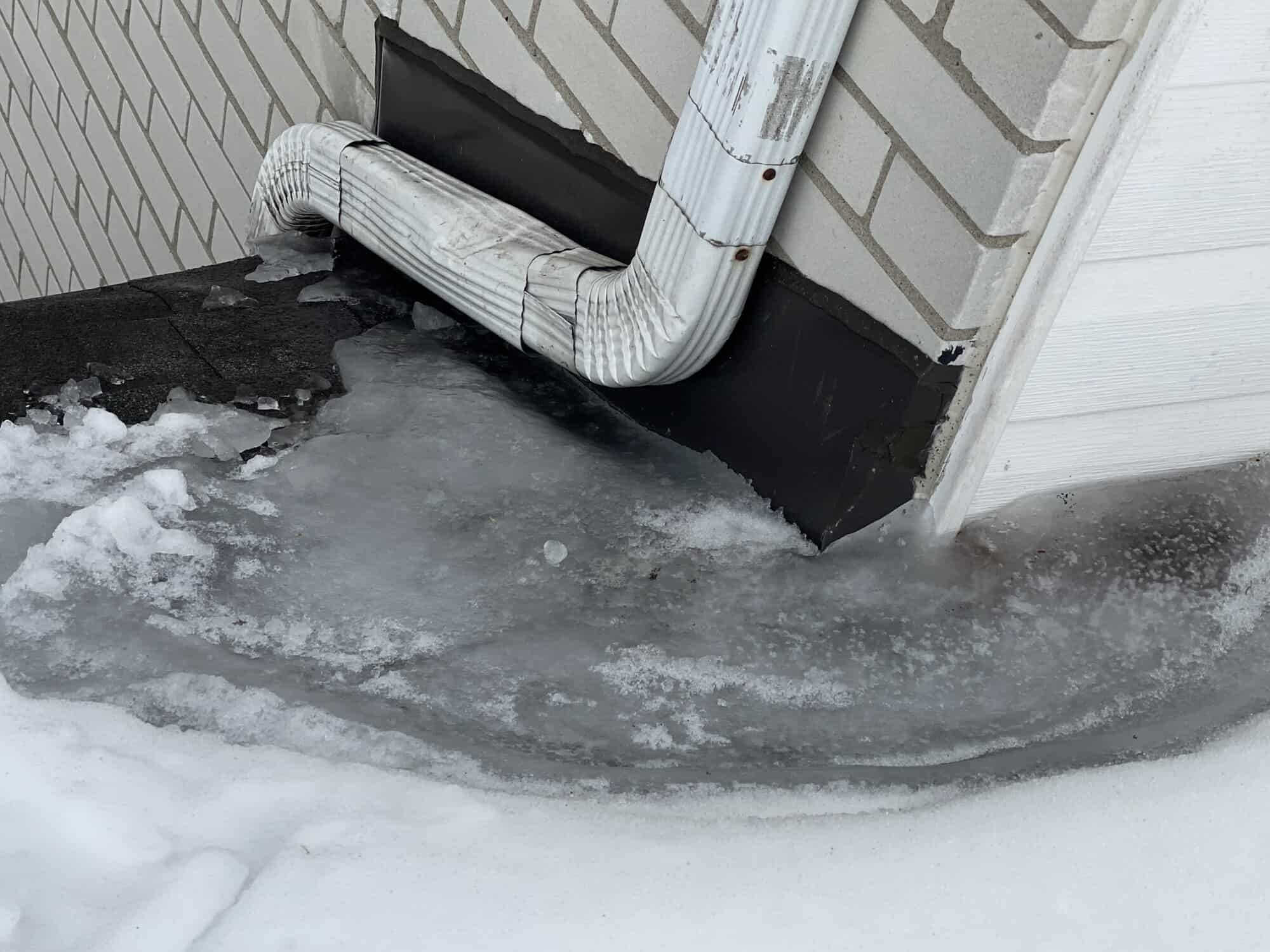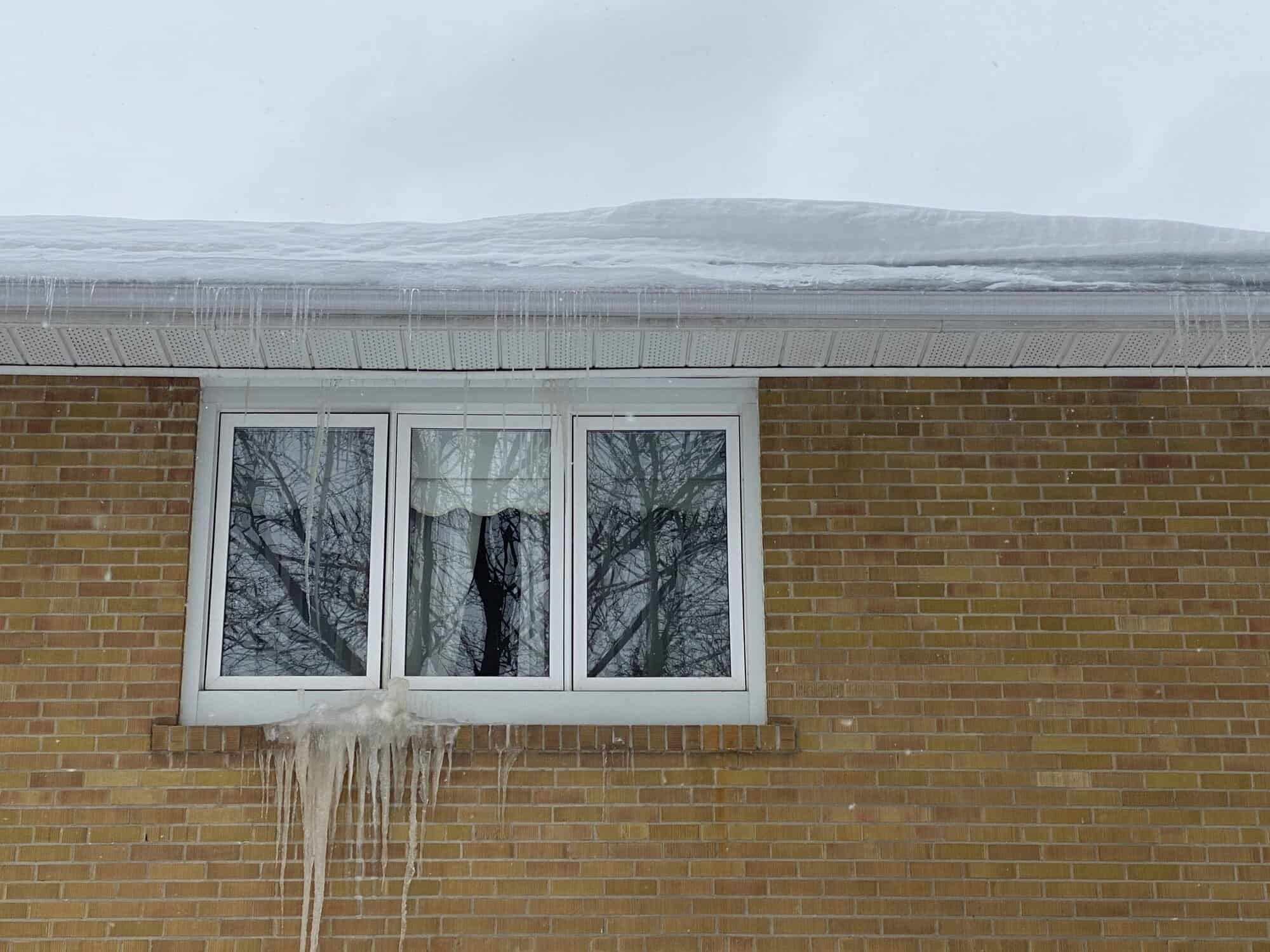
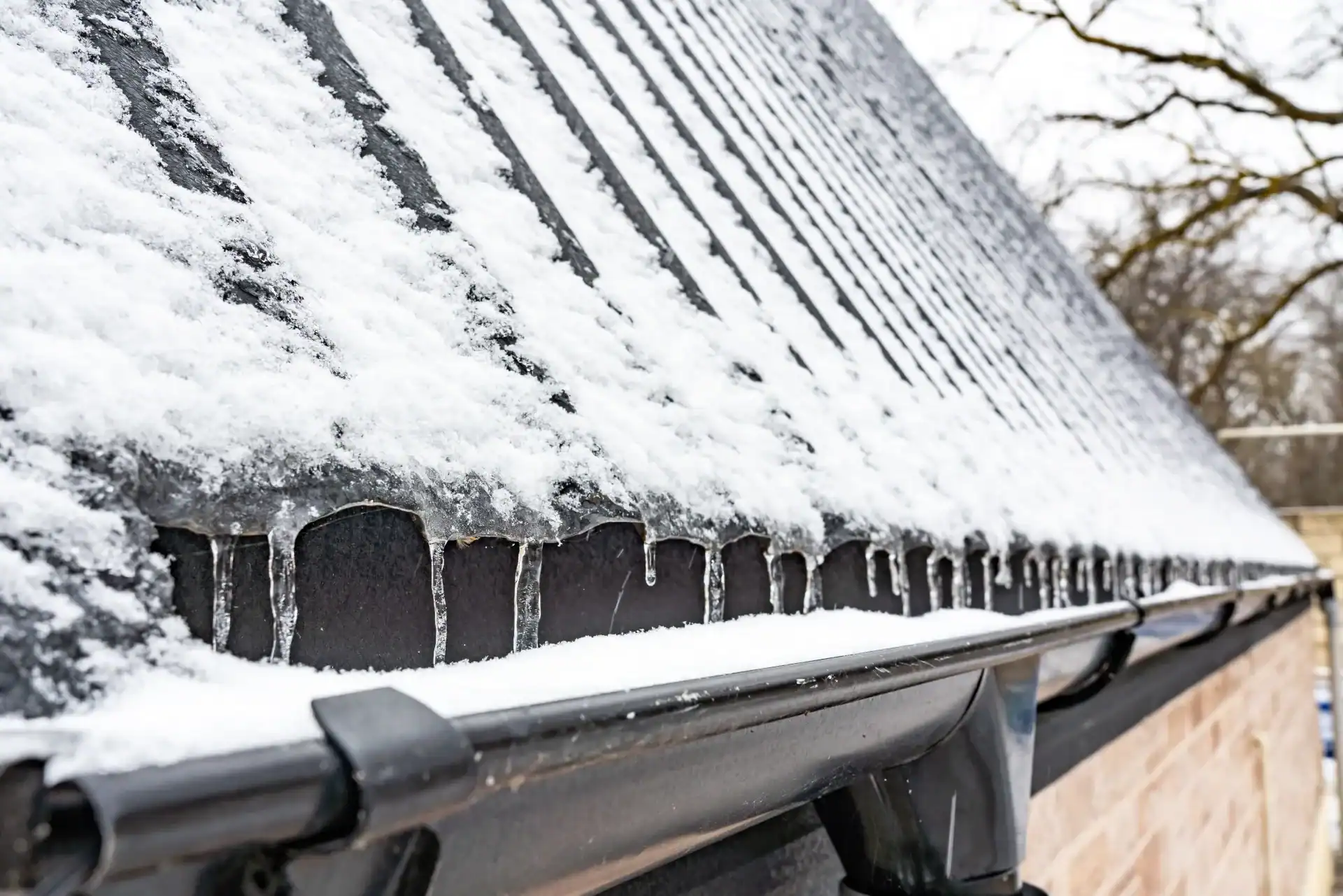
Flat roofs absolutely get ice problems, they just get a different version of them. On a sloped roof, ice builds into a ridge at the eave and traps water behind it. On a flat or low-slope roof there is no eave to dam, so the ice blocks the drains and scuppers instead, and the meltwater simply sits on the membrane with nowhere to go. It is a quieter problem than icicles hanging off a roofline, which is exactly why it often gets found late.
Why this matters so much in Toronto
Flat and low-slope roofs are everywhere in this city. Semi-detached and row houses through the older neighbourhoods, century homes with flat rear sections, third-storey additions, back extensions built over kitchens, garages and porch roofs. A great many Toronto homes have at least one flat section even when the front of the house looks entirely pitched.
Those transition points, where a flat section meets a sloped one, are the spots we get called to most. Snow slides off the pitched section onto the flat one, piles up deeper than anywhere else on the roof, and melts against a surface that drains slowly at the best of times.
How the problem actually works
A flat roof is not truly flat. It is built with a slight pitch toward a drain, a scupper through a parapet wall, or an edge that feeds an eavestrough. That small slope is the whole drainage design.
In winter, three things go wrong with it:
- The drain or scupper freezes. It is the low point, so it is where water collects and sits, and sitting water in freezing weather turns to a plug. Once plugged, nothing drains.
- Water ponds instead of running off. With the outlet blocked, meltwater spreads across the membrane and refreezes as a sheet. Each thaw adds another layer.
- Ice builds against parapets and roof edges. Where a low wall runs around the roof, ice piles against it and works at the flashing and the joint between membrane and wall.
The result is standing water on a surface designed to shed it, held there for weeks, working at every seam and penetration it can reach.
Why it is harder to spot
A sloped roof warns you. Icicles, a visible ridge of ice at the eaves, water marks down the siding. You can see it from the driveway.
A flat roof gives you almost nothing from the ground. There is no eave to look at and the ponding is hidden behind a parapet. By the time it shows up, it usually shows up inside, as a stain on a ceiling below the flat section, or as water tracking down the inside of an exterior wall where the flashing has let go.
The other sign worth knowing is weight. Ponded water that has frozen is heavy, and it accumulates in a single area rather than spreading. On older flat roofs over back additions, that concentration is worth taking seriously.
What makes a flat roof more likely to have trouble
- An internal drain rather than an edge or scupper, because the drain sits in the coldest, lowest spot and has a pipe below it that can also freeze
- A parapet wall on all sides, which contains water rather than letting it spill off an edge as a last resort
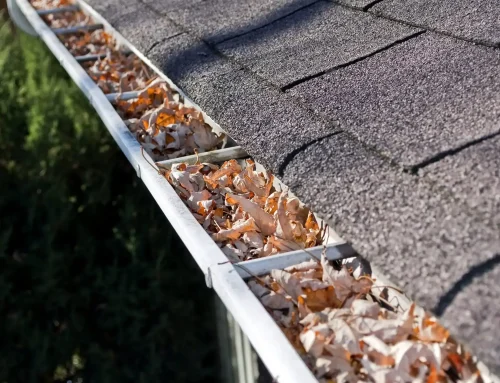
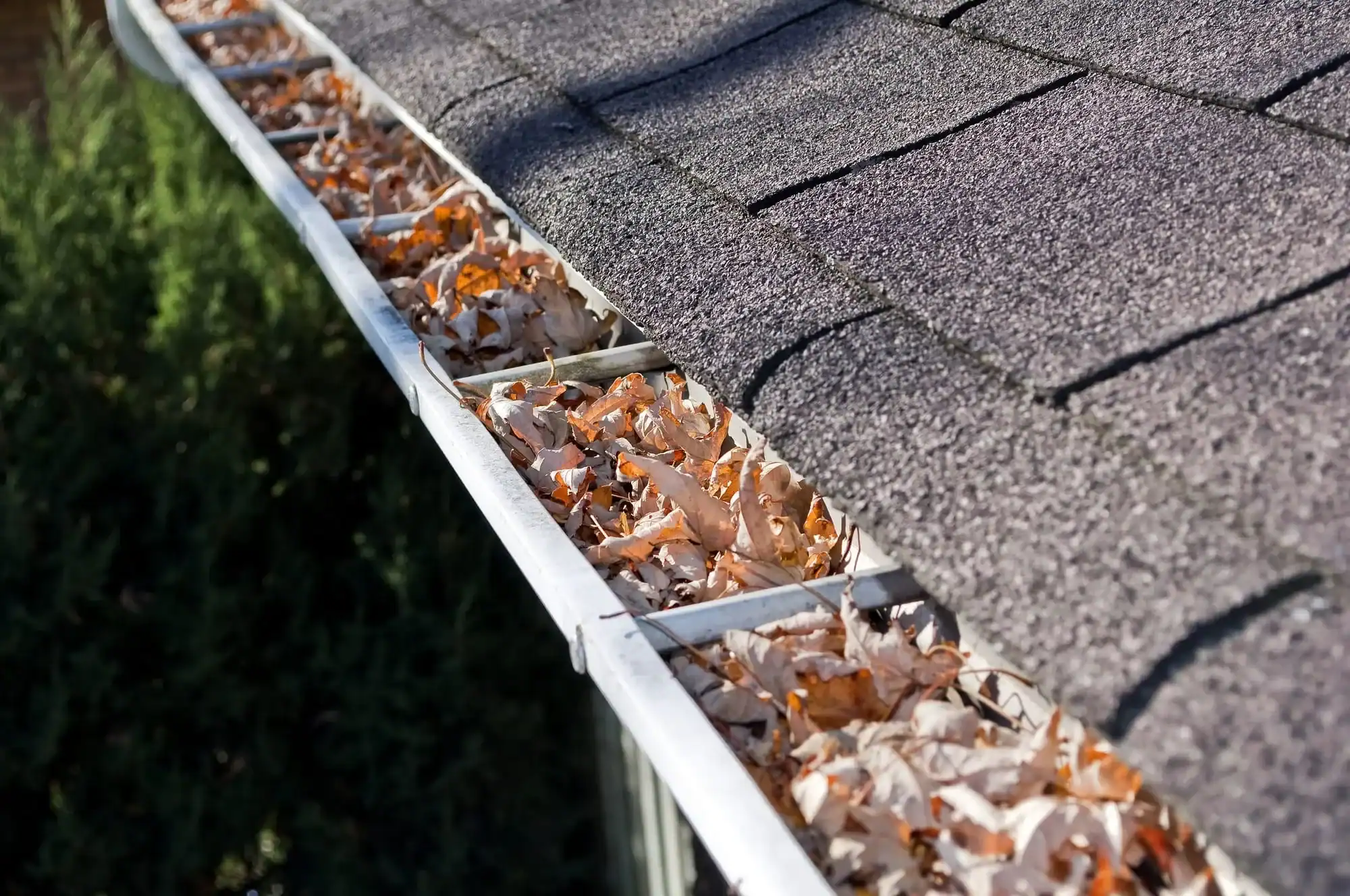
- Debris from autumn, which collects at exactly the low point where the drain is
- Existing ponding, visible as staining or residue on the membrane in summer, meaning the pitch is already inadequate
- Heated space directly below with limited insulation, which produces steady melt with nowhere for it to drain
- A pitched roof discharging onto it, adding both snow load and meltwater volume
What helps
Clear the drains and scuppers in late autumn, after the leaves are down. On a flat roof this is not optional maintenance, it is the entire drainage system. One blocked drain means the roof does not drain at all.
Check that the outlet is actually clear below the drain, not just at it. A clear grate over a blocked pipe looks fine and drains nothing.
Keep the surface clear where you safely can. Less snow means less meltwater and less weight. Flat roofs are easier to clear than pitched ones, but that does not make them safe to walk in winter, and a membrane can be damaged by the wrong tool.
Consider heating at the drain. This is where de-icing cable tends to earn its place on a flat roof. Rather than running along an eave, it keeps the drain, scupper or outlet pipe open so the roof can do what it was built to do. It is a targeted application and often a small one.
Deal with ponding in the summer. If water sits on your roof after rain in July, it will sit there as ice in January. That is a pitch or drainage problem, and the right time to fix it is when the roof is dry.
Frequently asked questions
Can I use a roof rake on a flat roof?
Generally not the same way. Roof rakes are designed to pull snow down a slope and can gouge a membrane. On an accessible flat roof, a plastic shovel used carefully with a layer of snow left in place is the usual approach, but the access itself is the risk on anything above ground level.
Is ponding water on a flat roof normal?
Shallow water that clears within a day or two after rain is common. Water still sitting after that, or visible staining rings on the membrane, means the roof is not draining as designed. That is worth addressing regardless of winter.
My flat roof is over an addition. Is that worse?
Often, yes. Additions are frequently less insulated than the original house, which means more heat reaching the roof deck and more melting. They also tend to sit below a pitched section that sheds snow and water onto them.
Will a new flat roof stop this?
Only if the new roof corrects the pitch and drainage. A new membrane over the same inadequate slope and the same drain location will pond and freeze the same way. If you are having the work done, the drainage design is the part worth asking about.
Getting it looked at properly
Flat roof drainage is a narrow problem with a small number of failure points, and they are all findable if someone actually looks at them before the weather turns.
Ontario Downspout Service is a licensed and insured residential drainage specialist serving Toronto and the GTA. If you have a flat or low-slope section that gives you trouble every winter, we can look at how it drains and where it is failing.