The short version: clean your eavestroughs after the leaves have finished falling rather than before, make sure water runs all the way through to a discharge point well clear of your foundation, and keep that discharge point free of snow all winter. Those three things prevent most of the winter drainage problems we get called about. The rest of this is the detail, organised by when it actually needs doing in Toronto and the GTA.
Early autumn: September and October
This is the planning window, not the cleaning window. The leaves are not down yet, so anything you clear now will be full again in six weeks.
- Walk the perimeter during rain. Fifteen minutes in a downpour tells you more than an hour on a dry day. Look for water spilling over the front edge of the trough, sheeting down an exterior wall, or pooling anywhere near the foundation.
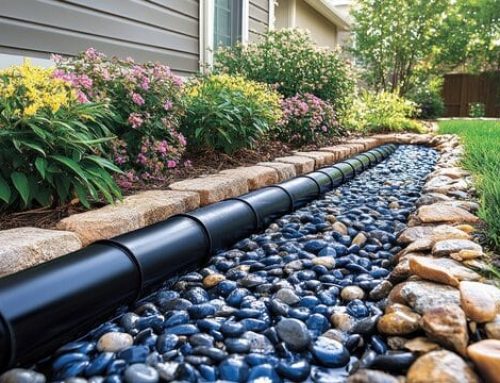
- Check where each downspout discharges. Follow it to the end. Water should be landing on ground that slopes away from the house, not into a flowerbed against the wall or onto a flat patio.
- Look at the troughs from the ground. Sagging sections, gaps at the seams, and spikes pulling away from the fascia are all visible without a ladder.
- Book anything that needs doing now. Contractors across the GTA fill up through autumn, and the work gets harder and more expensive once the weather turns.
Late autumn: after the leaves are down
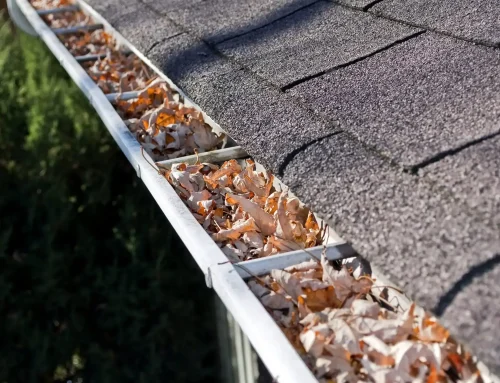
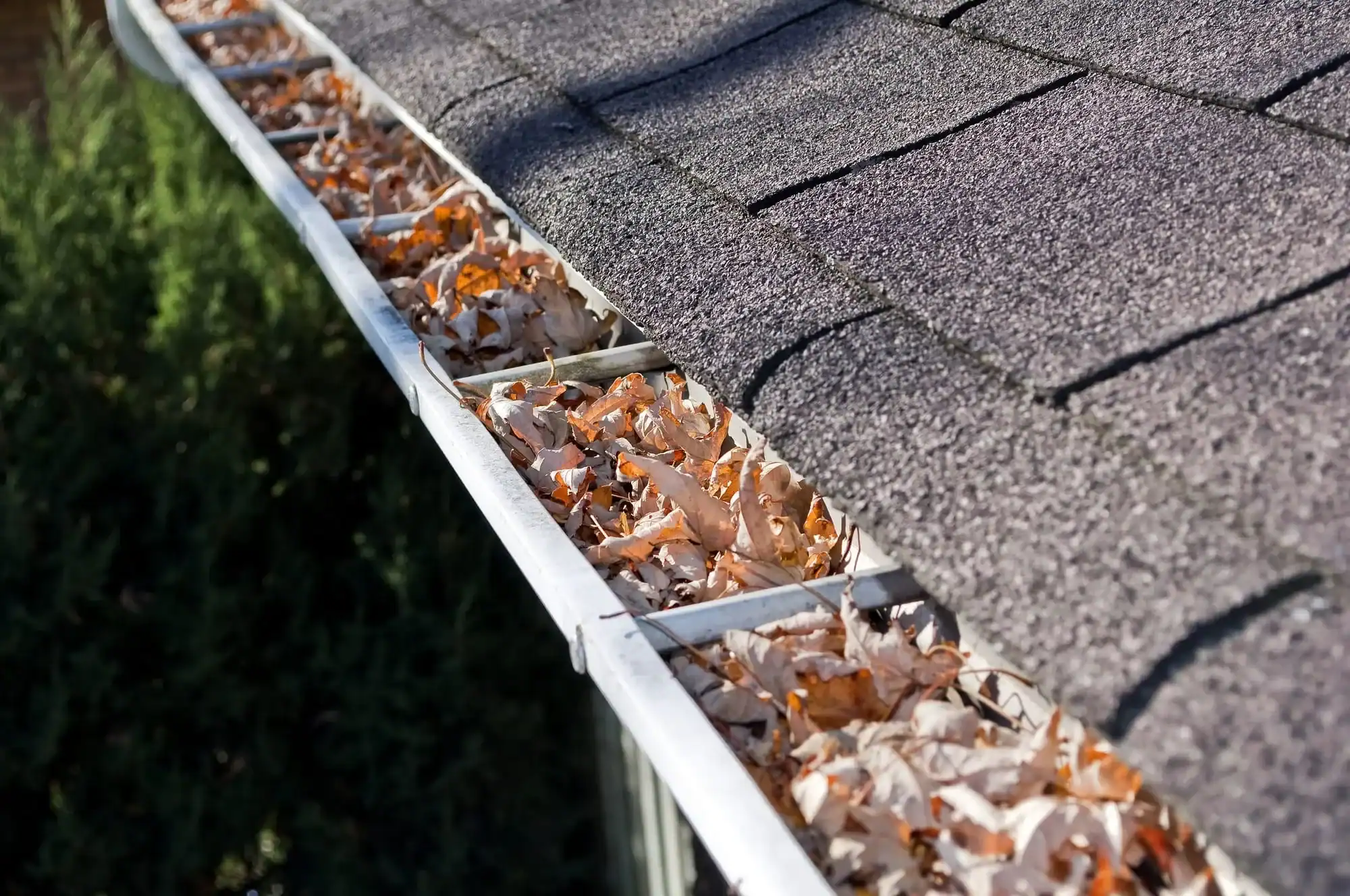
This is the one that matters most, and the most common mistake is doing it too early. Toronto’s heaviest leaf fall runs through late October and into November, and a system cleaned in September will be packed again by the time the first freeze arrives.
- Clear eavestroughs completely, including the outlets where the downspout connects. That is where the plugs form.
- Flush the downspouts. Run a hose into the top and confirm water comes out the bottom at full flow. A trickle means a partial blockage that will freeze solid.
- Check any underground connection. If your downspout goes into a buried line, confirm water is actually going somewhere. Buried lines silt up and nobody notices until winter.
- Look at the fasteners. Ice is heavy. A trough already sagging in November will be worse in February.
- Clear debris from window wells and around the foundation while you can still see the ground.
Before the first hard freeze
- Leave downspout extensions down and connected. Water moves through your system all winter in this climate. Extensions folded up send meltwater straight at your foundation.
- Reposition discharge points away from walkways and driveways where a sheet of ice becomes a hazard.
- Test any de-icing cable before you need it. Confirm it powers up and the controller works. Finding a dead circuit in January is a bad time to find out.
- Take photos of the roofline and eavestroughs. If you end up making an insurance claim later, a before picture is useful.
Through the winter
Most of this is watching rather than doing, and almost all of it is from the ground.
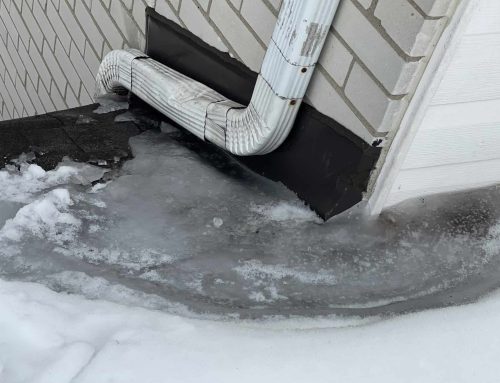
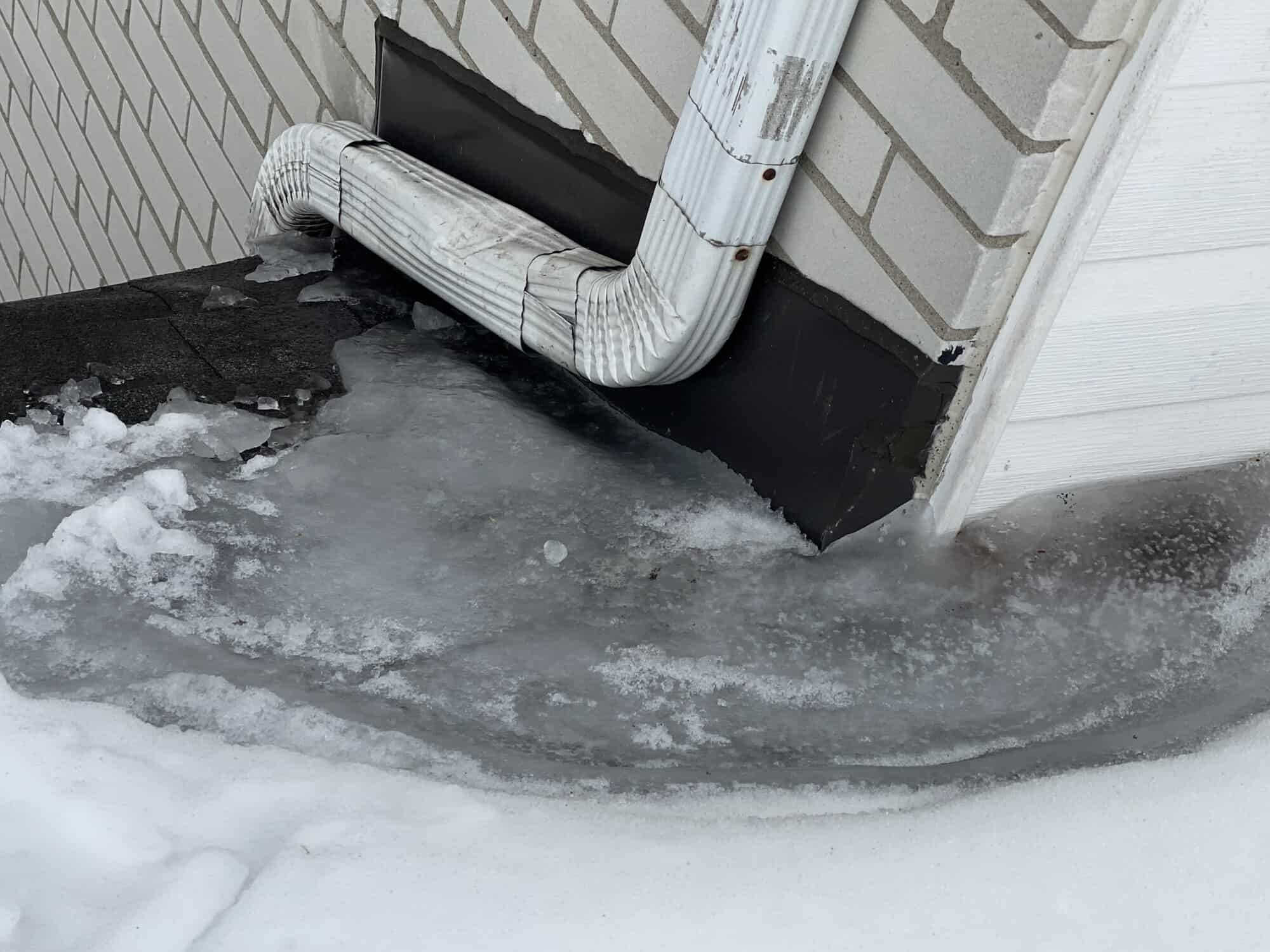
- Keep snow away from downspout outlets. This is the single most common cause of a frozen downspout, and shovelling is usually what causes it. Every time the driveway or path gets cleared, check that the piles are not sealing a discharge point.
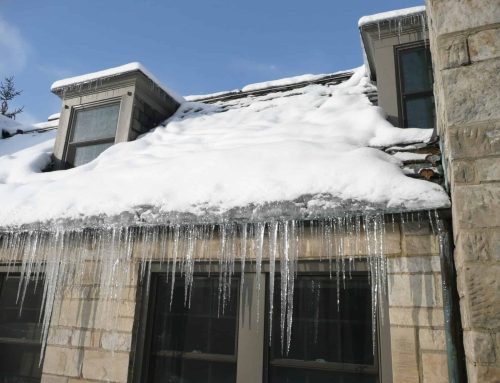
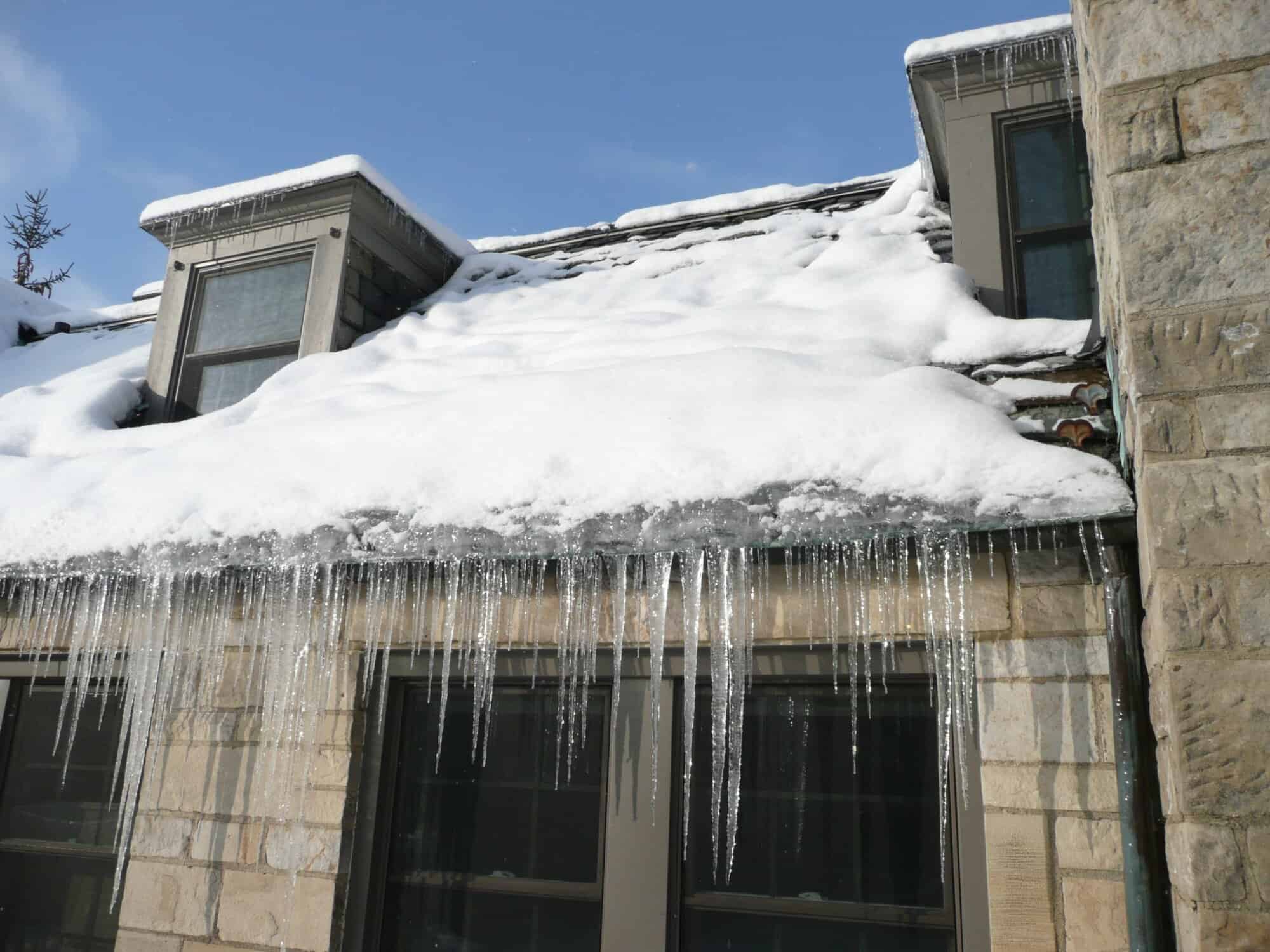
- Watch the roof edge after a thaw or a sunny day. A growing band of ice along the eaves, or icicles getting heavier week to week, means meltwater is not draining.
- Check interior ceilings and upper-floor walls during mild spells. Ice dam leaks show up when it warms, not when it rains.
- Note where ice forms. Which corner, which side, which valley. That information is genuinely useful when someone comes to diagnose it, and you will not remember by spring.
- Stay off the roof. A roof rake used from the ground is the safe way to take snow off the lower few feet.
Spring
- Inspect for winter damage once the ice is gone. Split downspout seams, pulled fasteners, dented sections and separated joints are all common and easy to miss.
- Clear the seeds and blossoms. Maple keys and similar debris block outlets as effectively as autumn leaves, and most people never think to check in spring.
- Watch where water sits after a heavy rain. Anywhere that pools near the foundation is a grading or drainage problem worth fixing while the ground is workable.
What is worth leaving to someone else
Most of the list above is ground-level work. A few things are not.
Anything on a two or three storey home, which covers most of the housing stock across Toronto, means working at a height where a fall is serious. Same for steep roofs, icy conditions, and any home where the eaves are above a hard surface. Repairs to sagging or separated troughs need the pitch corrected properly rather than just re-fastened, and a buried drainage line that has failed needs someone who can find out where before anything gets dug.
Frequently asked questions
How often should eavestroughs be cleaned?
Once a year, in late autumn, is enough for most homes. Twice a year if you have mature trees close to the house, adding a spring clean for seeds and blossoms. Homes surrounded by large maples or pines sometimes need more.
Do gutter guards mean I can skip this?
They reduce how much gets in, not to zero. Fine debris still passes through most designs and settles in the trough, and guards themselves need checking because they can collect a mat of leaves on top. They lengthen the interval; they do not remove the job.
Is it too late to do this once it snows?
Not too late to help, but harder. Once the trough is full of ice nothing can be inspected properly and cleaning is not possible. What you can still do is clear the discharge points, keep snow off them, and watch for the warning signs above.
How do I know if my downspouts are draining far enough from the house?
The usual guidance is at least six feet from the foundation, discharging onto ground that slopes away. The practical test is simpler: after a heavy rain, is there standing water near your foundation? If yes, it is not far enough, regardless of the measurement.
Where this ends up mattering
Almost every basement leak and foundation water problem we see traces back to roof water that was not carried far enough away from the house. The maintenance above is unglamorous, but it is what keeps that from happening.
Ontario Downspout Service is a licensed and insured residential drainage specialist serving Toronto and the GTA. If you would rather have someone look at the whole system before winter, that is what we do.