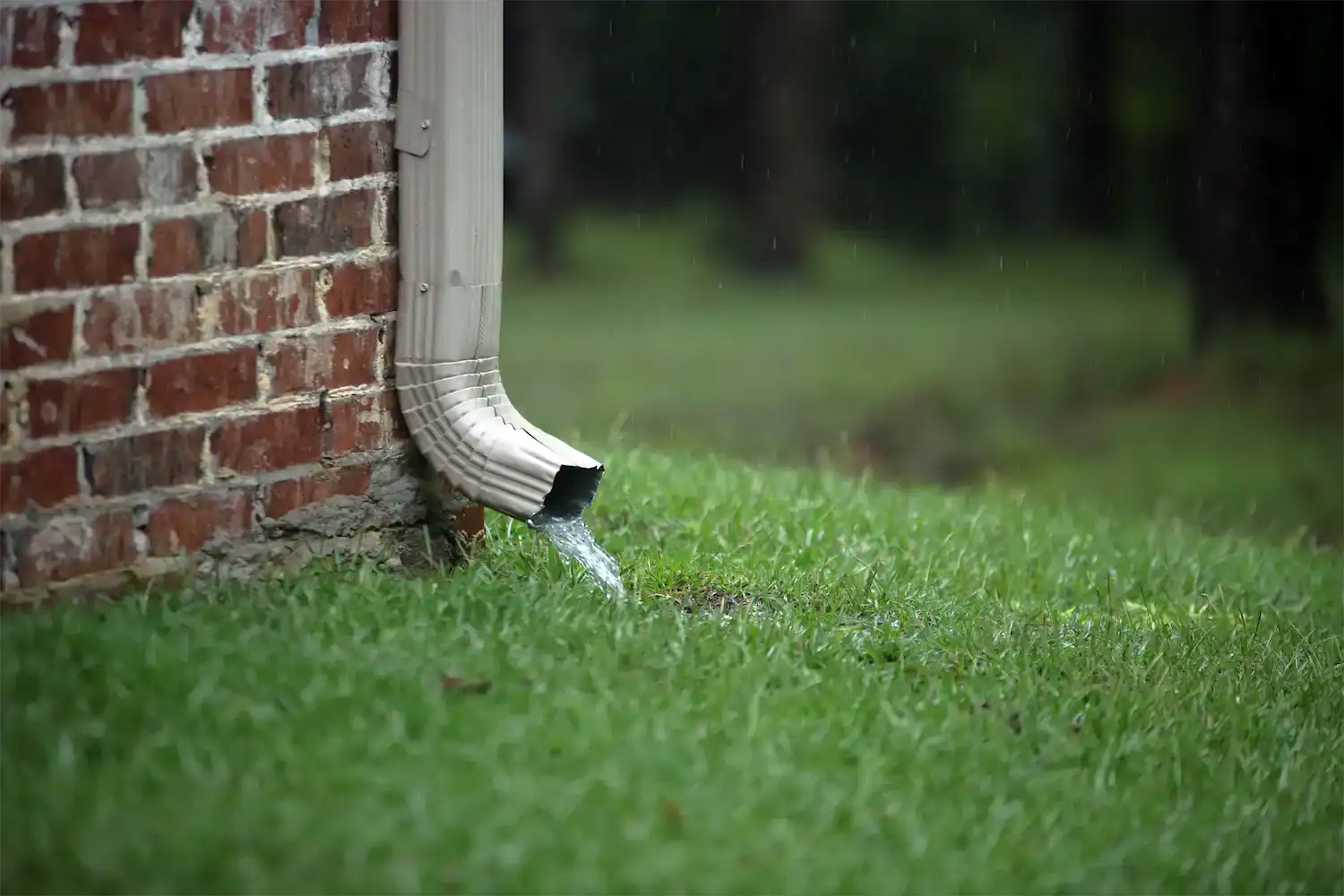
The most reliable way to check whether water is draining too close to your foundation is to walk around your house during, or just after, a steady rain and watch what happens in the first two metres from the walls. If water pools there, soaks in at one spot, or runs toward the house instead of away from it, it is draining too close. In dry weather you can still find the evidence: eroded soil below the roof edge, mud splashed on the siding, downspouts ending right at the wall, and white chalky deposits or damp patches on basement walls. The whole check takes about twenty minutes and needs nothing more than an umbrella and a level.
This guide walks through each check in order, what the results usually mean, and when it is time to bring in a professional.
Why the first two metres matter
When a house is built, the foundation hole is dug wider than the foundation itself and then backfilled. That backfill never compacts as tightly as the undisturbed ground around it, so it absorbs water quickly and channels it straight down the outside of the foundation wall. Water landing in this zone is the water most likely to end up in your basement.
That is why the Ontario Building Code requires that a building be located, or the site graded, so that water will not accumulate at or near it. The City of Toronto’s downspout guidance makes the same point in plain terms: water should flow away from your foundation walls, and should not be sent onto a neighbour’s property or the sidewalk.
Check 1: Watch it rain
This is the single most useful test, and it is the one most homeowners never do, because heavy rain is when everyone is indoors.
- Pick a steady rain rather than a light drizzle, and walk the full perimeter of the house.
- Watch where each downspout releases water and which way that water travels once it lands.
- Look up at the eavestroughs for water spilling over the front edge.
- Note any spot where water collects within a metre or two of the wall.
- Take a few photos. They are very helpful if you later ask a contractor for advice.
Check 2: Every downspout outlet
Downspouts concentrate the runoff from a large section of roof into a single point, so where they discharge matters more than anything else on this list.
For each one, check how far from the wall it releases water, whether the ground at that point slopes away, and whether there is erosion or a puddle at the outlet. As a general rule, water should discharge at least 1.8 metres from the foundation. Our guide How Far Should a Downspout Extend From Your Home? explains why distance alone is not the whole story.
Also look for downspouts that disappear into a pipe in the ground. On older Toronto homes, these were often originally connected to the sewer through clay pipe. The City runs a Mandatory Downspout Disconnection program, and exemptions are only granted through a formal application to the City. An underground line that has cracked or collapsed can also leak roof water directly against your foundation without any sign at the surface. See Should Downspouts Be Buried or Extended Above Ground?
Check 3: The grade around the house
The ground next to the foundation should fall away from the house. A common target is about 15 cm of drop over the first two metres.
To check it, rest a straight board on the ground running out from the wall and place a level on top. If the bubble shows the ground rising away from the house, or sitting flat, water has no reason to leave. Look especially for:
- Soil that has settled into a shallow trough along the foundation
- Garden beds with edging that holds water against the house
- Mulch or soil built up higher than the surrounding lawn
Check 4: Driveways, walkways and patios
Hard surfaces shed water fast, so their slope matters. Check whether driveways, walkways and patios fall toward the house or away from it, and look at the joint where they meet the foundation wall. A gap there, or a slab that has sunk and tilted back toward the house, sends water straight to the wall.
Check 5: Window wells
Window wells sit below grade, which makes them natural collection points. Look for standing water after rain, leaves and debris in the bottom, and staining on the window frame. A downspout or an overflowing eavestrough directly above a window well is a very common cause of basement window leaks.
Check 6: The roof edge
An overflowing eavestrough drops water in a line right along the foundation. Look for a trench or bare strip in the soil directly beneath the roof edge, mud splashed onto the siding, and staining on the fascia. These usually point to a clogged trough or one that has lost its slope.
Check 7: Inside the basement
Finally, look at the inside of the foundation walls where they are accessible, and match anything you find to the outside of the house.
- White, chalky deposits (efflorescence), left behind when water passes through masonry and evaporates
- Damp patches low on the wall or at the joint between wall and floor
- Peeling paint, a musty smell, or rust on items stored against the wall
A damp corner directly inside from a downspout, or a wet wall below a section of overflowing trough, is rarely a coincidence.
What your findings usually mean
- Puddle or erosion at a downspout outlet: the discharge is too short or lands on ground sloping the wrong way. An extension and some regrading usually solve it.
- Trench along the roof edge: the eavestrough is overflowing because of a clog, a blocked outlet or lost slope.
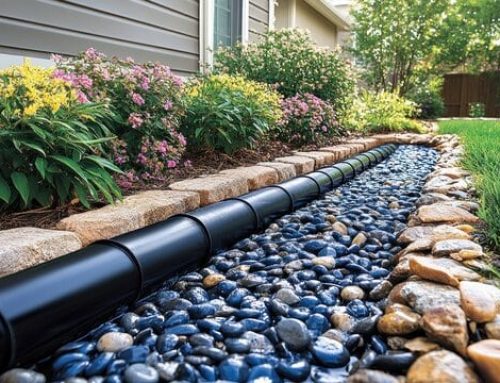
- One whole side of the yard stays soggy: a grading problem, or ground water arriving from higher ground. Our article What Is a French Drain and When Does a Home Need One? explains when a drain becomes necessary.
- Water in a window well: roof water landing above it, poor grade around it, or a blocked well drain.
- Water arriving from a neighbouring lot: often a shared grading issue that may need a swale or drain along the property line.
When to call a professional
Simple findings, such as a short downspout or a clogged trough, are usually straightforward to correct. It is worth getting a drainage specialist involved when water is already reaching the basement, when you find several problems at once, when a buried downspout line is involved, or when fixing the grade would change how water flows onto a neighbour’s property.
The most common mistake is treating the symptom inside the basement while the source outside keeps delivering water. For a broader look at the issues that tend to go unnoticed, see Why Your Downspout Is Dumping Water Too Close to Your House.
Frequently asked questions
How far from my foundation should water drain?
At least 1.8 metres is a sound general rule for downspout discharge, with further being better on heavy clay soil or flat lots. Just as important is that the ground at that point slopes away from the house.
Is it normal for the ground near my house to be wet after rain?
Briefly, yes. What is not normal is water that pools against the wall, or ground beside the foundation that stays soft for a day or more after the rain has stopped.
Can I do this check in winter?
Yes, and it can be revealing. Watch where ice forms below downspouts and along the roof edge, and where meltwater runs during a thaw. Early spring, when snow is melting and the ground is still partly frozen, is one of the best times to spot drainage problems.
Can poor drainage cause foundation cracks?
Repeated saturation, hydrostatic pressure and freezing soil all put stress on a foundation and can widen existing cracks. Drainage is rarely the only factor, but it is one of the few you can control.
Turning what you find into a plan
Most foundation water problems have a visible source outside the house, and a twenty-minute walk in the rain will usually show you where it is. Fixing that source, rather than managing the water once it is inside, is what keeps a basement dry long term.
Ontario Downspout Service is a licensed and insured residential drainage specialist serving Toronto and the GTA, and a Best of HomeStars winner for more than ten years. If your walk-around turns up something you are not sure about, get in touch and we will help you work out what is going on and what it will take to fix it.