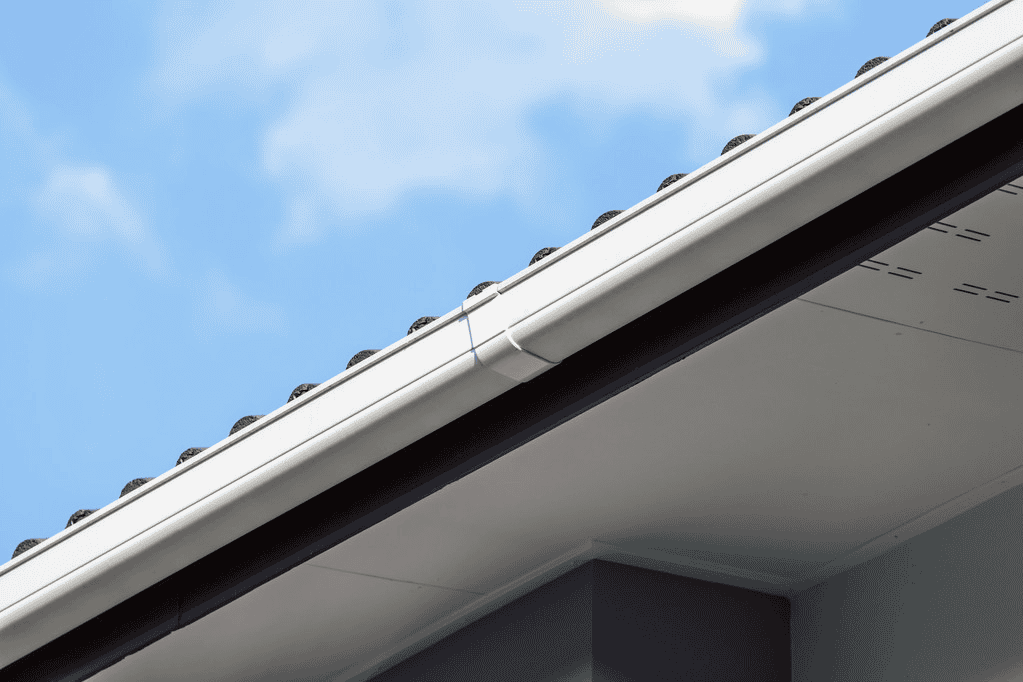
Eavestrough slope protects your foundation by making sure roof water actually reaches the downspouts instead of spilling over the edge and landing at the base of your walls. A properly installed trough has a slight, continuous fall toward each downspout, commonly about 6 mm for every 3 metres of run (roughly a quarter inch per 10 feet). With too little slope, water sits in the trough and overflows. With dips and uneven sections, it collects at the low points and pours off there. Either way, the water ends up in a line along your foundation, which is exactly where the soil is loosest and least able to cope with it.
Slope is one of the least visible parts of a drainage system, and one of the most important. Here is why it matters, how to tell when it has gone wrong, and what fixing it involves.
Why slope matters more than most homeowners realise
An eavestrough is a channel, and channels only move water when there is a gradient to follow. A trough that looks perfectly level from the street can still be draining well, because the correct fall is very gentle. But a trough that is truly level, or sagging between two hangers, is not a drain at all. It is a long, narrow tray.
The volumes involved are larger than most people expect. Every millimetre of rain falling on one square metre of roof produces one litre of water. A 25 mm rainfall on a 120 square metre roof sends roughly 3,000 litres into your eavestroughs. Heavy summer storms can deliver far more than that: the City of Toronto notes that a July 2024 storm dropped more than 100 mm of rain on parts of the city in about three hours. All of that has to travel along the trough to an outlet, and slope is the only thing moving it.
What correct eavestrough slope looks like
- A gentle, continuous fall. Around 6 mm per 3 metres is a common standard. Some installers use slightly more on shorter runs or under trees, where a faster flow helps carry debris. From the ground, a well-sloped trough should look close to level.
- No dips between hangers. The fall has to be consistent along the whole run. A single sag creates a low point that holds water and debris.
- Long runs split in two. On longer walls, often around 12 metres or more, troughs are usually pitched from the middle down to a downspout at each end. A single slope over a very long run would leave the low end sitting too far below the roof edge.
- Enough downspouts. Correct slope only works if there is an outlet at the end of it, sized and spaced for the roof area draining into that section.
How lost slope becomes a foundation problem
The chain of cause and effect is straightforward.
The problem: the trough no longer falls toward the downspout, so water collects at a low spot and spills over the front edge during rain.
The risk: that spill lands in the same place every storm, usually within half a metre of the wall. The soil there is backfill, loosened when the foundation was built, and it absorbs water quickly and channels it straight down the outside of the foundation wall. Over time that means hydrostatic pressure against the wall, water finding its way through cracks and the joint between wall and floor, and saturated soil that heaves when it freezes. A wet window well or a damp basement corner directly below an overflowing section is a very common pattern on Toronto homes.
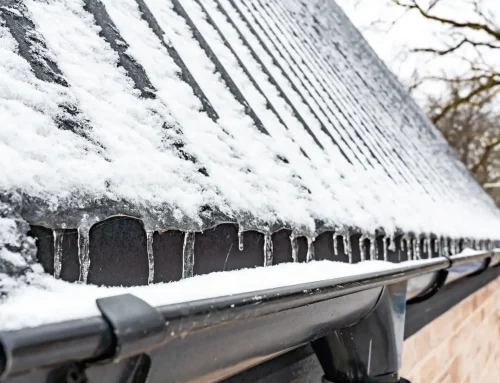
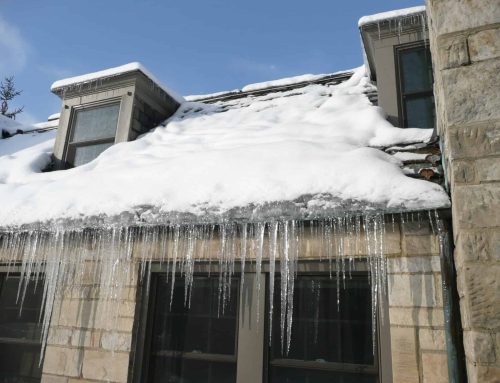
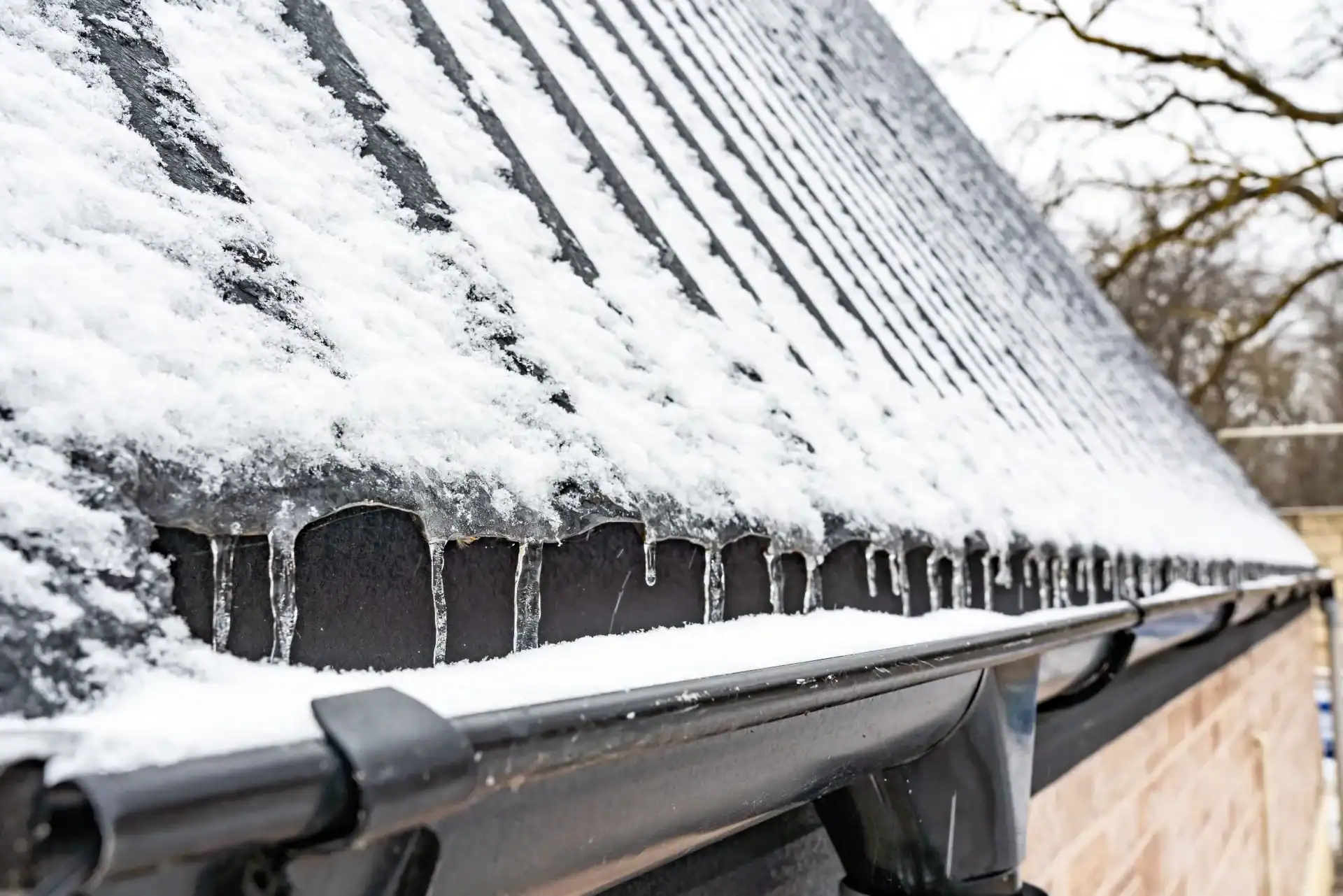
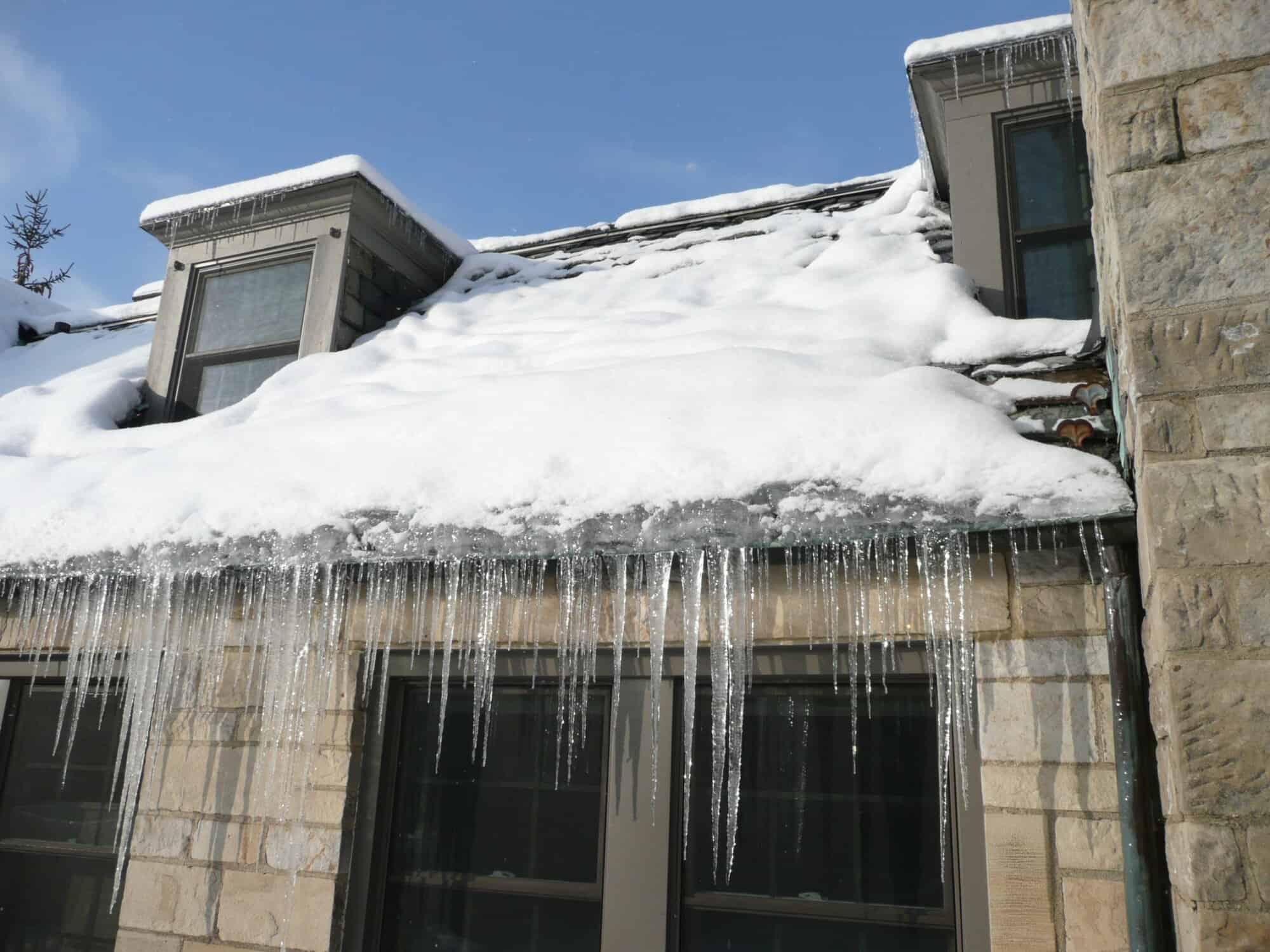
Standing water in the trough causes its own damage too. Water is heavy, so a trough holding it puts extra load on the hangers, which makes the sag worse, which holds more water. In winter that standing water freezes into a solid block. And water sitting against the back of the trough is a leading cause of the fascia and soffit rot described in How Poor Roof Edge Drainage Can Damage Fascia and Soffits.
The solution: restore a consistent fall to the outlet, then make sure the downspout carries that water well away from the house.
Why eavestroughs lose their slope
Most troughs were installed with reasonable slope. They lose it over time because of:
- Loosened hangers. Older spike-and-ferrule fastenings work loose with seasonal movement and let sections drop.
- Soft or rotted fascia. A hanger is only as secure as the board it is fastened to.
- Ice and snow weight. A trough packed with ice over a Toronto winter can be pulled down permanently. See How Winter Weather Affects Roofs, Eavestroughs, and Downspouts.
- Ladders leaned against the trough. A common cause of a single dented, sagging section.
- Installation for appearance. Troughs sometimes get hung parallel to the roofline because it looks tidier, even when the roofline itself is not quite true.
- Settling. Older homes move, and the fascia line moves with them.
Signs your eavestroughs have lost their slope
You can spot most of these from the ground or an upstairs window. The best time to look is during a steady rain.
- Water spilling over the front of the trough at one spot in moderate rain, while the downspout runs at only a trickle
- Standing water or a line of debris visible in the trough a day after rain
- A section that visibly dips or bows between hangers
- A trench, bare patch or splash of mud in the garden bed directly below the roof edge
- Staining or peeling paint on the fascia or siding beneath one section
- Ice forming in the same place every winter
How slope problems are fixed
Re-hanging the trough. When the trough itself is in good shape, the usual fix is to take it down or loosen it, set a new line to the correct fall, and re-fasten it with modern hidden hangers screwed into sound fascia at proper spacing.
Repairing the fascia first. If hangers have lost their grip because the wood is soft, the board needs attention before the trough goes back up. Otherwise the problem returns.
Adding a downspout or splitting the run. Some slope problems are really outlet problems: one downspout trying to serve too much roof. Adding an outlet shortens the run and improves flow.
Replacing the system. When sections are badly bent, seams are failing and the trough is old sectional material, replacement with properly sloped seamless eavestrough is often the more durable answer. Our guide on what to know before replacing your eavestroughs covers that decision.
Checking the discharge. Perfect slope does nothing for your foundation if the downspout then drops the water at the wall. Every slope correction should be paired with a look at where the water goes next, as explained in How Far Should a Downspout Extend From Your Home?
Frequently asked questions
Can an eavestrough have too much slope?
Yes. An excessive fall drops the low end of the trough well below the roof edge, so water can shoot past the front or run down behind it. It also looks visibly crooked. The goal is a consistent, gentle gradient rather than a steep one.
How can I tell if water is sitting in my eavestroughs?
Look from an upstairs window a day after rain. Standing water, a ring of debris, or mosquito activity along the trough all point to sections that are not draining. Sagging between hangers is another reliable sign.
Do gutter guards fix slope problems?
No. Guards keep leaves out, but water still collects in any section that has lost its fall. A guarded trough with poor slope can also hide the problem, because you cannot see the water sitting underneath.
Is lost slope a repair or a replacement?
It depends on the trough’s condition. A sound trough on solid fascia can usually be re-hung. A bent, leaking or very old system is often better replaced. Our article How Eavestroughs and Downspouts Work Together explains how each part of the system affects the others.
Getting the water where it belongs
Slope is easy to overlook because a trough that has lost it often still looks fine from the street. But it decides where every litre of roof water ends up, and on most homes the alternative to the downspout is the foundation.
Ontario Downspout Service is a licensed and insured residential drainage specialist serving Toronto and the GTA, and a Best of HomeStars winner for more than ten years. If you have noticed overflow, sagging or a wet patch below your roof edge, our eavestrough repair team can check the slope and correct it properly.