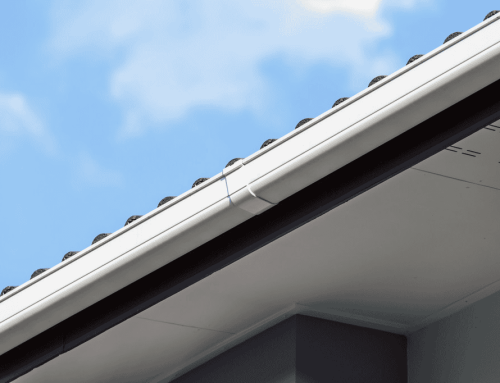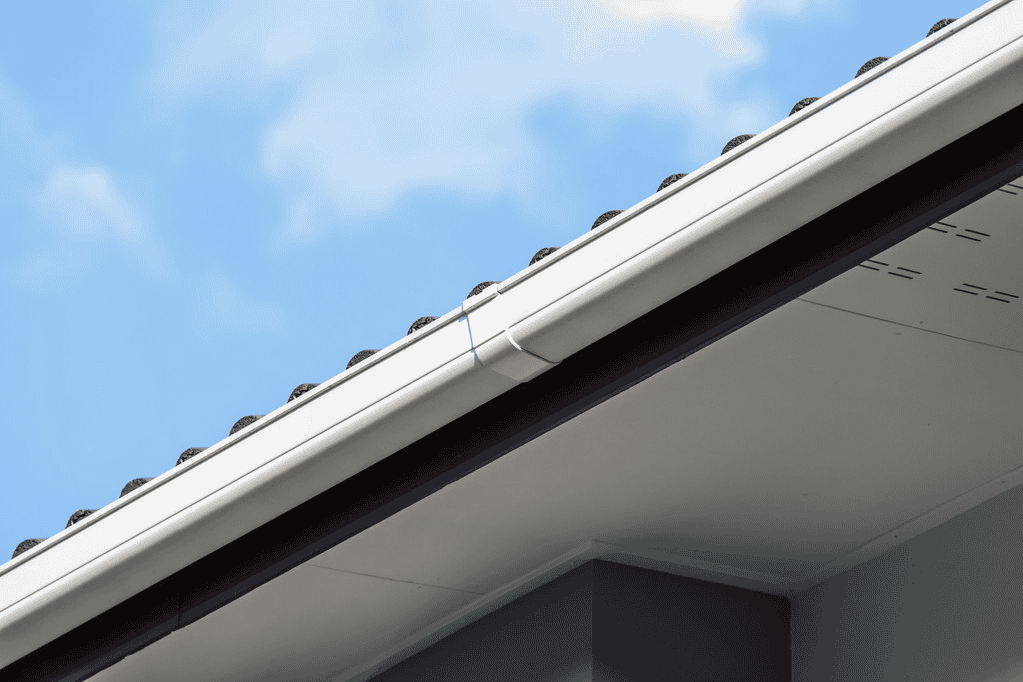
Eavestroughs and downspouts are two halves of one system: eavestroughs catch water running off the edge of your roof and carry it horizontally to a discharge point, while downspouts take that water vertically down the side of the house and release it away from the foundation. Neither half works without the other. A perfectly installed eavestrough that empties into a broken or badly placed downspout still puts water against your foundation, and an excellent downspout fed by a sagging, overflowing eavestrough never gets the chance to do its job.
Most homeowners only think about this system when something goes visibly wrong — water sheeting over the edge in a storm, or a damp patch appearing in the basement. Understanding how the two components hand water off to each other makes those problems much easier to spot early, and much cheaper to solve.
How much water are we actually talking about?
The volume surprises people. A roof with a 1,500-square-foot footprint sheds roughly 3,500 litres of water during a single 25 mm rainfall. Toronto receives somewhere in the range of 800 mm of rain in a typical year, which means that same roof is responsible for redirecting well over 100,000 litres annually.
All of it lands on a strip of aluminum a few inches wide, and all of it has to end up somewhere. Your eavestrough and downspout system is what decides whether that destination is your lawn or your basement.
What eavestroughs do
The eavestrough (often called a gutter) runs along the roof edge and performs three jobs at once:
- Catches runoff before it can fall directly onto soil, walkways, or landscaping
- Moves water horizontally along a deliberate slope toward the outlets
- Protects the roof edge, including fascia boards and soffits, from constant saturation
That middle job depends on slope. An eavestrough is not level — it is pitched slightly toward each outlet so gravity does the work. When that pitch is lost, water sits in the trough instead of moving, and standing water is the beginning of most eavestrough failures.
What downspouts do
The downspout is the vertical pipe that receives water from the eavestrough outlet and carries it to ground level. Its job sounds simple, but two details determine whether it succeeds:
- Capacity — the downspout has to accept water at least as fast as the eavestrough delivers it
- Discharge point — where the water actually lands, and whether the ground there slopes away from the house
A downspout that releases water at the base of the wall has technically moved it off the roof and done nothing useful. That water simply soaks into the soil directly against the foundation, which is exactly the situation the system exists to prevent. We cover this in more detail in Do Downspouts Really Protect Your Foundation?
The handoff point matters more than either component
Most failures happen where the two halves meet. The outlet — the hole in the bottom of the eavestrough that feeds the downspout — is a bottleneck by design, and it is the first place debris collects.
Two common mismatches:
Too few downspouts. A long run of eavestrough feeding a single downspout concentrates enormous volume at one point. During heavy rain the trough backs up and overflows well before the downspout is at fault.
Undersized outlets. Upgrading to a larger eavestrough without enlarging the outlets and downspouts creates a system that collects more water than it can discharge. If you are weighing a size change, our post on 6-inch versus 5-inch gutters explains how the two decisions have to be made together.
What Toronto weather does to the system
Local conditions put specific stresses on both halves:
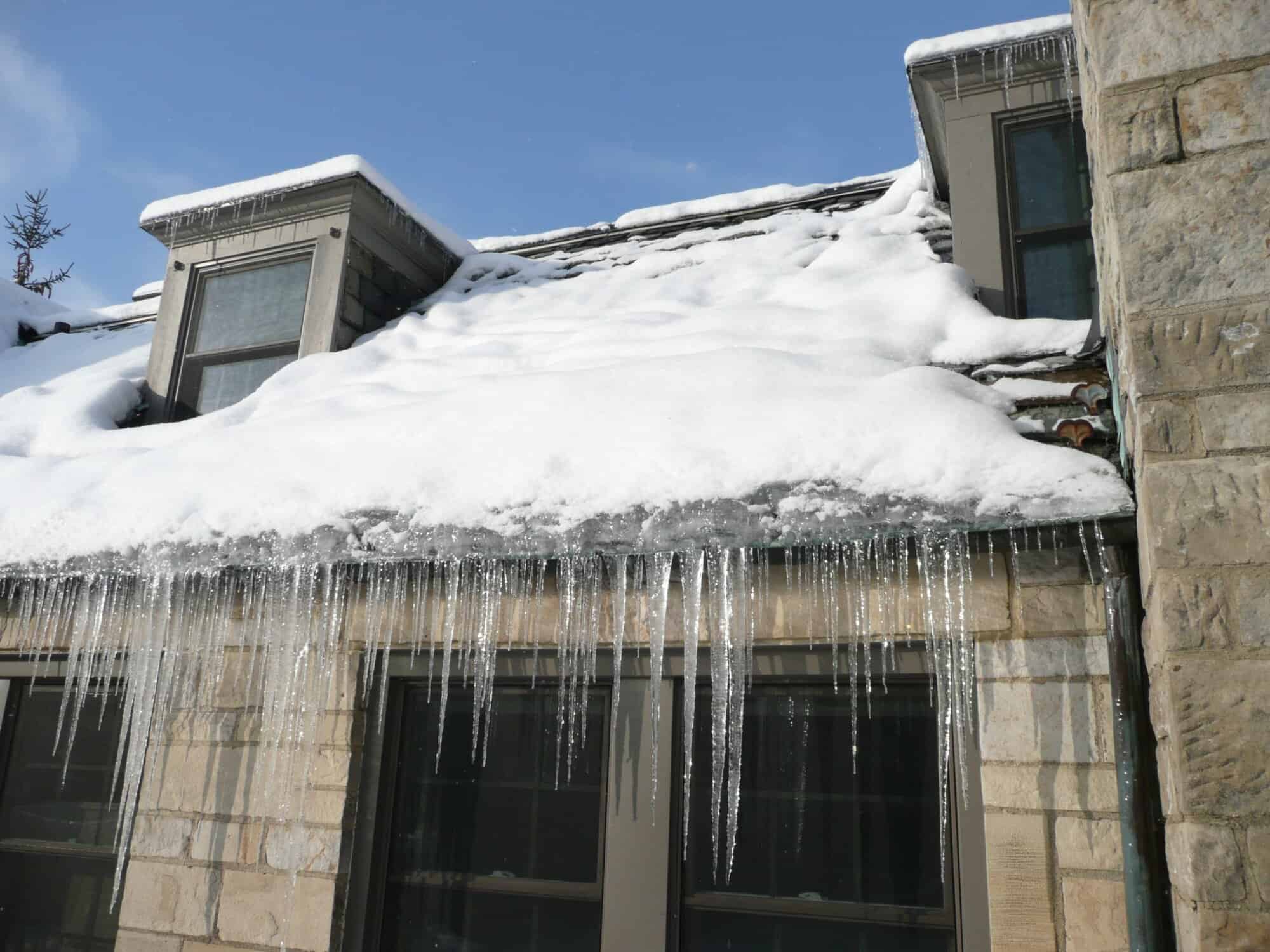
- Freeze-thaw cycling. Water trapped in a poorly sloped eavestrough freezes, expands, and gradually pulls fasteners loose. Repeat this dozens of times each winter and hardware fails.
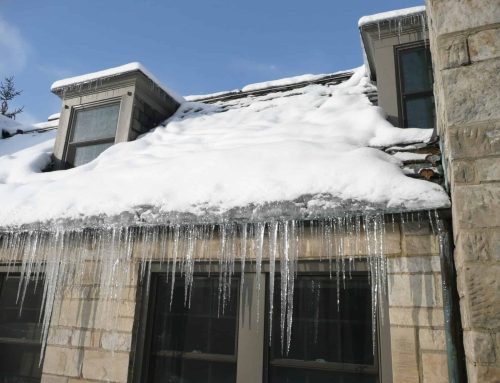
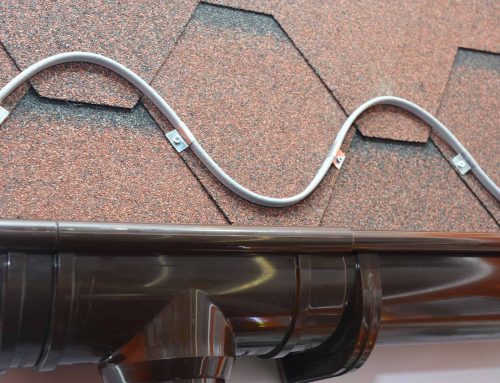
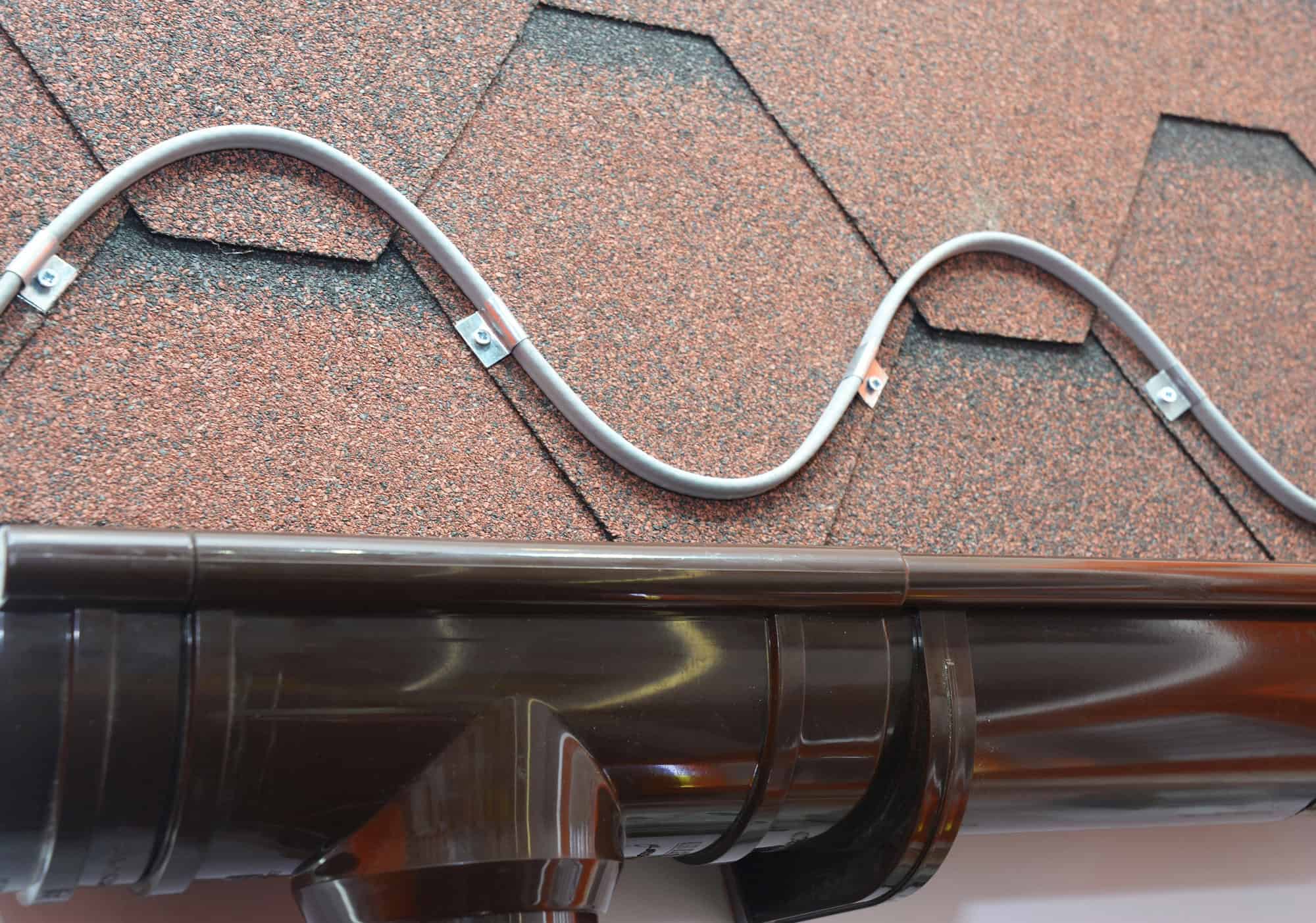
- Ice at the outlets. Downspouts freeze from the bottom up. Once the base is blocked, the whole column can fill with ice. Our page on heating cables covers one approach to this.
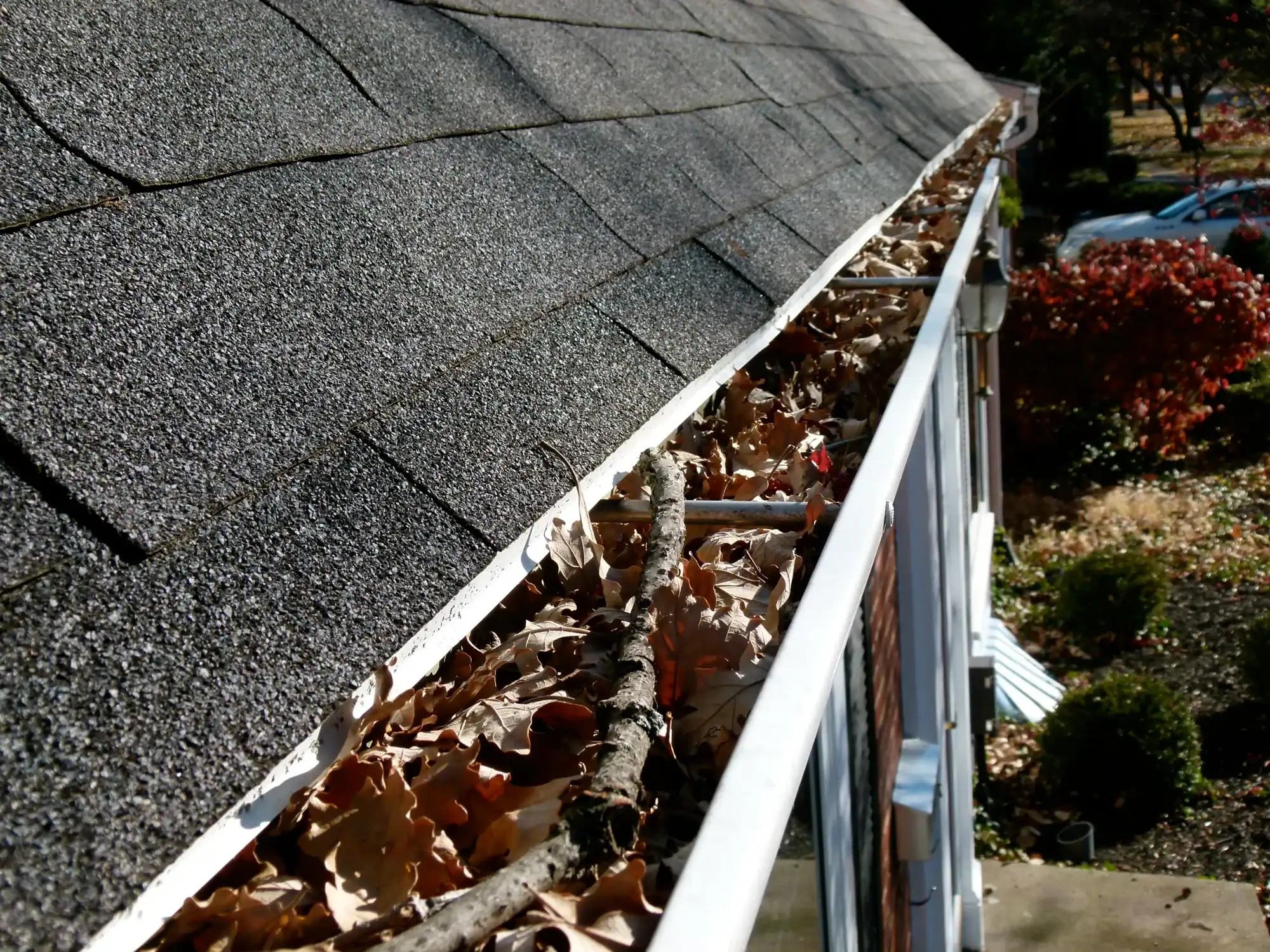
- Mature tree cover. Many established Toronto neighbourhoods have heavy leaf fall, and outlets clog faster than the troughs themselves.
- Intense summer storms. Short, heavy downpours test peak capacity in a way that steady rain never does.
Signs the handoff is failing
You can diagnose most of this from the ground during a rainfall:
- Water spilling over the front edge of the eavestrough while the downspout runs at a trickle
- Water dripping from behind the eavestrough, against the fascia
- Visible sag or standing water in the trough after rain stops
- Splashing or erosion at the base of a downspout
- Soil pulling away from the foundation, or pooling within a metre of the wall
If overflow is your main symptom, Is It Normal for Gutters to Overflow in Heavy Rain? walks through when overflow is expected and when it signals a real problem.
Keeping both halves working
Because the system only performs as well as its weakest component, maintenance has to cover both:
- Clear troughs and outlets seasonally, especially after leaf fall — see our eavestrough cleaning service
- Check slope by looking for standing water a few hours after rain
- Confirm every downspout discharges well clear of the foundation onto ground that slopes away
- Watch for loose fasteners and separating seams, which eavestrough repair can usually address before replacement is needed
- Prepare before winter, as outlined in our winter preparation guide
Frequently asked questions
Can I have too many downspouts?
Practically speaking, no. More downspouts means less volume through each one and less strain on the eavestrough. The limiting factors are appearance and finding sensible discharge points, not drainage performance.
Do eavestroughs and downspouts need to be the same material?
They do not have to be, but matching materials is generally better. Different metals in contact can corrode, and mismatched systems often mean the components were replaced at different times without the pairing being reassessed.
My eavestroughs are clean but still overflow. What is wrong?
Usually one of three things: not enough downspouts for the roof area, an outlet or downspout blocked further down where you cannot see it, or lost slope causing water to pool rather than travel.
How long should the system last?
Aluminum systems commonly last a couple of decades in Toronto conditions, though hardware and sealant fail sooner. Our post on eavestrough lifespan covers what shortens and extends it.
Treat it as one system
The most useful shift in thinking is to stop evaluating eavestroughs and downspouts separately. Water leaving your roof has to complete an entire journey — off the shingles, along the trough, down the pipe, and safely away from the foundation. A break anywhere along that path undoes everything upstream of it.
If you are unsure whether your system is completing that journey, we can assess both halves together. Learn more about our eavestrough and downspout services or get in touch.