When an eavestrough stops draining properly, the damage usually shows up on the fascia and soffit before it shows up anywhere else. Water backing up behind a blockage spills over the back edge of the trough rather than the front, which puts it directly against the fascia board the trough is fastened to. That board is wood on most Toronto homes, it is hidden behind aluminum capping, and by the time anyone notices, the fastenings holding your eavestroughs are screwed into something soft.
Front edge versus back edge
Most people picture an overflowing gutter as water pouring off the front in a sheet. That happens, and it is the obvious version.
The back edge is the one that causes the expensive damage. A trough sits tight against the fascia, and when water rises past the point where the trough meets the board, it runs down between the two. Nothing is visible from the ground. The water is now behind the aluminum capping, against bare wood, with no airflow to dry it.
This happens when the trough is blocked, when it has sagged so water pools at the wrong point, when it was hung without enough pitch, or when the roof edge discharges behind the trough instead of into it.
Why capping hides the problem rather than preventing it
Aluminum capping over fascia and soffit is standard across the GTA and it is genuinely useful — it keeps weather off the wood and removes repainting from your maintenance list.
What it also does is conceal rot. Water that gets behind capping has no easy route out and very little ventilation, so a board can go from sound to spongy over a few seasons while the exterior looks perfect. We have pulled capping off homes where the fascia behind it had essentially gone, and the owner had no idea because the house looked freshly finished.
The tell is almost never the wood itself. It is the eavestrough beginning to sag, because the fasteners no longer have anything solid to hold.
What happens to the soffit
Water that gets behind the fascia runs down and inward into the soffit, the underside of the roof overhang. Three things follow.
The soffit panels stain or sag. Visible from the ground if you look up, and the most common thing homeowners actually notice.
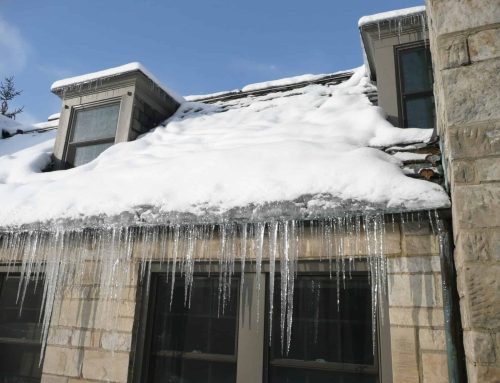
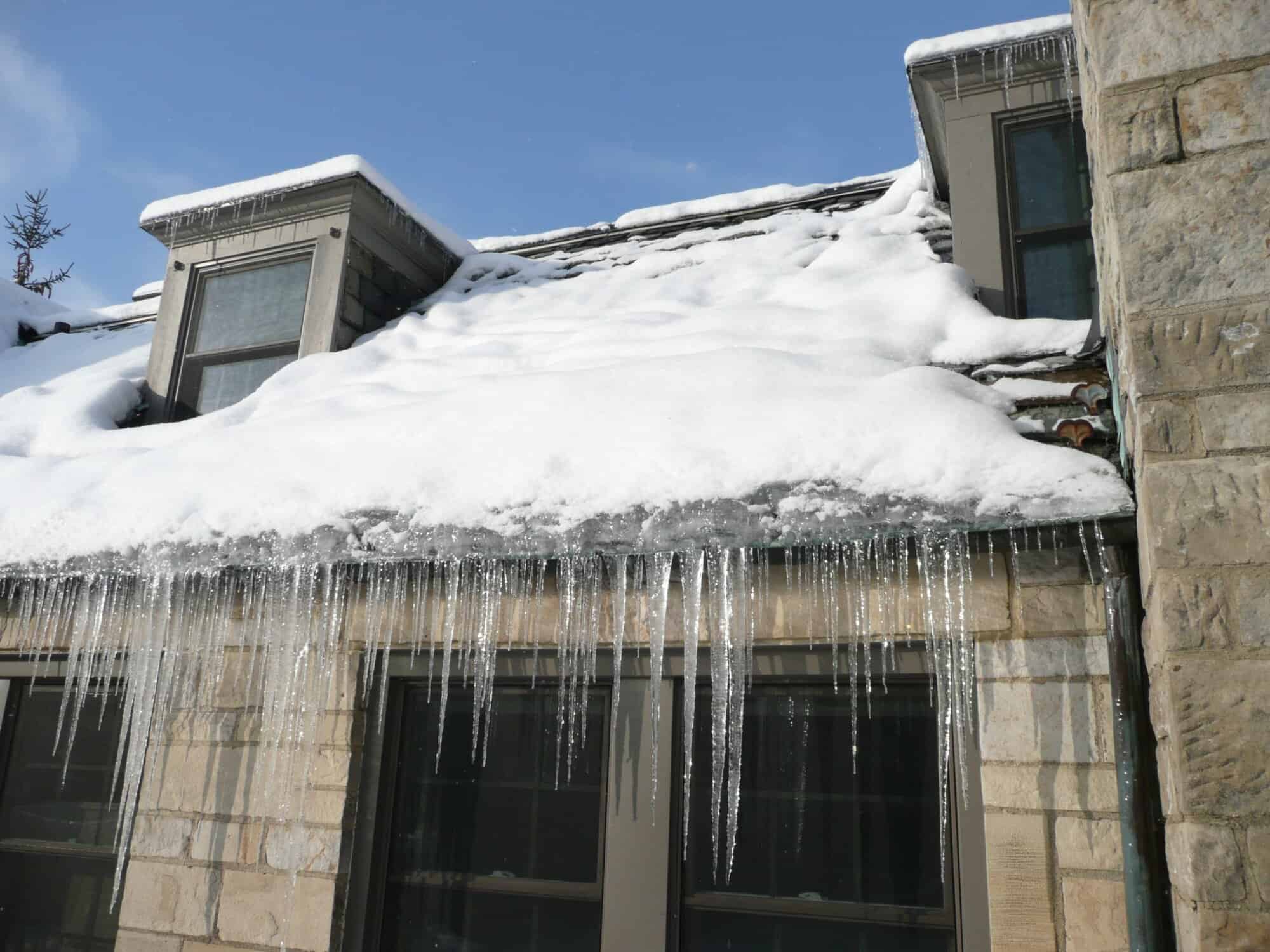
Ventilation gets compromised. Soffit vents are the intake for your attic. Wet, sagging or displaced soffit restricts that airflow, and an attic that cannot ventilate runs warmer. A warmer attic melts roof snow unevenly, which is how a drainage problem at the roof edge ends up contributing to ice dams.
Water reaches the wall assembly. Once it is past the soffit it can track into the top of the wall, which is a considerably larger repair than replacing a fascia board.
That ventilation link is the part worth understanding. Poor edge drainage does not just damage trim. It can feed the exact winter problem that makes the drainage worse.
What to look for
- Eavestroughs sagging or pulling away from the house, especially at one end of a run
- Fastener heads backing out or visible gaps between trough and fascia
- Stains, streaks or green growth on the fascia capping or the soffit below
- Soffit panels bowing, dropping or discoloured
- Peeling paint or swelling where fascia is still bare wood
- Water dripping from the soffit during rain, which means it is already well past the trough
- Birds or wasps getting into the soffit, which usually means a panel has come loose
The sagging trough is the one to act on. It is rarely the trough failing. It is usually what it is fastened to.
Why repairs sometimes do not hold
Re-fastening a sagging eavestrough into a fascia board that has started to go will hold for a while and then let go again, often taking more of the board with it. The same applies to re-hanging a trough without correcting the pitch that caused the pooling in the first place.
Doing it properly means establishing why water was sitting there, checking whether the fascia is still sound behind the capping, replacing any board that is not, and re-hanging with correct fall to the outlet. That is more work than a repair call, but a trough re-hung into rotten wood is money spent twice.
Frequently asked questions
How do I check the fascia if it is capped?
You largely cannot from the outside, which is the difficulty. The indirect signs are sagging troughs, loose fasteners, and capping that feels soft or moves when pressed. Confirming it means lifting a section of capping, which is a job for someone already up there.
Can fascia be replaced without removing the eavestrough?
Generally not. The trough fastens to the fascia, so the board cannot come off with the trough hanging on it. In practice the trough comes down, the board is replaced, and the trough goes back up — which is also the right moment to correct the pitch.
Is this covered by insurance?
Usually not. Rot from long-term water exposure is generally treated as a maintenance issue rather than sudden damage. Your insurer is the only reliable source on your own policy.
Does this get worse in winter?
Considerably. Ice in a trough adds weight to fastenings already holding into weakened wood, and the freeze-thaw cycle works at any water that has got into the board. A marginal fascia in November is frequently a failed one by March.
Where this fits
Soffit and fascia work is something we do, but it is almost always a consequence rather than a cause. The board rotted because water was not leaving the roof edge the way it should, and replacing it without fixing that just resets the clock.
Ontario Downspout Service is a licensed and insured residential drainage specialist serving Toronto and the GTA. If your eavestroughs are sagging or your soffit is staining, we can work out what is actually happening at the roof edge.