
The drainage problems homeowners most often miss are the slow, quiet ones: eavestroughs that overflow only in heavy rain, water running behind the trough instead of into it, downspouts that discharge a metre too short, buried downspout lines that have collapsed underground, soil that has settled back toward the house, and window wells that hold water. None of these look urgent on a dry afternoon. Each one does its damage gradually, over years of storms and spring thaws, and usually surfaces as a damp basement, a cracked foundation wall or rotted fascia. By that point, the repair is much bigger than the original problem.
Here are the most common ones we find on Toronto and GTA homes, why they go unnoticed, and what to look for.
Why drainage problems go unnoticed
Most drainage failures share a few traits that make them easy to overlook:
- They happen when you are indoors. Overflow and pooling occur during heavy rain, often at night.
- They happen out of sight. On the roof edge, underground, or behind finished basement walls.
- The damage is cumulative. One storm does very little. Hundreds of storms over a decade do a great deal.
- Symptoms appear far from the cause. A wet basement corner rarely announces that the real problem is a downspout or a trough above it.
1. Eavestrough overflow you never see
A trough can drain perfectly in a light rain and overflow badly in a downpour. Because heavy storms are exactly when nobody is outside, many homeowners have no idea it is happening.
What to look for: a trench or bare strip in the soil below the roof edge, mud splashed on the siding, and staining on the face of the trough. These point to clogs, an undersized outlet or a trough that has lost its slope. Our article How Eavestroughs and Downspouts Work Together explains how the system is meant to handle that volume.
2. Water running behind the eavestrough
When there is a gap between the roof edge and the trough, water can run down the back of the trough instead of into it. It soaks the fascia, rots the wood, and drips down the wall to the foundation.
What to look for: dark streaks or peeling paint on the fascia, water dripping behind the trough during rain, and soft or crumbling wood at the roof edge. See How Poor Roof Edge Drainage Can Damage Fascia and Soffits.
3. Downspouts that end too close to the house
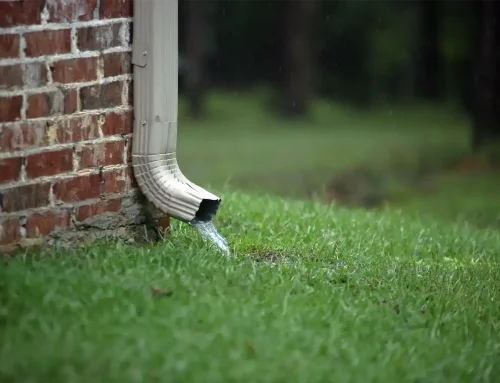
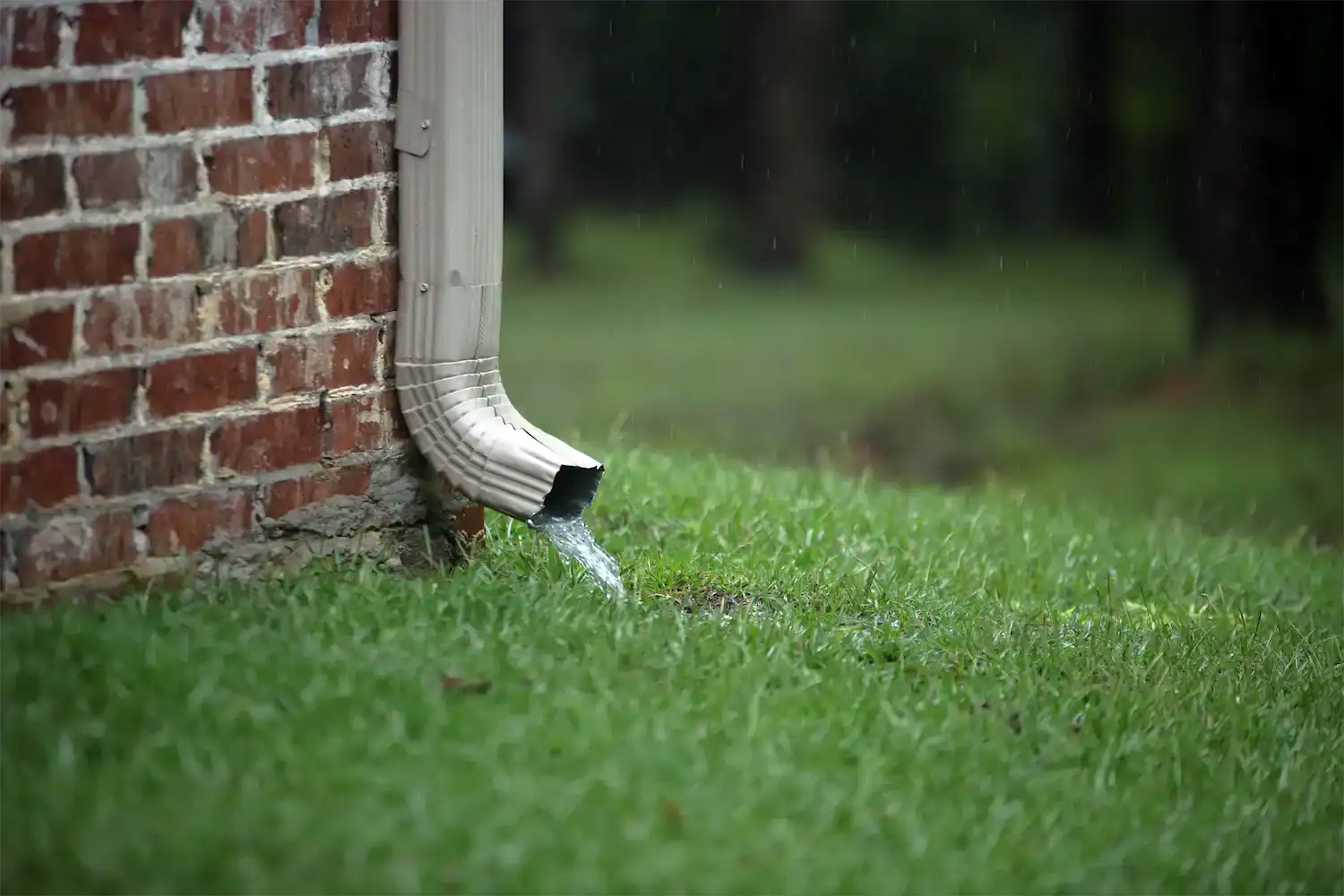
This is the most common drainage problem on the list, and the easiest to fix. A downspout releasing water at the base of the wall, or onto a splash block that only moves it a few centimetres, concentrates a large share of the roof’s runoff into the most vulnerable soil around the house.
What to look for: discharge points less than about 1.8 metres from the foundation, erosion at the outlet, and water flowing back toward the wall. Our guide Why Your Downspout Is Dumping Water Too Close to Your House covers this in detail.
4. Buried downspout lines that have failed
On many older Toronto homes, downspouts run into a pipe in the ground. That pipe may be decades-old clay, and it may have cracked, separated at the joints or filled with roots. When it fails, roof water leaks out underground, right beside the foundation, with no sign at the surface.
In Toronto, downspouts that still connect to the sewer system are also covered by the City’s Mandatory Downspout Disconnection program, which only allows exemptions through a formal application to the City.
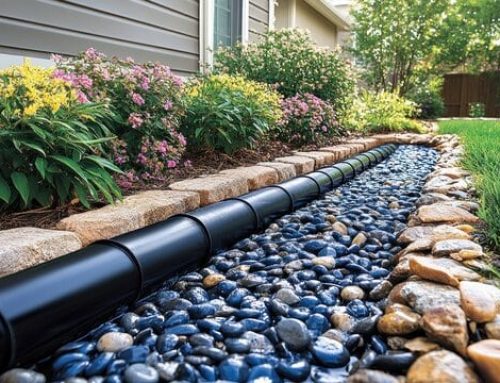
What to look for: downspouts that disappear into the ground, water backing up out of the top of the pipe during heavy rain, and basement dampness concentrated near those spots. Our article Should Downspouts Be Buried or Extended Above Ground? explains the options.
5. Soil that has settled back toward the house
The backfilled soil around a foundation slowly compacts over the years. A slope that once ran away from the house gradually flattens and then reverses.
What to look for: a shallow dip along the foundation, puddles that form against the wall, and garden beds that stay wet. Laying a level on a straight board running out from the wall is a quick way to check.
6. Partly blocked downspouts
A fully blocked downspout is obvious because the trough overflows. A partly blocked one is not. It drains well enough in light rain and backs up in heavy storms, sending water over the trough edge only when the volume is highest.
What to look for: a downspout that runs at a trickle while the trough above it is full, and rattling or bulging at the elbows. Leaves, shingle grit and nests are common culprits, as explained in How Leaves, Ice, and Debris Affect Roof Water Drainage.
7. Window wells that collect water
Window wells sit below grade, so they naturally collect anything that runs toward them. Leaves block the drain at the bottom, and a downspout or overflowing trough above can fill one in minutes.
What to look for: standing water or debris in the well, staining on the window frame, and dampness on the interior wall below the window.
8. Ice that forms in the same place every winter
Icicles and ice build-up in the same spot year after year are a drainage warning, not just a winter nuisance. They show where water is escaping the system, and the same spot often overflows in summer rain as well.
What to look for: repeating icicles, ice sheets spreading from downspout outlets, and ice on the fascia or siding. See Why Does My Downspout Freeze in Winter?
9. Hard surfaces sloping the wrong way
Driveways, walkways and patios that have settled can tilt back toward the house and send a sheet of water straight to the foundation, often into the joint where the slab meets the wall.
What to look for: water running toward the house across paving during rain, and gaps or staining where the slab meets the foundation.
The simplest way to catch them early
Two habits catch most of these problems before they cause damage. First, walk around the house during a steady rain once or twice a year and watch where the water goes. Second, do a seasonal check in spring and fall, using our Seasonal Drainage Maintenance Checklist for Toronto Homeowners.
Frequently asked questions
What are the earliest signs of a drainage problem?
Erosion below the roof edge, puddles near the foundation after rain, staining on fascia or siding, and white chalky deposits on basement walls. All of these usually appear well before an actual leak.
Can drainage problems cause foundation damage?
Yes. Repeated saturation of the soil against the foundation increases pressure on the walls, contributes to cracking, and causes frost heave when the wet soil freezes. Poor drainage is one of the most common contributing factors to basement water problems.
Are drainage problems covered by home insurance?
Coverage varies widely between policies. Many policies treat gradual damage and maintenance issues differently from sudden events, and water-related coverage often depends on optional endorsements. The only reliable answer comes from reading your policy and speaking with your insurer.
How often should drainage be checked?
At least twice a year, in spring and fall, plus a quick look after any major storm. Homes with mature trees nearby usually need more frequent eavestrough cleaning.
Small problems, caught early
Nearly every serious drainage repair we see began as one of the small problems above. Each was simple to correct at the start and far more disruptive to repair once it had been left. Knowing what to look for is most of the battle.
Ontario Downspout Service is a licensed and insured residential drainage specialist serving Toronto and the GTA, and a Best of HomeStars winner for more than ten years. If you have spotted any of these signs around your home, get in touch and we will help you find and fix the source.