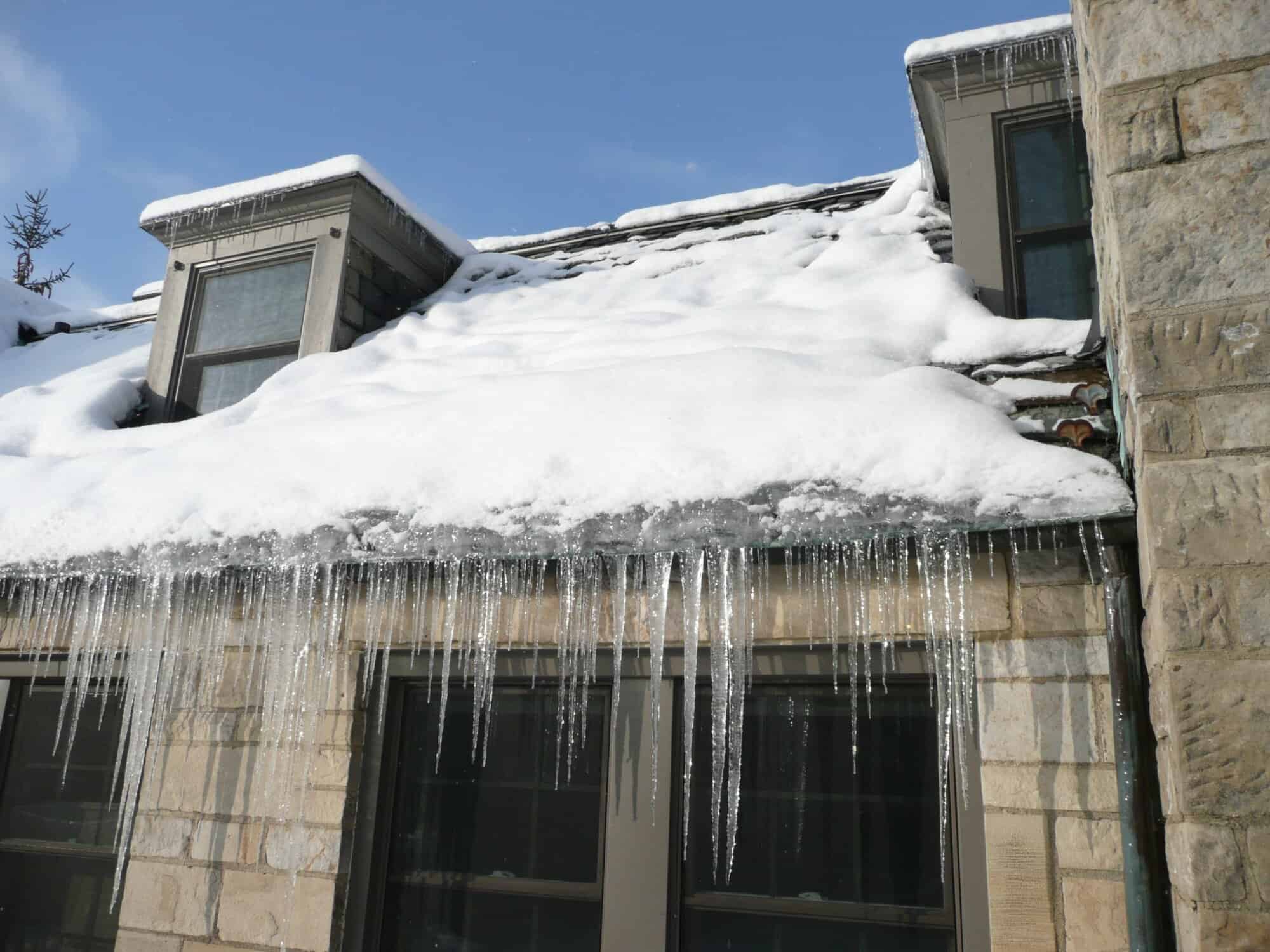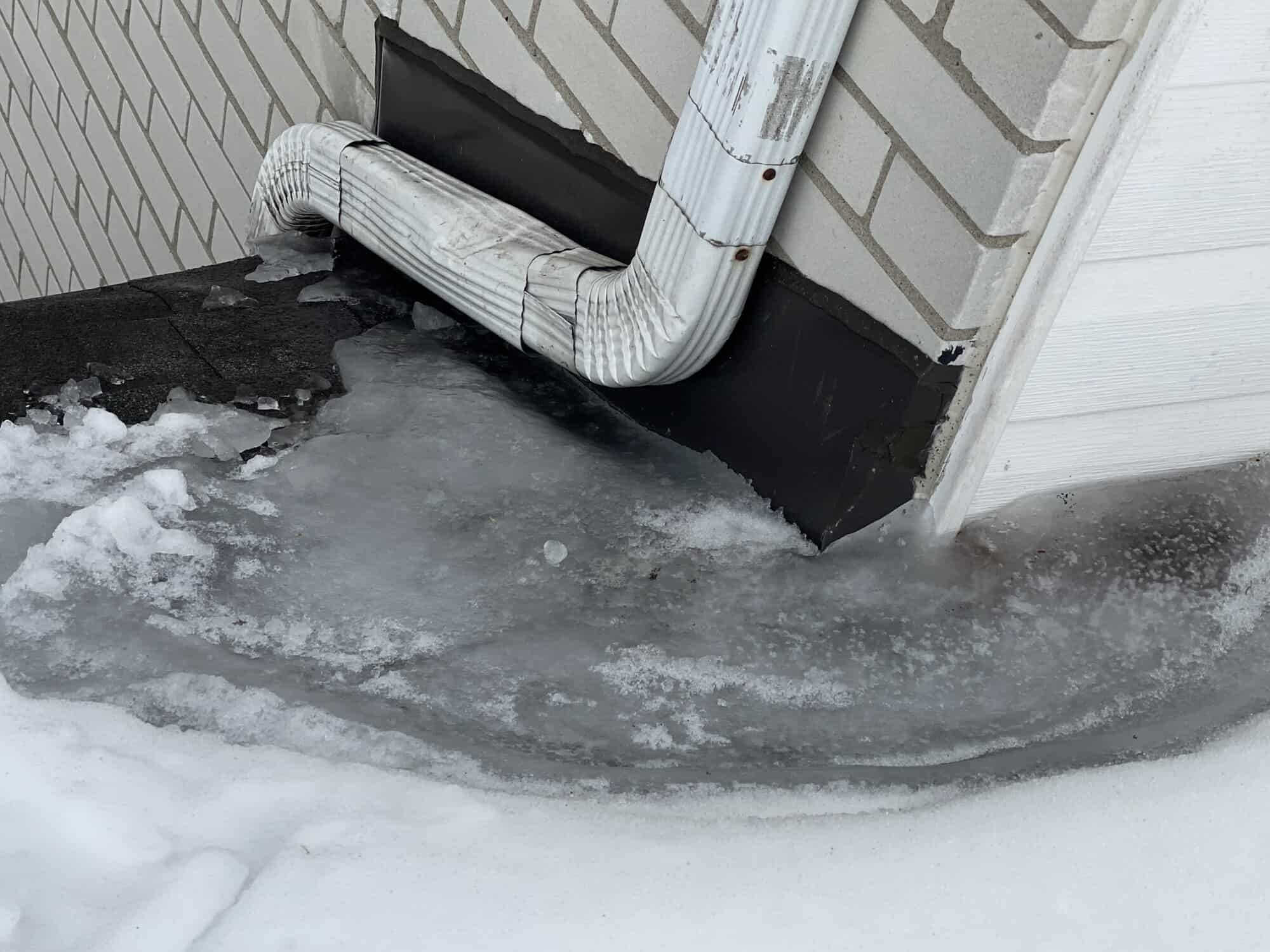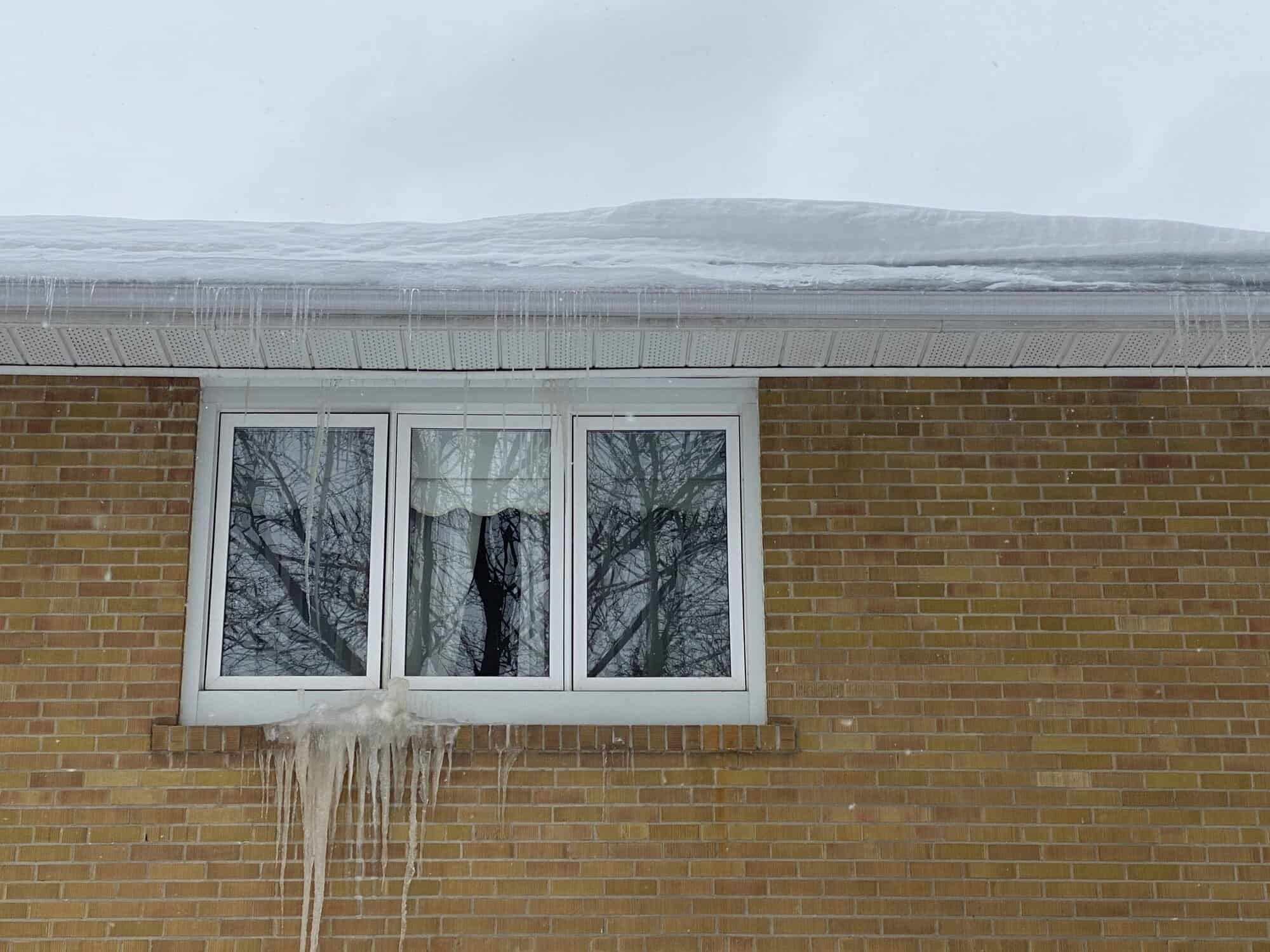
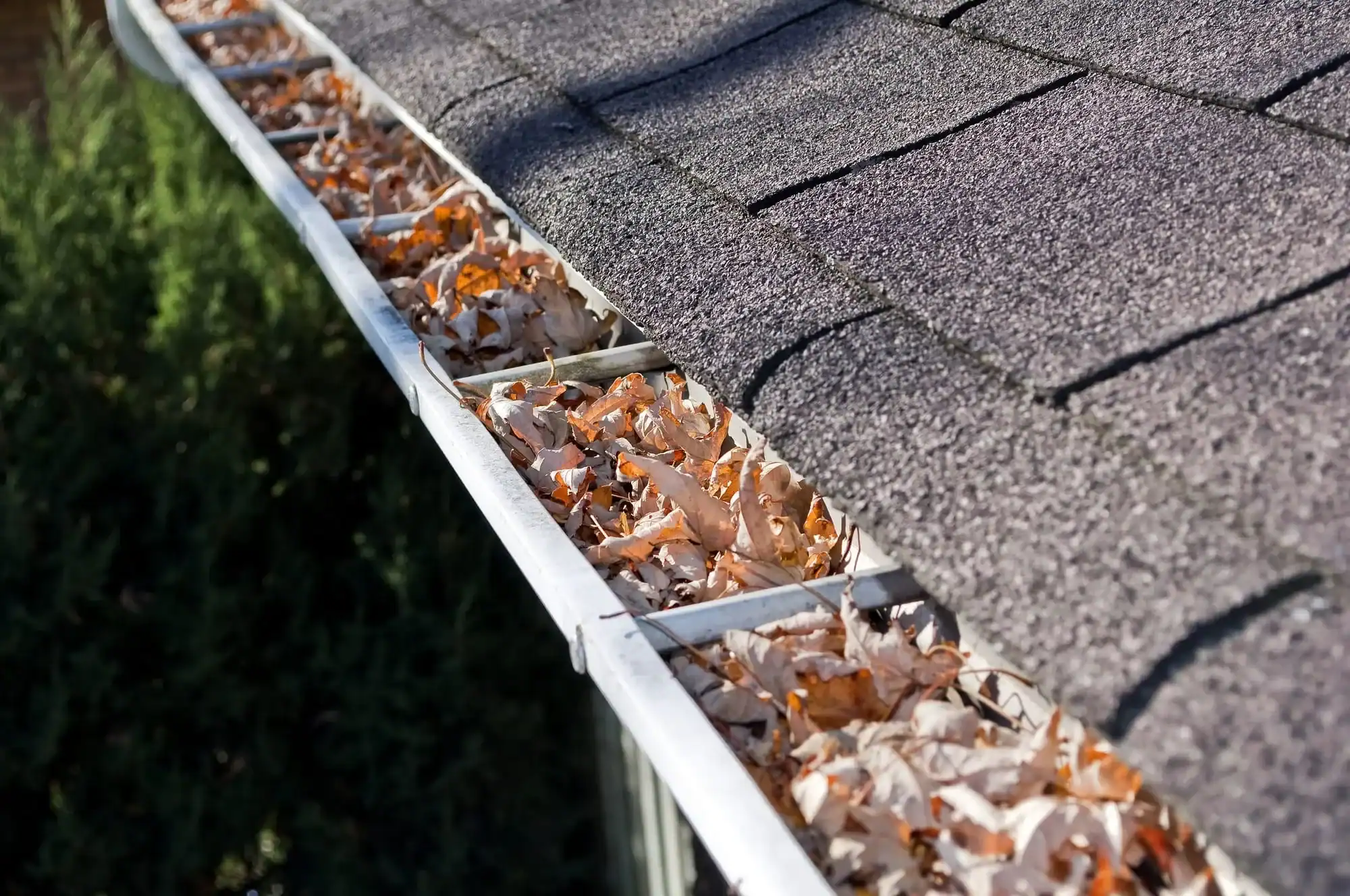
Debris does not block an eavestrough evenly. It collects at the outlets, where the downspout connects, because that is where the water is trying to go and where the channel narrows. A trough can look reasonably clear along its length and still be effectively sealed at the one point that matters. In October that means an overflow during heavy rain. By January the same blockage is holding water that freezes, and the problem stops being about leaves.
How debris actually moves through the system
Leaves landing in a trough do not stay where they fall. Rain pushes them along toward the low point, which is the outlet. There they pile against the opening and form a mat, and the mat catches everything that follows: seeds, shingle grit, twigs, roof moss.
The grit matters more than people expect. Asphalt shingles shed granules constantly, and that sand-like material settles into the leaf mat and packs it solid. A loose pile of leaves lets some water through. A leaf mat bound with shingle grit does not.
Some debris also makes it into the downspout itself, where it wedges at the first bend. That blockage is invisible from the ground and from the roof.
The autumn sequence in Toronto
Our leaf fall runs late. Through most of the GTA the heaviest drop is late October into November, and mature maples hold on well past the first frost. That timing is why eavestroughs cleaned in September are full again before the first freeze.
What follows is a fairly predictable progression:
- Late autumn. Debris collects at outlets. Heavy rain overflows the front edge of the trough rather than draining.
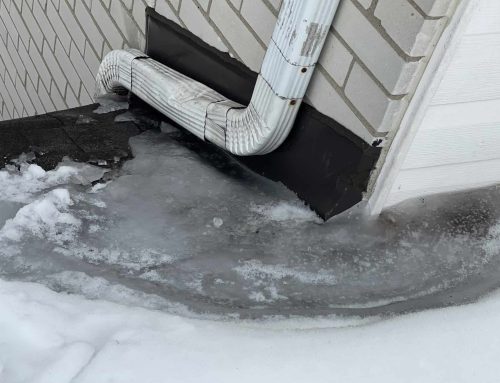
- First freeze. The water held behind the blockage freezes. The debris mat is now locked in ice.
- Through winter. Each thaw adds meltwater that cannot drain, and each freeze adds to the ice. The trough fills.
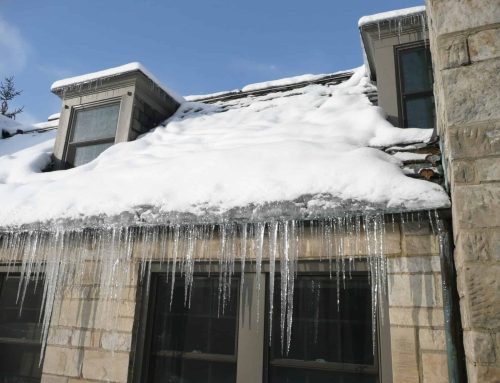
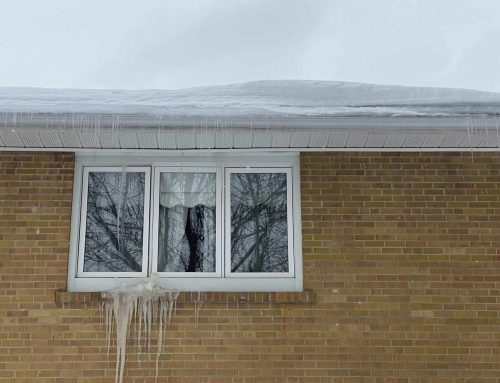
- Deep winter. A full trough cannot accept roof meltwater, so that water sits at the roof edge instead and freezes there. This is where an ice dam starts.
The leaves are the first link in that chain, and they are the easiest one to break.
What a blocked system does to the house
Water goes over the front edge. It lands against the foundation in a concentrated stream rather than being carried away, which is how roof water ends up in a basement.
Water goes over the back edge. Less obvious and more damaging. Water backing up behind a blockage can spill between the trough and the fascia, soaking the fascia board and running into the soffit.
The trough carries weight it was not designed for. Wet debris is heavy. Debris plus ice is considerably heavier. Fasteners pull, the pitch changes, and the trough stops draining even once it is cleared.
Standing water accelerates corrosion. A trough that drains fully is wet briefly. One holding a reservoir of water and rotting leaves is wet permanently, and seams fail sooner.
How to tell your system is blocked
Nearly all of this is visible from the ground.
- Water spilling over the edge during rain rather than running to the downspout. Fifteen minutes outside during a downpour is the best diagnostic there is.
- Plants growing in the trough. Seedlings mean soil, and soil means years of accumulation.
- Staining or streaking down the siding below a particular section.
- A downspout that stays dry while it rains. That one is conclusive and almost nobody notices it.
- Sagging or a wavy line along what should be a straight run.
- Debris visible above the trough lip from the ground.
Why guards help but do not finish the job
Gutter guards keep most leaves out, and on a property surrounded by mature trees they meaningfully extend the interval between cleanings.
What they do not stop is fine material. Shingle grit, seeds, pollen and roof moss pass through most designs and settle in the trough, and over a few years that builds into the same packed sediment at the outlet. Some guard styles also let a mat of wet leaves sit on top, which sheds water straight over the edge, and that mat can hold ice in winter.
Guards change the job from clearing handfuls of leaves to checking and flushing a system that looks clean. They do not remove it.
The timing that actually works
Clean once the leaves are down, not before. In most of Toronto and the GTA that means November rather than September or early October.
When you do it, the outlets matter more than the length of the trough. Scooping leaves out of the middle of a run and leaving a packed outlet achieves very little. Run a hose in at the top of each downspout afterwards and confirm full flow at the bottom, because that is the only way to know the path is actually clear.
If you have mature trees directly over the house, a second clearing in spring catches seeds and blossoms, which block outlets just as effectively and almost nobody thinks to check for.
Frequently asked questions
Can I just flush it out with a hose from the ground?
A hose will clear light debris from a downspout that is only partly blocked. It will not shift a packed mat at an outlet, and spraying water into a blocked trough just fills it. Flushing is a way to verify the system is clear, not a substitute for clearing it.
Is it a problem if leaves sit in the trough all winter?
Yes, more than people assume. The debris holds water that freezes and thaws repeatedly, which adds weight, works at the seams and keeps the trough from accepting meltwater. A trough full of frozen leaf matter is a common starting point for ice at the roof edge.
What about the leaves on the roof itself?
Debris sitting in valleys and behind chimneys holds moisture against the roof surface and eventually washes down into the trough anyway. Clearing valleys is worth doing when the roof is accessible and safe, which on most Toronto homes means from a ladder at the edge rather than from on the roof.
How do I know if the underground drain is blocked too?
If water pools at the bottom of a downspout that connects into the ground, or backs up out of the connection during heavy rain, the buried line is not clearing. Those silt up gradually and the failure is usually invisible until a storm.
Getting ahead of the sequence
The chain from autumn leaves to a winter leak is a long one, and it can be broken at the first link for very little effort compared with what the last link costs.
Ontario Downspout Service is a licensed and insured residential drainage specialist serving Toronto and the GTA. If you would rather have the whole path checked and cleared properly before the freeze, that is what we do.