If you had roofing work done and the ice came back the next winter, the roof was probably never the whole problem. Ice dams are caused by three things working together: heat escaping into the attic, snow melting unevenly because of it, and meltwater having nowhere to drain once it reaches the roof edge. New shingles address none of those. This is one of the most common calls we get, and the homeowner is usually surprised, because they were told the roof was the issue.
What a roof repair actually fixes
Replacing shingles or repairing a damaged section restores the roof’s ability to shed water that runs across it. That matters, and if your old roof was leaking in the rain, it was the right work.
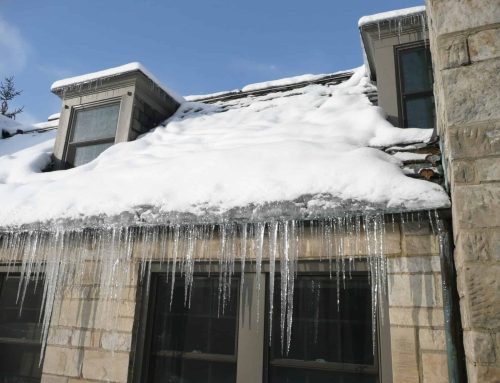
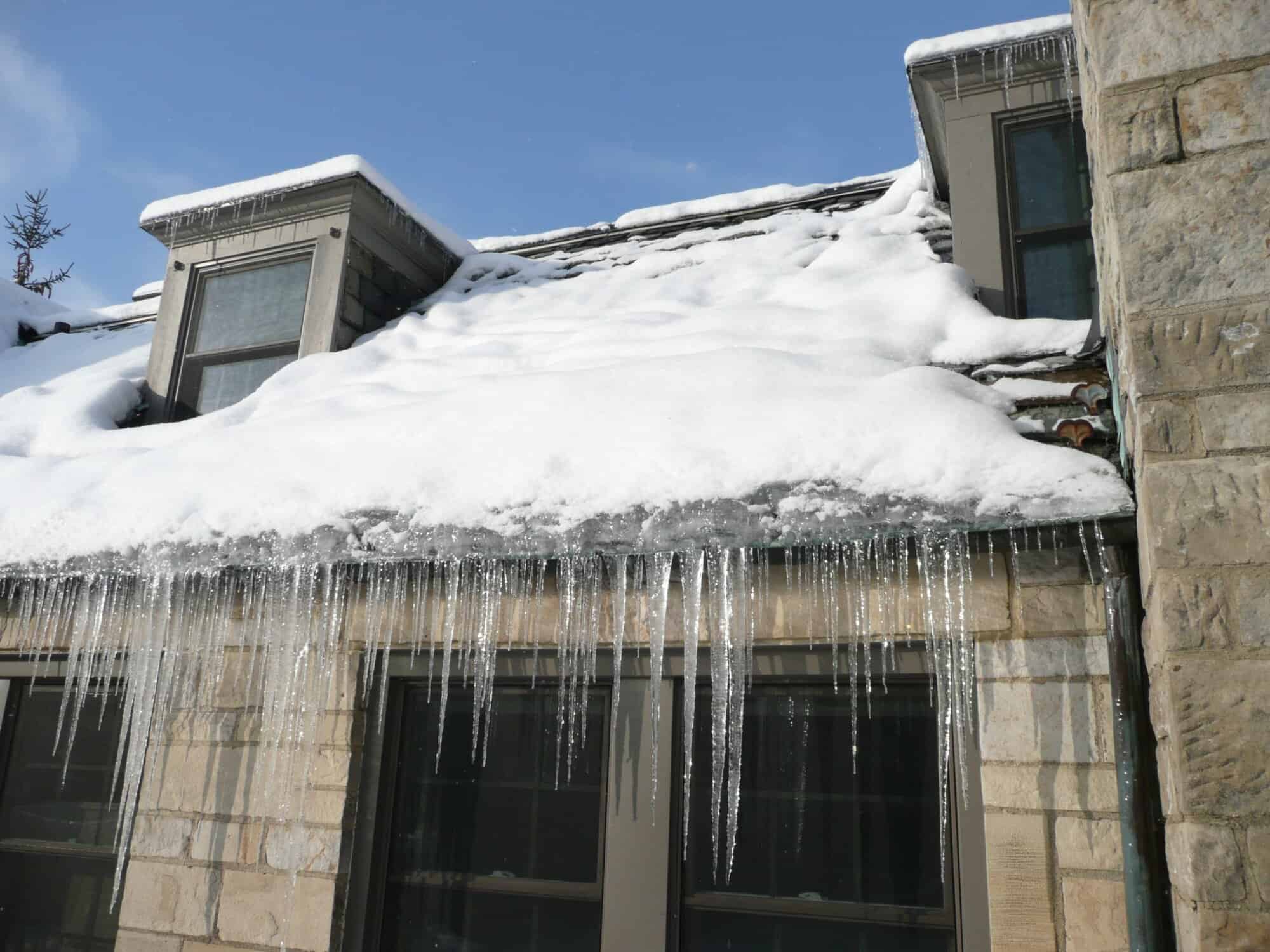
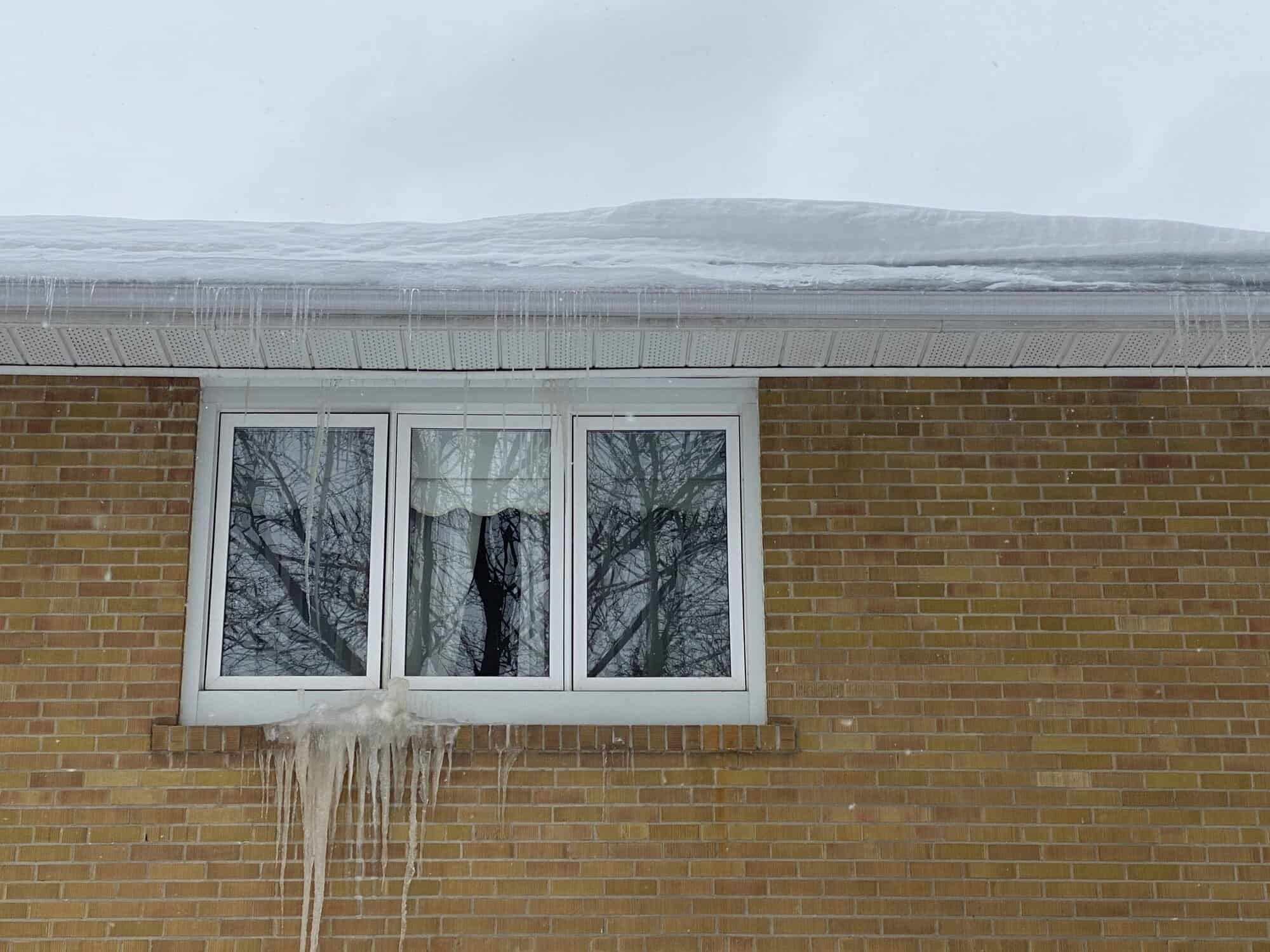
But an ice dam does not defeat your roof by running across it. It defeats your roof by sitting on it. Water pools behind a ridge of ice, works sideways and upward under the shingle edges, and reaches the deck from below. Shingles are designed to shed water flowing downhill, not to hold back standing water pushing uphill.
That is why a roof can be in excellent condition and still leak during a thaw.
The three causes, and which one your roofer addressed
1. Heat escaping into the attic
Warm air from the living space rises into the attic and heats the underside of the roof deck. Snow on that warm section melts even when it is below freezing outside. Gaps around light fixtures, bathroom fans venting into the attic instead of outside, attic hatches without weatherstripping, and thin or compressed insulation all contribute.
Re-shingling does not change any of this. Unless the work included air sealing or adding insulation, the heat is still going up there.
2. Ventilation that cannot clear the heat
A properly ventilated attic stays close to outdoor temperature because cold air moves through it continuously. Blocked soffit vents are the usual culprit, often blocked by the insulation someone added to fix the first problem. Insulation pushed into the eaves without baffles seals the intake, and the ventilation stops working.
Roofers frequently add or replace roof vents during a re-shingle. That helps with exhaust, but exhaust without intake does very little.
3. Drainage that cannot clear the water
This is the one almost nobody looks at, and it is our specialty, so it is where we see the failures.
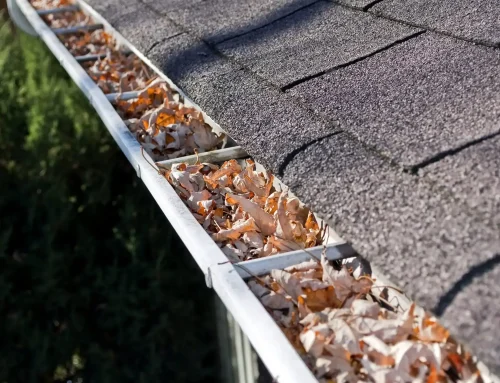
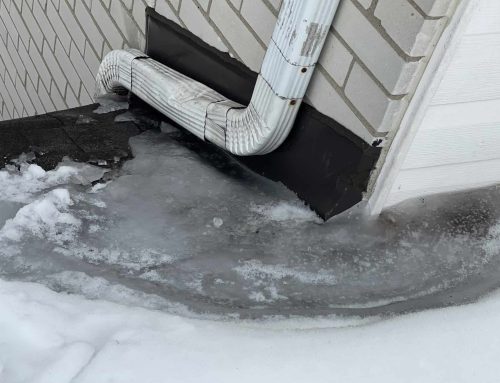
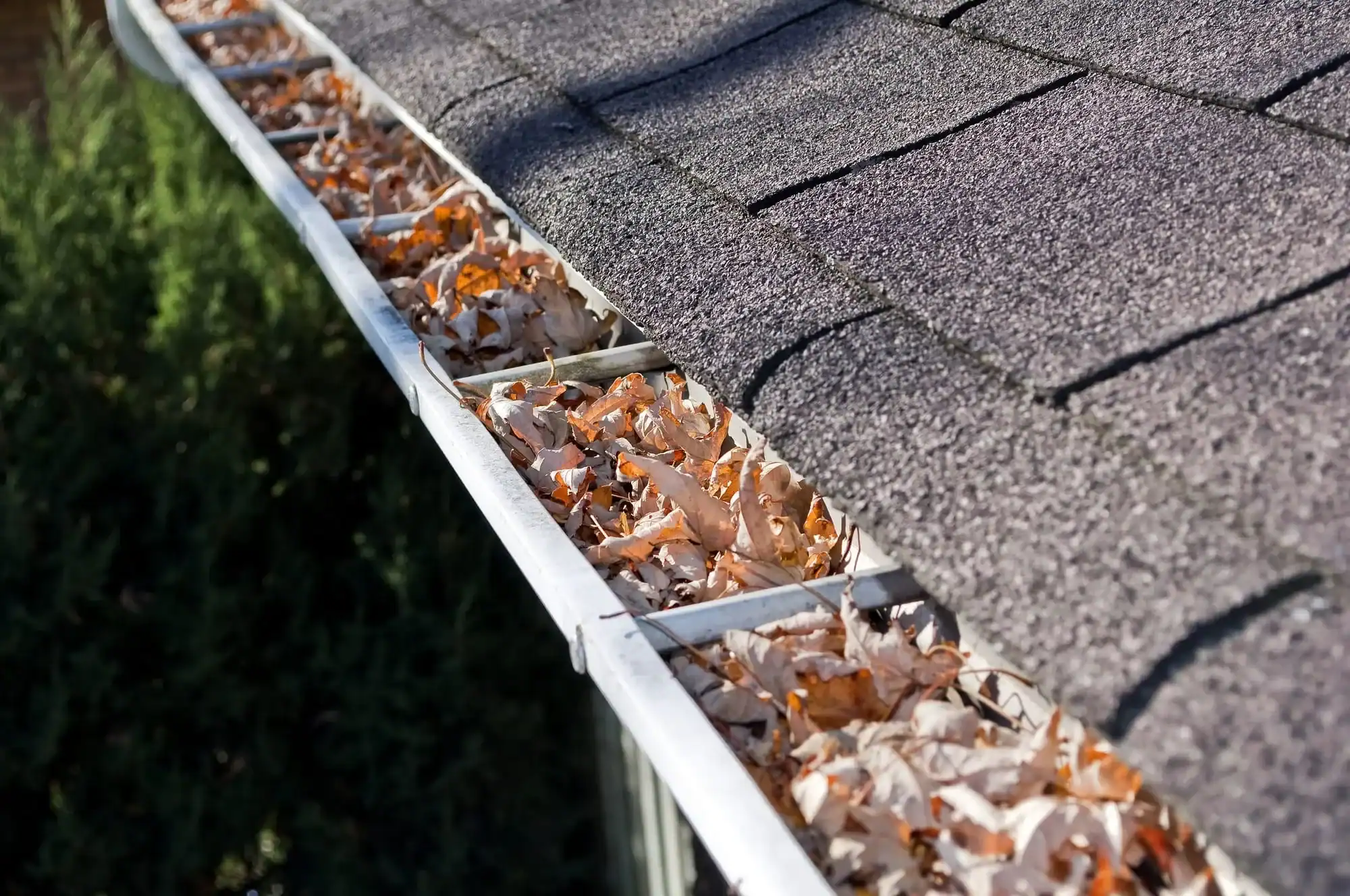
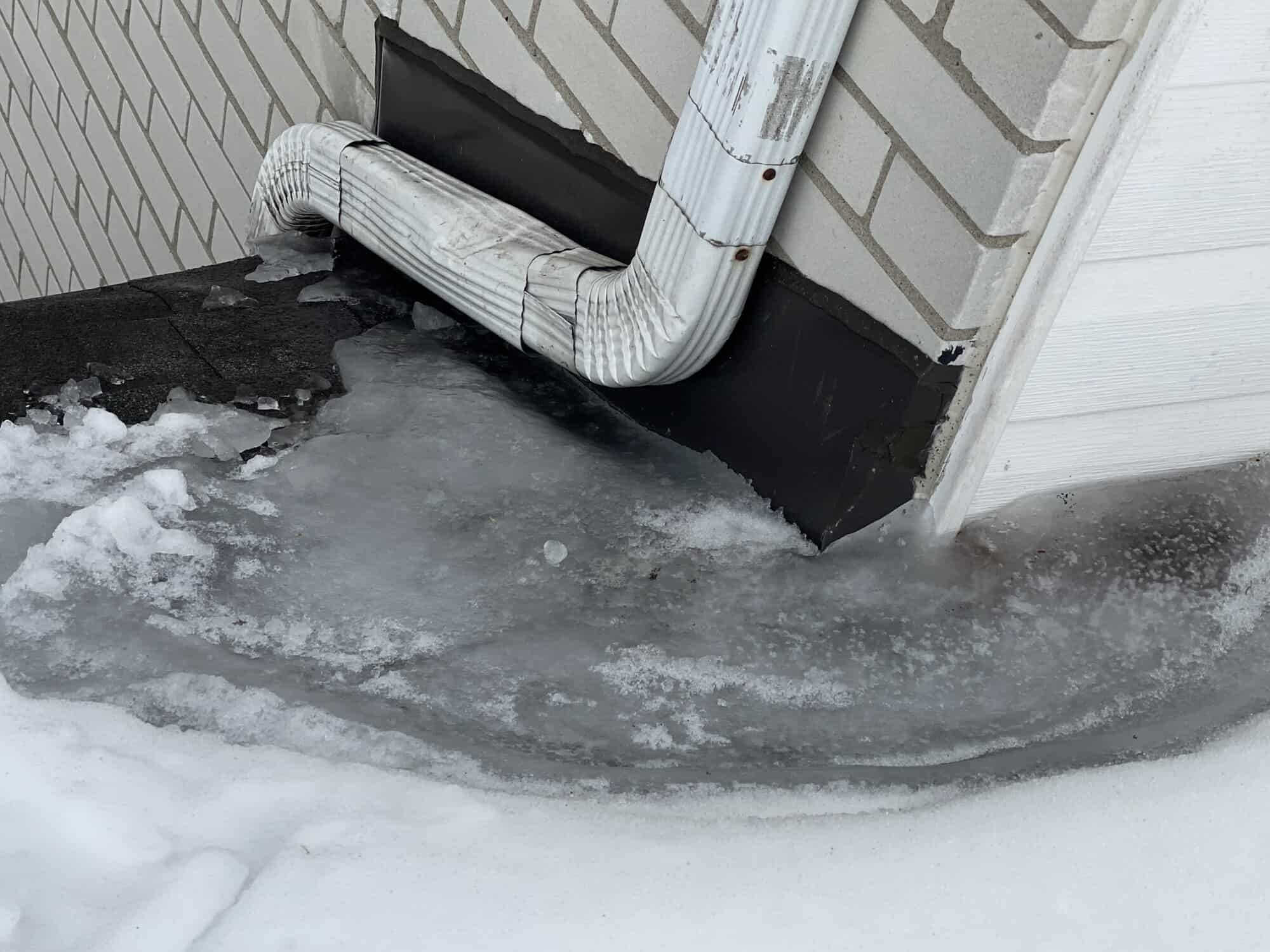
Even with a cold roof and good ventilation, some melting happens on every sunny winter day. That water has to leave. If your eavestroughs still hold leaves from autumn, if the trough has sagged so water pools instead of running to the outlet, or if the downspout is frozen at the bottom, the meltwater cannot get away. It sits at the roof edge and freezes there.
A brand new roof drains into the same eavestroughs and downspouts you had before. If those were the bottleneck, they still are.
How to work out which one is yours
- Ice forms in the same spot every year — points to a consistent warm area below, usually heat loss or a ventilation blockage in that section
- Ice forms across the whole roof edge — more likely general attic heat or drainage that cannot keep up anywhere
- The eavestrough fills with ice before the roof edge does — drainage first. The trough or downspout is not clearing.
- Bare patches on the upper roof while the edge stays iced — classic heat loss signature
- Frost on the underside of the roof sheathing in the attic — worth a look on a cold day; it means warm moist air is reaching the deck
- Ice at a valley, dormer or where an addition meets the main roof — geometry concentrating both snow and meltwater, often needing a drainage solution rather than a roofing one
Why the roof gets blamed
When water comes through a ceiling, the roof is the obvious suspect, and a roofer looking at a roof will usually find something on it worth doing. None of that is dishonest. It is just that ice dam leaks are a symptom of a system problem, and a roofer is looking at one part of the system.
The question that sorts it out is simple: did the leak appear during rain, or during a thaw? Rain points at the roof. A thaw points at ice, and ice points at heat and drainage.
What actually stops it
In most Toronto homes it is a combination, done in this order:
- Reduce the heat reaching the roof deck. Air sealing first, then insulation. Air sealing is usually the cheaper and more effective of the two.
- Restore intake ventilation. Clear the soffit vents and install baffles so insulation cannot block them again.
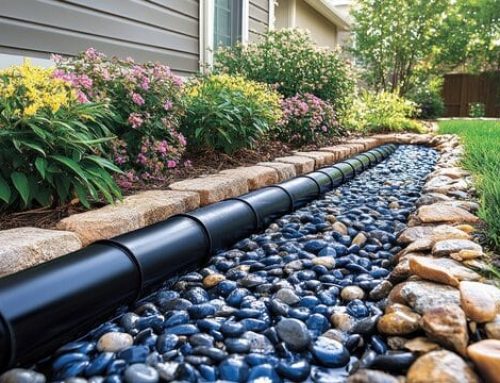
- Make sure meltwater can leave. Clear eavestroughs, correct sagging sections so water runs to the outlet, and make sure downspouts discharge properly rather than into a frozen elbow.
- Add de-icing cable where the geometry cannot be fixed. Some rooflines will always concentrate ice. Valleys, dormers, low-slope sections and north-facing edges on century homes are common examples. Cable running the full drainage path keeps a channel open through the winter.
The last one is a management tool rather than a cure, and it should be a deliberate choice after the first three have been considered, not a substitute for them.
Frequently asked questions
Should ice and water shield have prevented this?
Ice and water membrane at the roof edge is a backup layer, and it does protect the deck when water backs up. It is genuinely valuable and worth having. But it protects a limited width from the edge, and once water gets past that, it is into the deck. It also does nothing to stop the ice forming in the first place, and it will not help if the water is overflowing an iced-up eavestrough and running down your wall.
Is my roofer responsible if ice dams come back?
Generally not, unless they specifically undertook to solve the ice dam problem. Replacing a roof is not the same as fixing the conditions causing ice, and most roofing work is quoted for the roof covering.
Can ice dams damage a new roof?
Yes. Ice does not care how old the shingles are. Standing water backing up under shingle edges, and the weight of ice pulling on eavestroughs and fascia, cause the same problems on a new roof as an old one.
Do I need to fix the attic before winter, or can drainage buy me time?
Clearing the drainage path is fast, and it does help, because meltwater that leaves the system cannot freeze at the edge. It will not overcome a badly leaking attic on its own. If you are close to winter, deal with the drainage now and plan the attic work for spring when it can be done properly.
Getting a straight answer about your home
The homes where this repeats year after year are almost always the ones where only one of the three causes was addressed.
Ontario Downspout Service is a licensed and insured residential drainage specialist serving Toronto and the GTA. We look at the drainage side of it honestly, including telling you when the answer is in your attic rather than your eavestroughs. If ice has come back after roofing work, we can help you find out why.