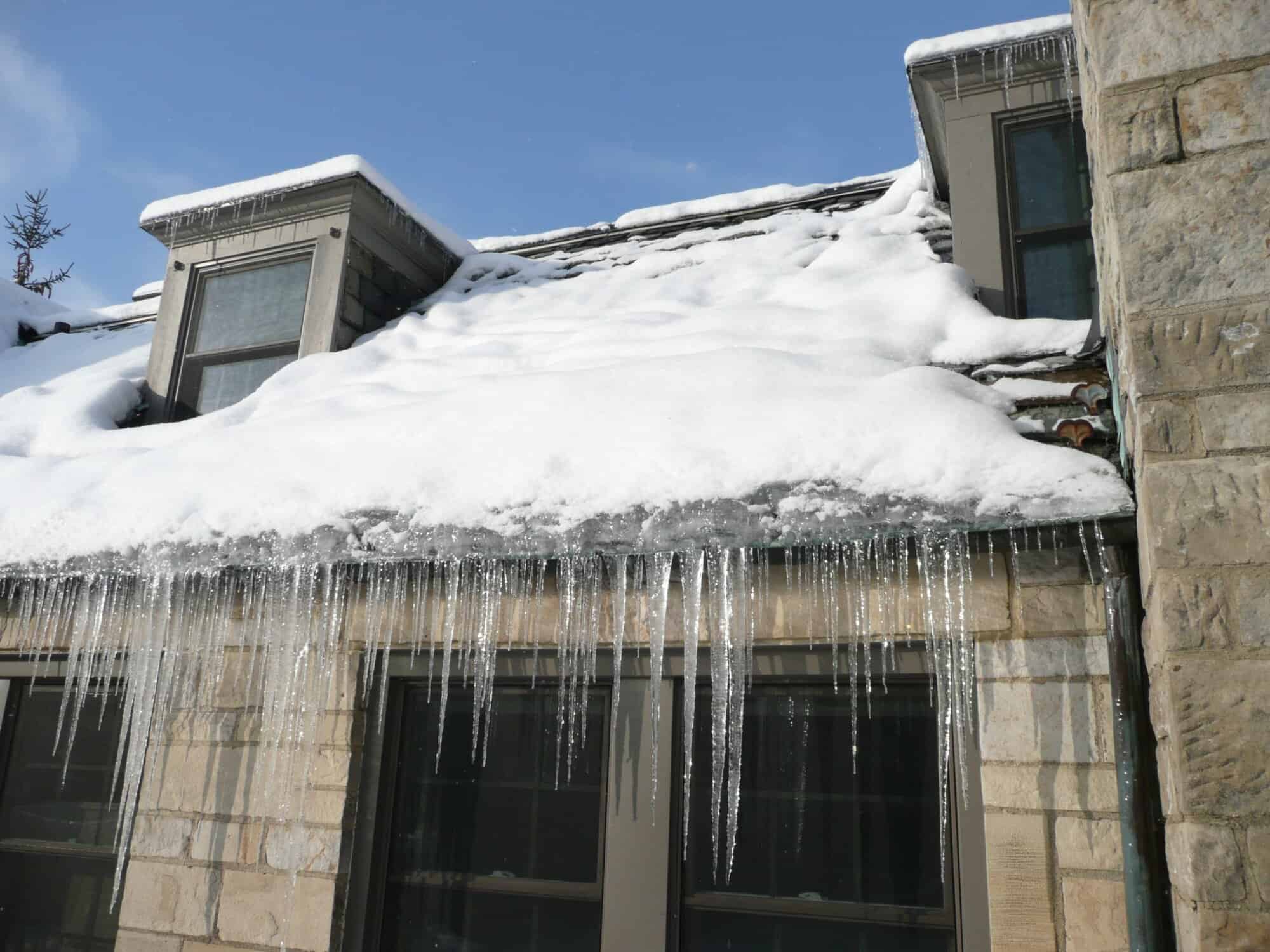
A sheet of snow and ice releasing from a roof can tear an eavestrough clean off the fascia, and it happens more often than most homeowners expect. The weight is the reason: a slab of wet snow and ice sliding down a slope arrives at the edge with real momentum, and the trough is fastened to catch water, not to stop a moving load. Most of the damage we repair in early spring was caused this way, and the homeowner usually assumes a branch came down.
Why it happens
Snow does not sit still on a roof all winter. Heat escaping from the house warms the deck just enough to melt a thin film underneath the snowpack, and that film acts as a lubricant. The whole mass then slides, often all at once, usually during a mild spell or a sunny afternoon.
Some roofs shed far more readily than others:
- Metal roofs. Smooth and slick by design. Snow releases easily and in large pieces, which is exactly why snow guards exist for them.
- Steeper pitches. More slope, more force by the time it reaches the edge.
- Roofs with heavy ice at the edge. The ice adds weight to whatever comes down with it.
- Upper roofs discharging onto lower ones. A third-storey roof releasing onto a porch or addition delivers the load onto a smaller structure, and onto its eavestrough.
What it does to the drainage system
The obvious damage is a trough pulled loose or bent down along a whole run. The less obvious damage is what costs you later.
Fasteners pull partway out. The trough still looks attached but the pitch has changed. Water now pools in the middle of the run instead of flowing to the outlet, which means it sits, and sitting water in winter freezes.
Seams and joints open. A section wrenched sideways splits at the seam. In summer you get a drip. In winter that drip refreezes down the wall.
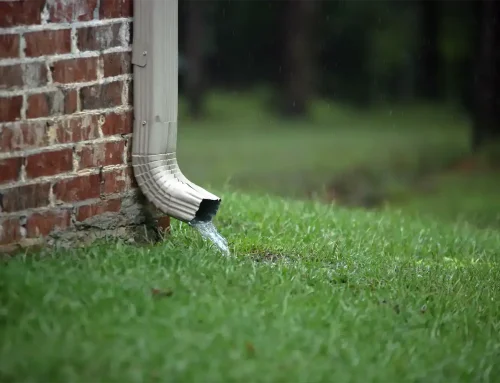
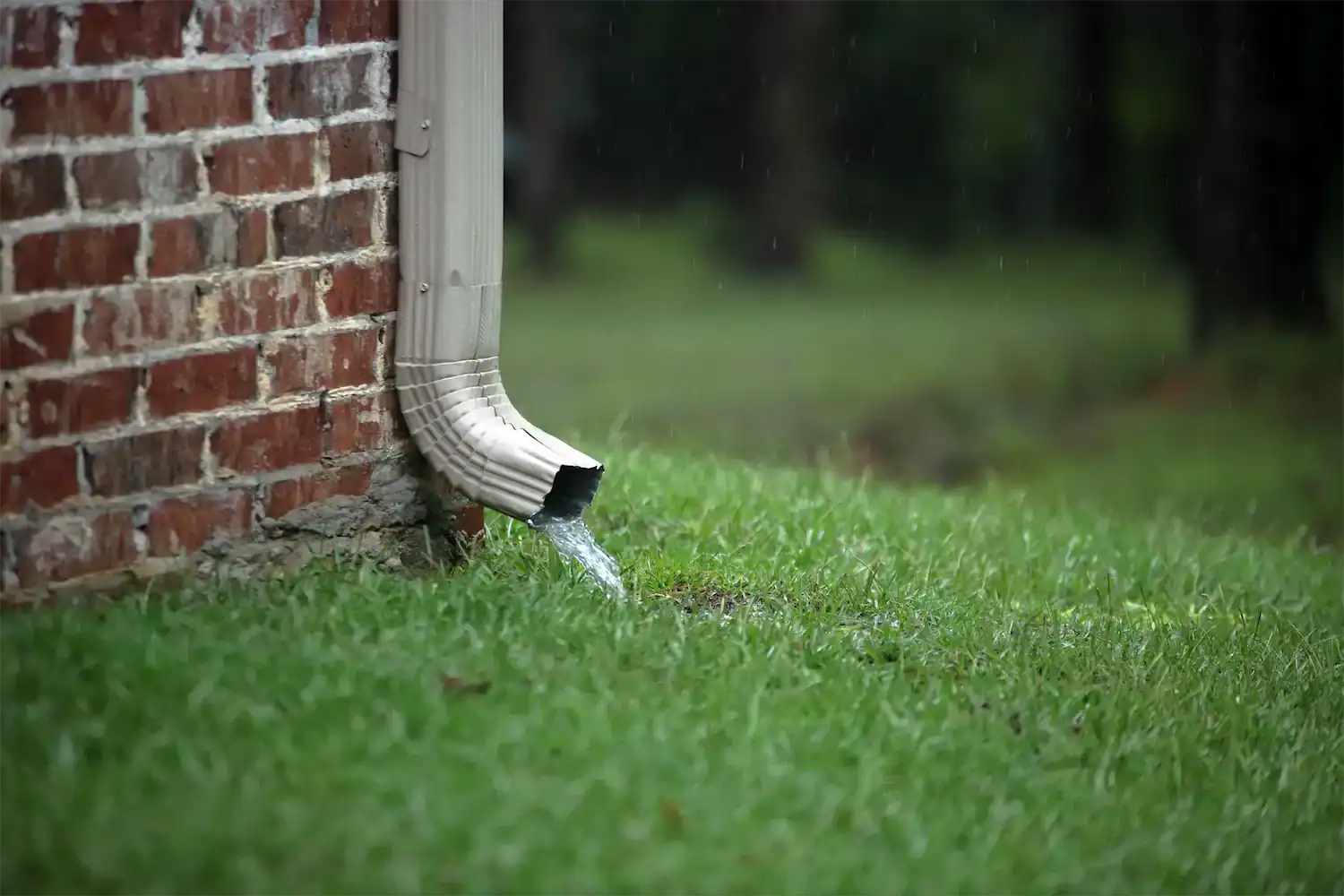
The downspout gets crushed or disconnected. Ice landing on or beside a downspout dents it closed or knocks the top elbow off the outlet.
Fascia and soffit take damage. When fasteners tear out they take wood with them, and that opening is how water gets behind the system entirely.
The pattern worth understanding is that a partly damaged eavestrough is worse in winter than a missing one. A trough that no longer drains to its outlet holds water, freezes solid, and becomes the ice dam that causes the leak inside.
The other things in the landing zone
Eavestroughs are not the only casualty. Sliding ice damages porch railings and roofs, air conditioning units sitting against the house, fences, shrubs and garden beds, vehicles parked along the side, and anything on a deck below. One homeowner told us a falling piece took a strip of siding off on the way down.
Anywhere people walk below a shedding roof is a safety problem in its own right, which is the same concern covered in our post on ice over doorways and walkways.
What to check after it happens
You do not need to be on a ladder for most of this.
- Sight along the trough from the ground. It should run in a straight line with a consistent slight fall toward the downspout. Dips or a wavy line mean fasteners have moved.
- Look for daylight between trough and fascia anywhere along the run.
- Check the downspout for dents, a flattened section, or a top elbow that has come away from the outlet.
- Watch it during the next rain. Water spilling over the front edge, or pouring from a joint, tells you where the damage is.
- Look at the fascia board for splits, torn fastener holes, or sections pulling away.
If this happens in midwinter, note what you see and where. A damaged trough packed with ice cannot be properly assessed or repaired until it thaws, but knowing which run to look at saves time later.
Reducing the chance of it
Snow guards break up the snowpack so it releases gradually instead of in one slab. They are standard practice on metal roofs and worth considering on any steep roof that sheds over an entrance, a walkway or a lower roof.
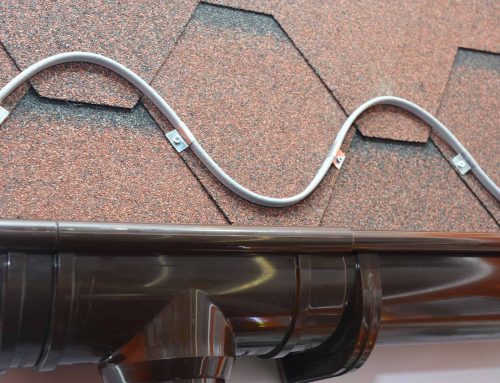
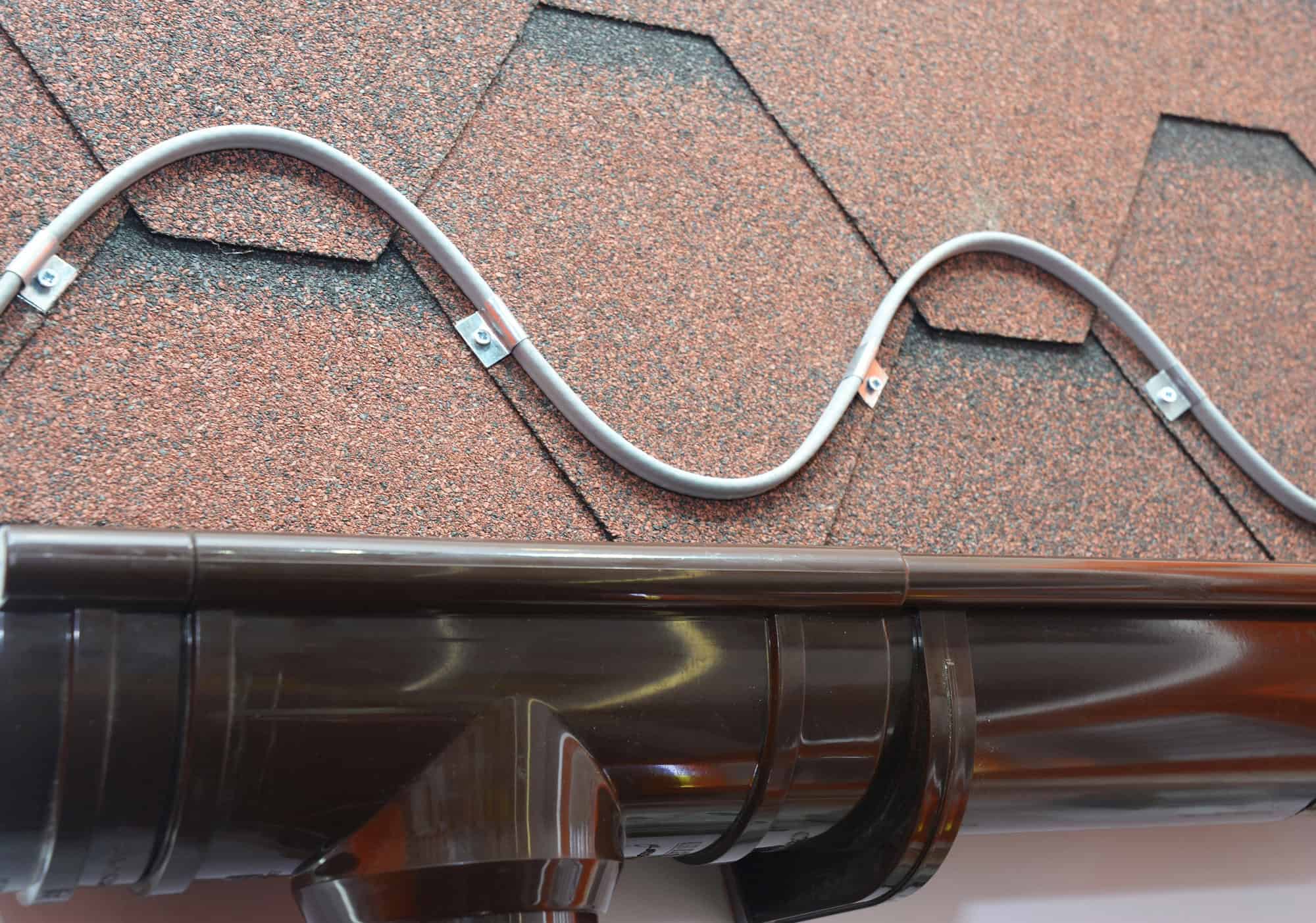
Keeping the edge clear of heavy ice reduces the weight that comes down with any slide. That comes back to drainage: an eavestrough that clears water does not build the ice mass in the first place, and de-icing cable through the trough and downspout keeps the path open on roofs where this repeats.
Correct fastening. Older systems hung on spikes are considerably more vulnerable than modern hidden hangers at proper spacing. If your troughs have come loose more than once, the fastening method is worth reviewing rather than just re-attaching what is there.
Move what you can out of the landing zone before winter, and keep the area below a known shedding roof clear.
Frequently asked questions
Should I pull the snow off before it slides?
A roof rake used from the ground on the lower few feet reduces what is available to come down and is the safe approach. Getting onto a snow-covered roof to clear it is not, on any home, and is not realistic on the taller houses where this does the most damage.
Is this covered by insurance?
It depends on the policy and on whether the damage is treated as sudden or as wear and maintenance. Photographs taken at the time help either way. Your insurer is the only reliable source on your own coverage.
Can a damaged eavestrough wait until spring?
Sometimes, but understand the risk. A trough that no longer drains properly holds water, and held water in winter freezes and adds weight to a system already weakened. If it is still draining to the downspout it can usually wait. If water is pooling or spilling, it is likely to get worse before spring.
Do snow guards work on shingles?
They can be fitted to asphalt shingle roofs, though sliding is far less of an issue there than on metal because the surface has more grip. On shingles, ice at the edge is usually the bigger problem, and that is a drainage question.
Sorting it out properly
What makes this worth attention is not the trough itself but what a compromised trough does over the rest of the winter. A run that no longer carries water to the downspout becomes the thing that holds ice at your roof edge.
Ontario Downspout Service is a licensed and insured residential drainage specialist serving Toronto and the GTA. If snow coming off your roof has pulled your eavestroughs about, we can assess what is still draining and what needs putting right.