The short answer: self-regulating cable changes its heat output automatically as the temperature changes, while constant-wattage cable puts out the same heat no matter how cold or mild it is. For most Toronto and GTA homes, self-regulating cable is the better fit, because our winters swing back and forth across the freezing mark rather than staying steady. Below we explain what that difference actually means on your roof, and why the question homeowners should really be asking is not which cable to buy, but where the cable needs to run.
What self-regulating cable does
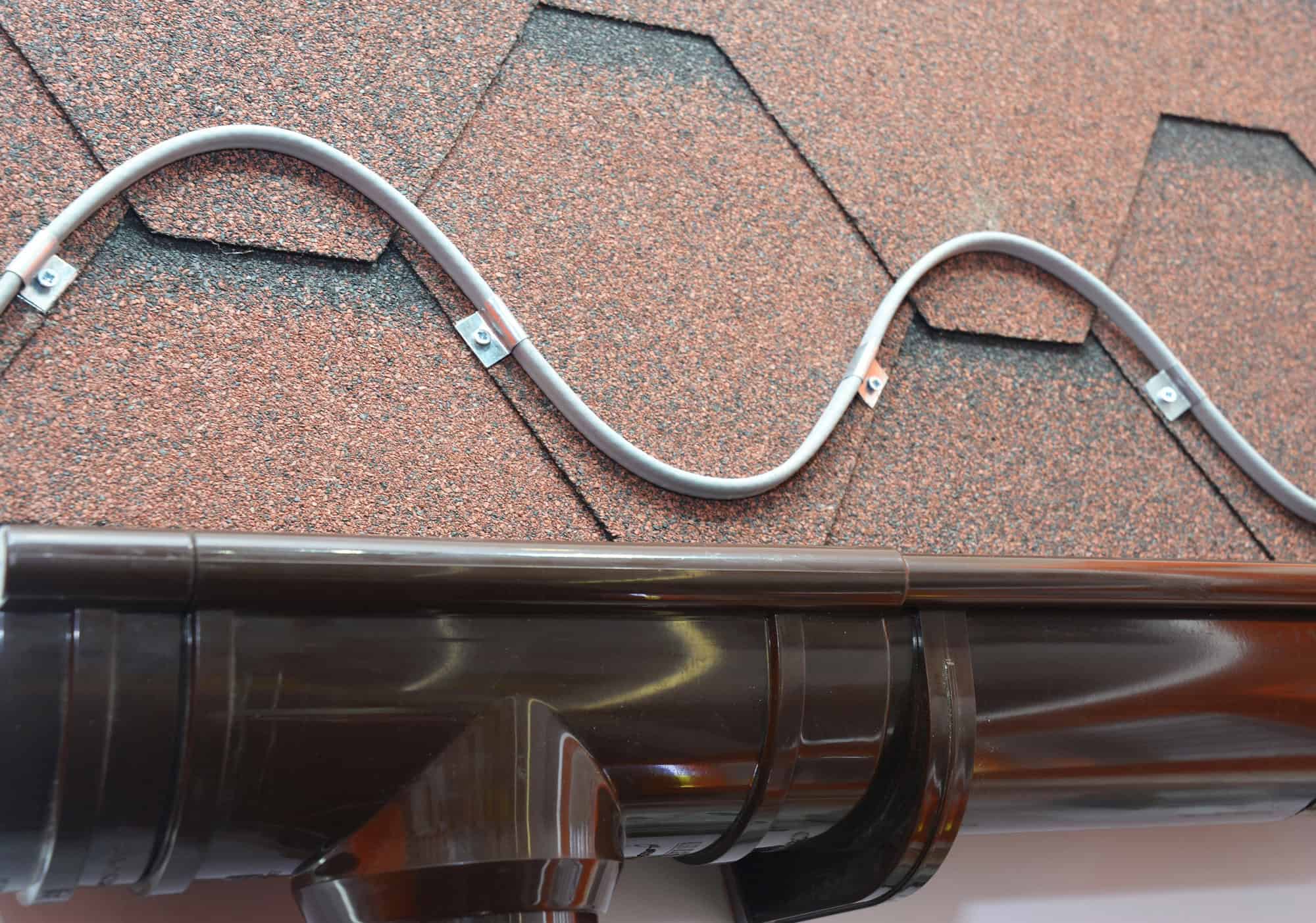
A self-regulating cable has a conductive core running between two wires. That core responds to the temperature around it. When a section of the cable gets colder, it puts out more heat. When that same section warms up, it throttles itself back.
The important part is that this happens section by section along the same cable. The length sitting in a shaded north-facing valley can be working hard while the length in afternoon sun is barely drawing power. No thermostat is making that decision; the cable itself is.
Self-regulating cable can also be cut to length on site, which matters on real roofs where runs are rarely a tidy round number. It costs more up front than constant-wattage cable.
What constant-wattage cable does
Constant-wattage cable produces a fixed amount of heat per foot whenever it is switched on. At minus twenty it puts out the same heat as it does at zero.
It comes in fixed factory lengths and cannot be cut down, so the run has to be designed around the lengths available. It also cannot be overlapped on itself, because doubling it up traps heat. Self-regulating cable does not have that restriction.
The trade-off is straightforward. Constant-wattage cable is cheaper to buy and simpler to make. It is less suited to a climate where conditions change hour to hour.
Why Toronto winters push toward self-regulating
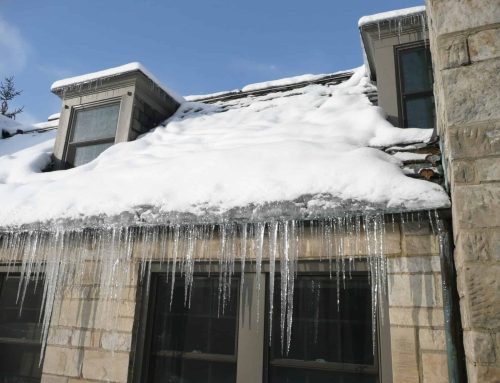
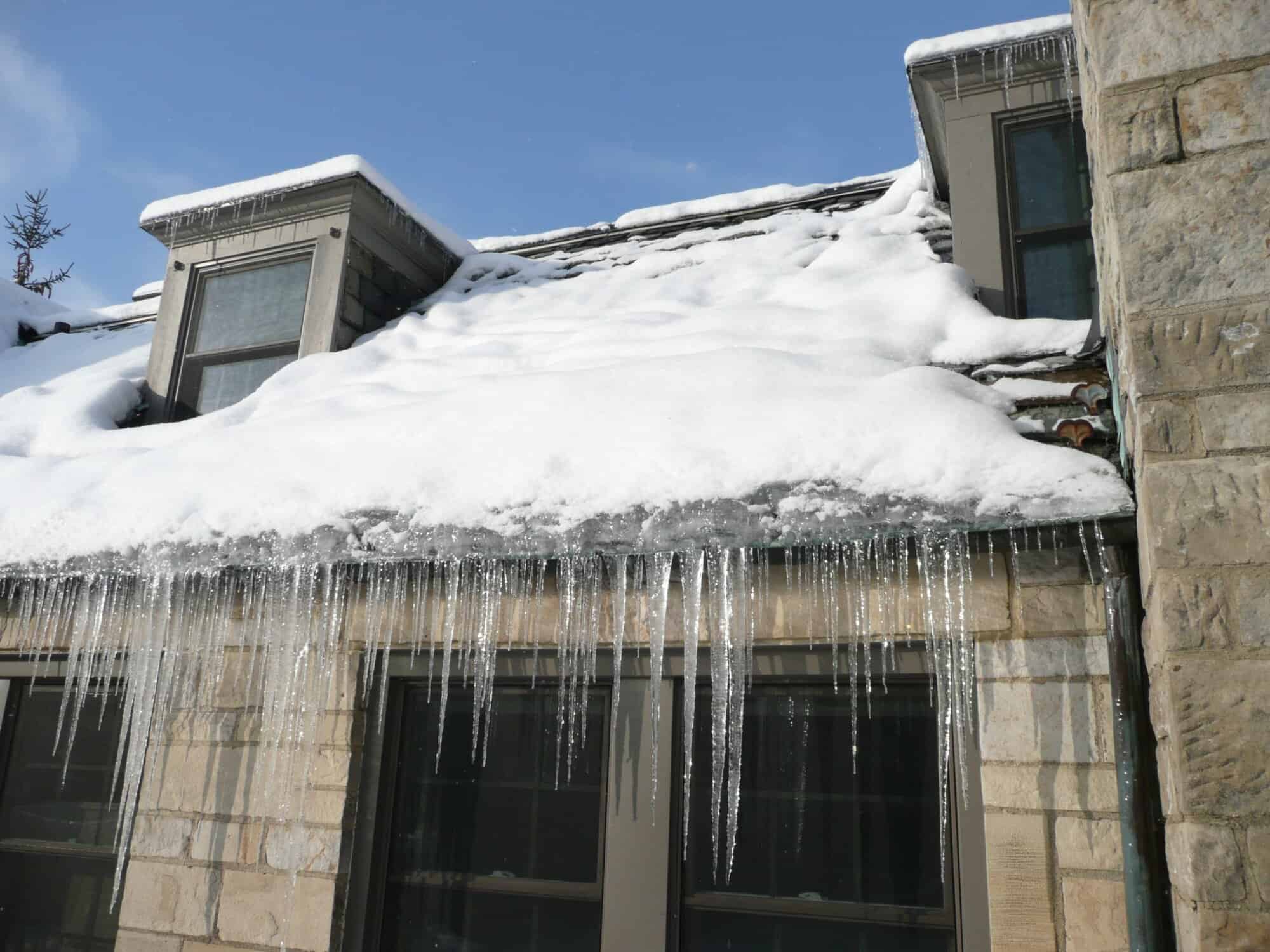
Ice dams do not form in steady deep cold. They form in the freeze-thaw cycle, when snow on the upper roof melts, the water runs down to the cold roof edge, and it refreezes there. Toronto and the GTA sit right in that pattern for much of the winter, with temperatures hovering near the freezing mark and moving above and below it repeatedly.
A cable that cannot adjust is working against that. On a mild day it runs at full output when little heat is needed. In a deep cold snap it cannot give you any more than its rated output, which is when you want it most. A self-regulating cable meets each of those conditions on its own.
Where the cable runs matters more than which type you buy
This is the part most homeowners are not told, and it is where we see systems fail.
Heating the roof edge alone solves half the problem. Meltwater has to go somewhere. If the cable stops at the eavestrough, the water it releases runs into a trough and a downspout that are still frozen, and it refreezes there instead. You have moved the ice dam rather than removed it.
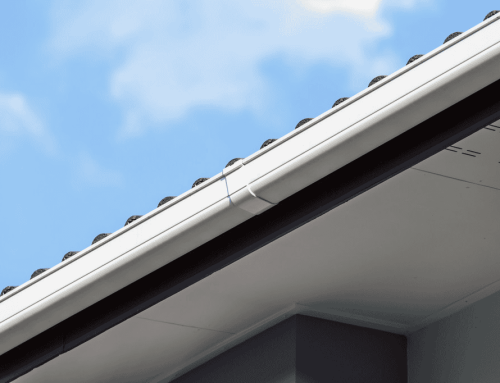
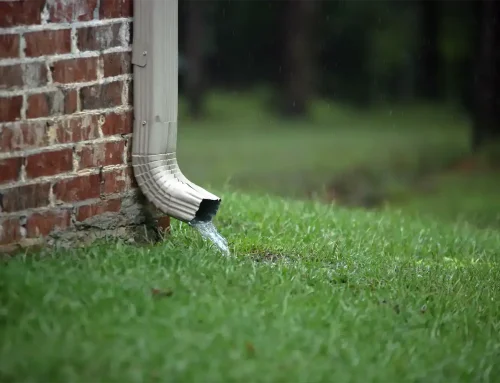
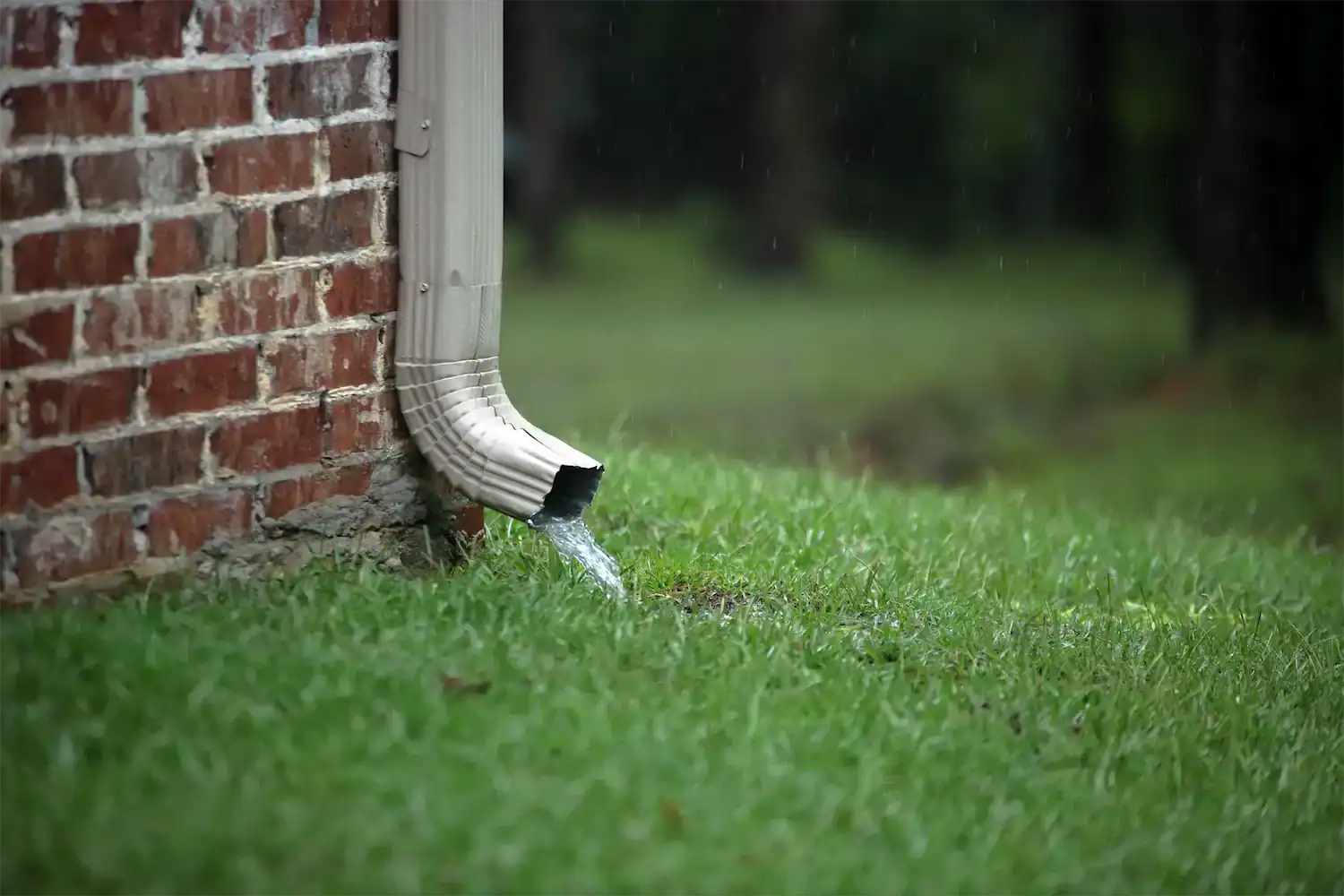
A properly designed system carries the cable through the full drainage path: along the roof edge, into the eavestrough, down through the downspout, and out past the bottom outlet where the water discharges. Every one of those is a place ice can block, and every one needs to stay open for the system to work.
That is a drainage question, not an electrical one, which is why it is worth having the system designed by someone who works on eavestroughs and downspouts rather than someone who only installs cable.
What neither type of cable will fix
De-icing cable manages a symptom. It keeps a drainage channel open through the winter. It does not address why ice is forming in the first place.
Ice dams are usually driven by heat escaping into the attic, which warms the roof deck and melts snow from underneath. Poor attic insulation and blocked ventilation are common causes. Clogged or badly sloped eavestroughs make it worse by holding standing water where it can freeze.
Cable is often the right answer anyway, especially on flat and low-slope roofs, complex rooflines, and century homes where the underlying fix is impractical or expensive. But it should be a deliberate choice rather than a substitute for finding out what is actually happening on your roof. If you are dealing with recurring ice, it is worth reading about how ice dams form and what causes them before committing to a solution.
Frequently asked questions
Can I install de-icing cable myself?
Some homeowners do on a single-storey roof with a simple edge. The difficulty is not the cable, it is the height and the layout. Most of the roofs that need this in Toronto are two and three storeys with valleys, dormers and flat sections, and the cable has to be routed through the full drainage path to work. That is not a ladder job.
Does the cable run all winter?
It does not need to. Systems are usually controlled so they only run when conditions can actually produce ice, rather than any time it is cold. Self-regulating cable reduces this further by throttling itself back when a section warms up.
Will cable damage my shingles or eavestroughs?
Properly specified and installed cable is designed to sit against roofing materials safely. Problems come from incorrect installation, such as overlapping a constant-wattage cable on itself, or fastening methods that puncture the roof surface.
Can cable be installed once winter has already started?
It is much easier before ice forms. Once a roof edge is loaded with ice, the ice generally has to come off before a system can be installed correctly, which turns one job into two. If you had ice dams last winter, autumn is the time to deal with it.
Getting it right for your roof
Which cable suits your home depends on your roofline, the length of the runs, where the problem ice forms, and how your water drains once it melts. That last one is the piece that gets overlooked most often.
Ontario Downspout Service is a licensed and insured residential drainage specialist serving Toronto and the GTA. If you have had ice building up at the roof edge, in your eavestroughs, or over a walkway or entrance, we can look at the whole drainage path and tell you what it actually needs.