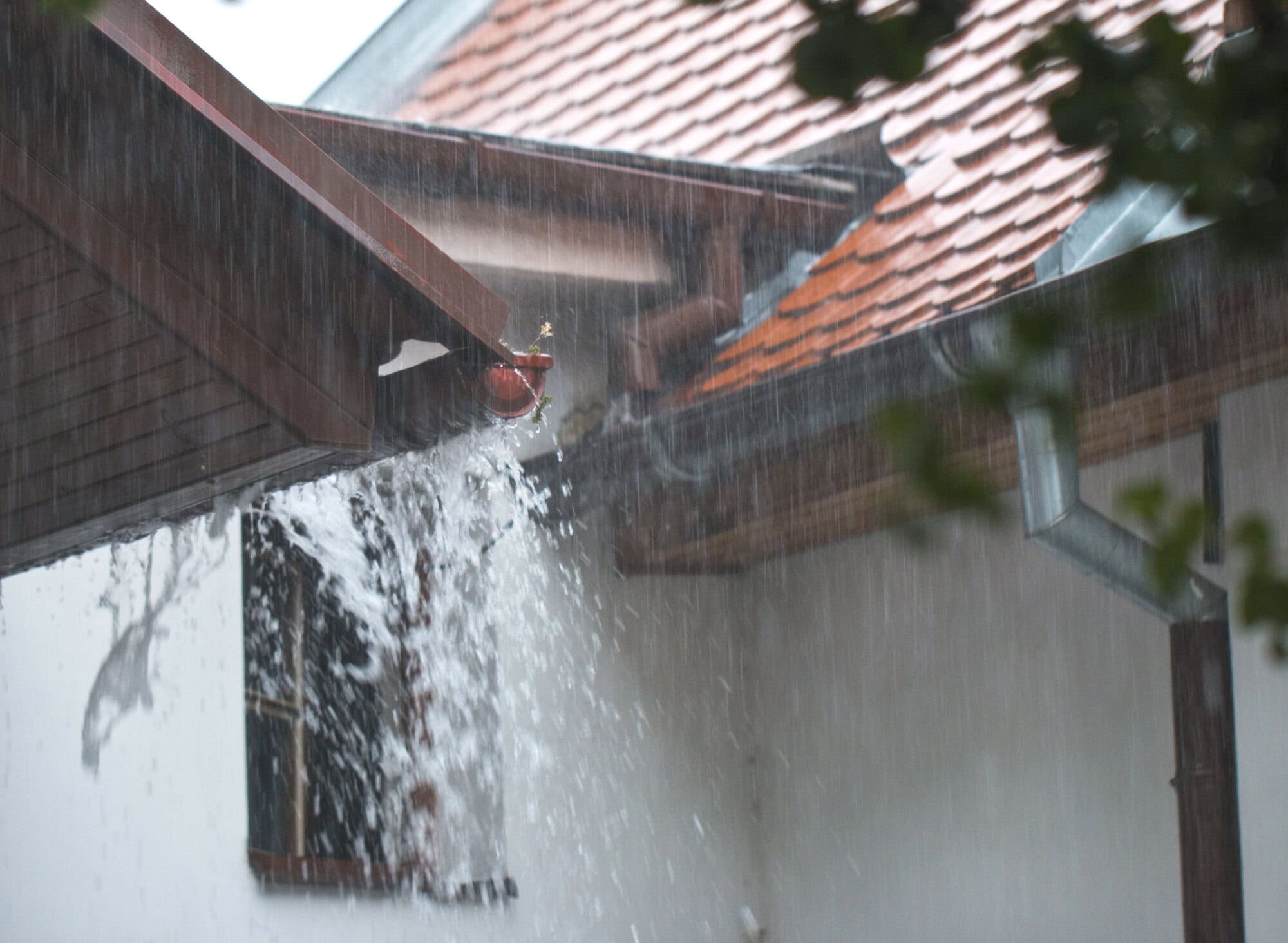
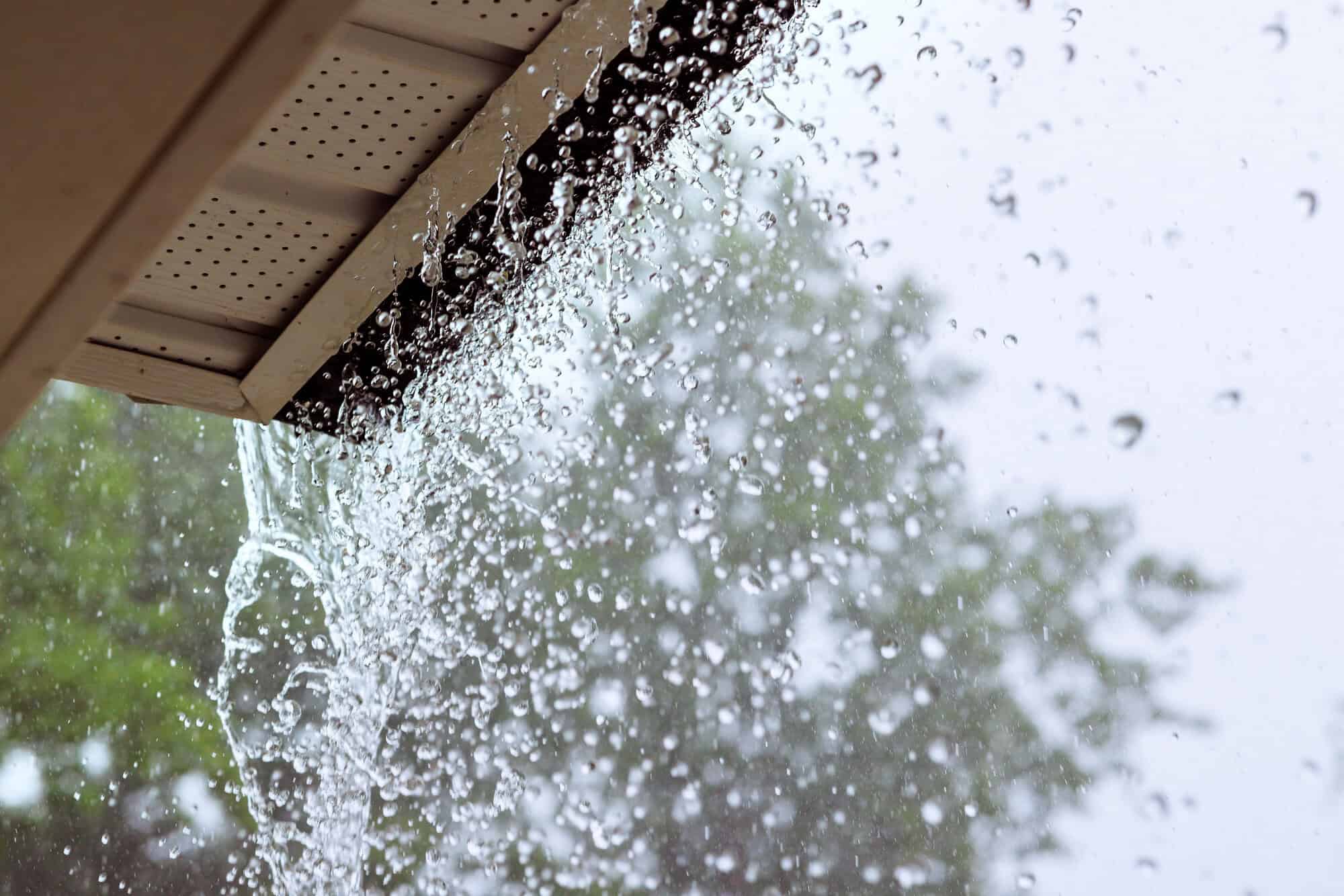
If your downspout is releasing water right at the base of your wall, it is almost always one of five things: the extension was removed and never put back, the extension has separated at a joint, the downspout was never extended in the first place, a buried drain line has failed and is backing up, or the ground at the discharge point slopes toward the house rather than away from it. Each has a different fix, and identifying which one you have is the first step.
This matters more than it appears. Roof water arriving at the foundation is one of the most common causes of basement moisture in Toronto homes — and unlike many drainage problems, it is usually visible from your own driveway during a rainfall.
Why this causes damage
A downspout concentrates the runoff from a large section of roof into a single point. A 1,500-square-foot roof sheds roughly 3,500 litres during a 25 mm rainfall. Divided among four downspouts, each is delivering close to 900 litres in a matter of minutes.
When that volume lands against the wall, it soaks into the loose backfill placed around the foundation during construction. That backfill is more permeable than surrounding undisturbed soil, so water travels downward alongside the wall rather than dispersing. Over time this produces:
- Hydrostatic pressure against the foundation from saturated soil
- Seepage through cracks, cold joints, and window wells
- Soil erosion that undermines walkways and creates settling
- Freeze-thaw stress as saturated soil expands against the wall each winter
The five causes, and how to tell them apart
1. The extension was removed and never replaced
The most common cause by far. Extensions get lifted for mowing, landscaping, or snow clearing and are quietly forgotten. Look for a downspout that ends abruptly at elbow height with no extension attached, and often a patch of eroded soil directly beneath it.
2. The extension has separated at a joint
Extensions are usually friction-fit. Freeze-thaw movement, lawn equipment, or simple age works the joint apart. From a distance the extension looks fine; up close, water escapes at the seam near the wall. Check each connection during rain rather than in dry weather.
3. It was never extended
Some homes were built with downspouts terminating at a splash block or directly onto soil. On older Toronto homes, downspouts were frequently connected straight into the sewer system instead, which was standard practice before the 1960s. Toronto has since made downspout disconnection mandatory city-wide, with the final compliance deadline set for December 3, 2016. Homes disconnected under that program sometimes had the pipe cut without a proper surface extension being added.
4. A buried drain line has failed
Where a downspout feeds an underground pipe, failure is hard to see. Older Toronto homes often used clay pipe, which cracks, shifts, and admits roots over decades. When the line blocks, water backs up and surfaces at the top — right at the foundation. Signs include water bubbling up at the downspout base during heavy rain, or a downspout that drains fine in light rain but overflows in a downpour.
5. The grade slopes toward the house
Sometimes the downspout is doing its job and the ground undoes it. Properties settle, landscaping gets added, patios get installed. If the ground within two metres of the wall falls toward the house, water discharged there returns to the foundation regardless of extension length.
How to diagnose yours
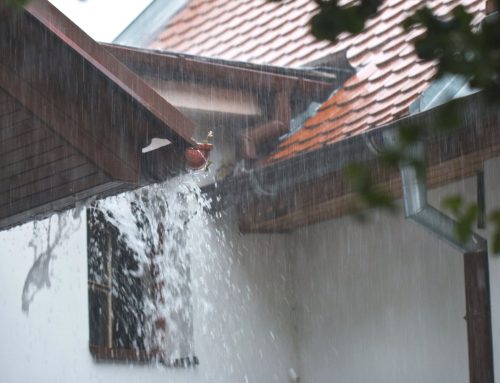
The only reliable way is to look during rainfall. On the next steady rain:
- Walk the full perimeter and observe each downspout while water is moving
- Note where water first touches the ground
- Follow the path it takes and watch for pooling near the wall
- Listen at buried connections for gurgling, which suggests a restriction
- Check whether water backs up out of the top of any buried connection
Return a few hours later. Water still standing near the foundation confirms the problem regardless of what you saw during the storm.
Matching the fix to the cause
Because the causes differ, the corrections do too:
- Missing or separated extension — replace and secure it, extending at least 1.8 metres from the wall
- Never extended — add a properly sized extension and confirm the discharge point drains away
- Failed buried line — this needs assessment; sometimes clearing works, sometimes the line needs replacing or rerouting to the surface
- Bad grading — regrading the first two metres, or routing water further out with a French drain where surface options are limited
For the full picture on extension distance, see How Far Should a Downspout Extend From Your Home?
When the downspout is not the real problem
Occasionally water at the foundation traces back upstream. If the eavestrough overflows before water reaches the downspout, extending the downspout changes nothing. Clogged troughs, lost slope, and undersized outlets all produce foundation water that looks like a downspout issue.
Our post on how eavestroughs and downspouts work together explains how to tell which half is failing, and eavestrough cleaning resolves a surprising share of these cases.
Frequently asked questions
Can I fix this myself?
Replacing a missing surface extension is straightforward. Diagnosing a failed buried line, correcting grade, or reworking a discharge route usually needs assessment, because the wrong fix can move the problem rather than solve it.
How quickly does foundation damage occur?
It is cumulative rather than sudden. Seasons of repeated saturation gradually widen cracks and worsen seepage, which is why homeowners often notice the basement symptom long before connecting it to the downspout.
My basement is dry. Does it still matter?
Yes. A dry basement today reflects current conditions, not future ones. Soil erosion, settling, and gradual crack widening happen well before visible water appears indoors.
Is it acceptable to direct water toward the street?
Often yes, provided it does not cross a neighbour’s property, create an icing hazard on a public walkway, or conflict with local requirements. The destination needs as much thought as the distance.
Start with the perimeter walk
Most downspout problems are visible to anyone willing to stand outside during a rainstorm. Identifying which of the five causes applies to your home tells you whether this is a ten-minute fix or something that needs a closer look.
If the answer points to a buried line or a grading issue, we can assess it properly. Learn more about our downspout and eavestrough services or contact us.