Standing water forms when the ground around your home has nowhere lower to send it, or when more water arrives in one place than the soil can absorb. Poor grading creates the first problem: low spots, flat areas and slopes that run back toward the house. Poor drainage creates the second: short downspouts, overflowing eavestroughs and hard surfaces that pour concentrated water into those low spots. Around much of Toronto and the GTA, heavy clay soil absorbs water slowly, so instead of soaking away it sits. Near the foundation that means basement moisture and pressure on the walls. Out in the yard it means dead lawn, mosquitoes, and sheets of ice in winter.
The encouraging part is that grading and drainage problems are usually visible, and they can almost always be corrected from the outside.
What grading actually means
Grading is the shape of the ground around your house: the slopes, high points and low points that decide which way water runs. Good grading moves water away from the foundation and toward a safe place, such as the street, a rear yard swale or a lawn that can absorb it.
The Ontario Building Code requires that a building be located, or its site graded, so that water will not accumulate at or near the building and will not adversely affect neighbouring properties. In practical terms, a common target is about 15 cm of fall over the first two metres from the foundation, with a gentler slope of around 2 percent continuing beyond that.
Why grading fails over time
Most homes were graded properly when they were built. The problem is that grading does not stay put.
- Backfill settles. The soil packed against the foundation after construction slowly compacts. Over years, the slope that once ran away from the house flattens, and then often reverses, leaving a shallow trough right along the wall. This is the most common grading problem we see.
- Landscaping changes the surface. Raised garden beds, edging, interlock and layers of mulch can all create dams that hold water against the house.
- Additions, decks and patios. New structures interrupt the original drainage path, and the space underneath decks is rarely graded with care.
- Sinking hard surfaces. Walkways and patio slabs that settle often tilt back toward the foundation.
- Changes next door. Infill construction and neighbouring renovations can raise the ground on one side of a property line and send runoff your way. This is especially common in older Toronto neighbourhoods with narrow side yards.
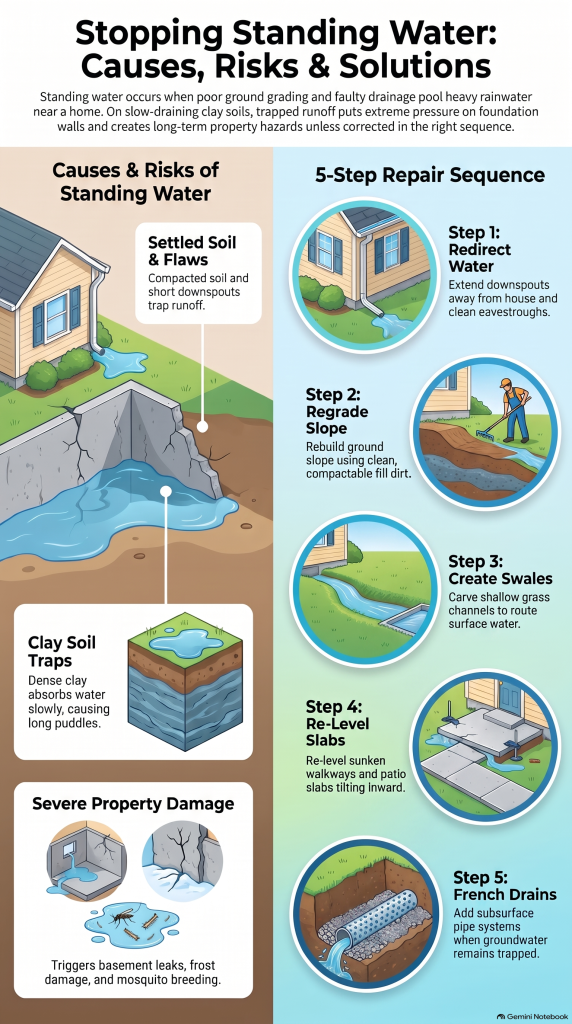
How drainage problems feed the standing water
Grading decides where water can collect. Drainage decides how much arrives there. The biggest single source is usually the roof.
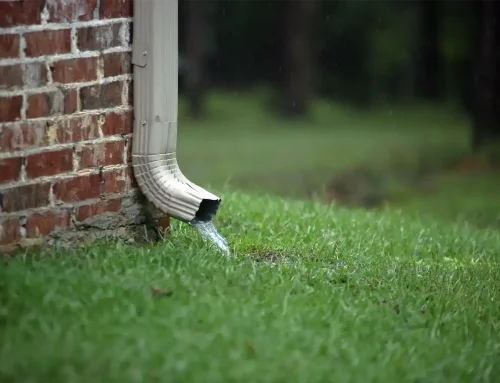
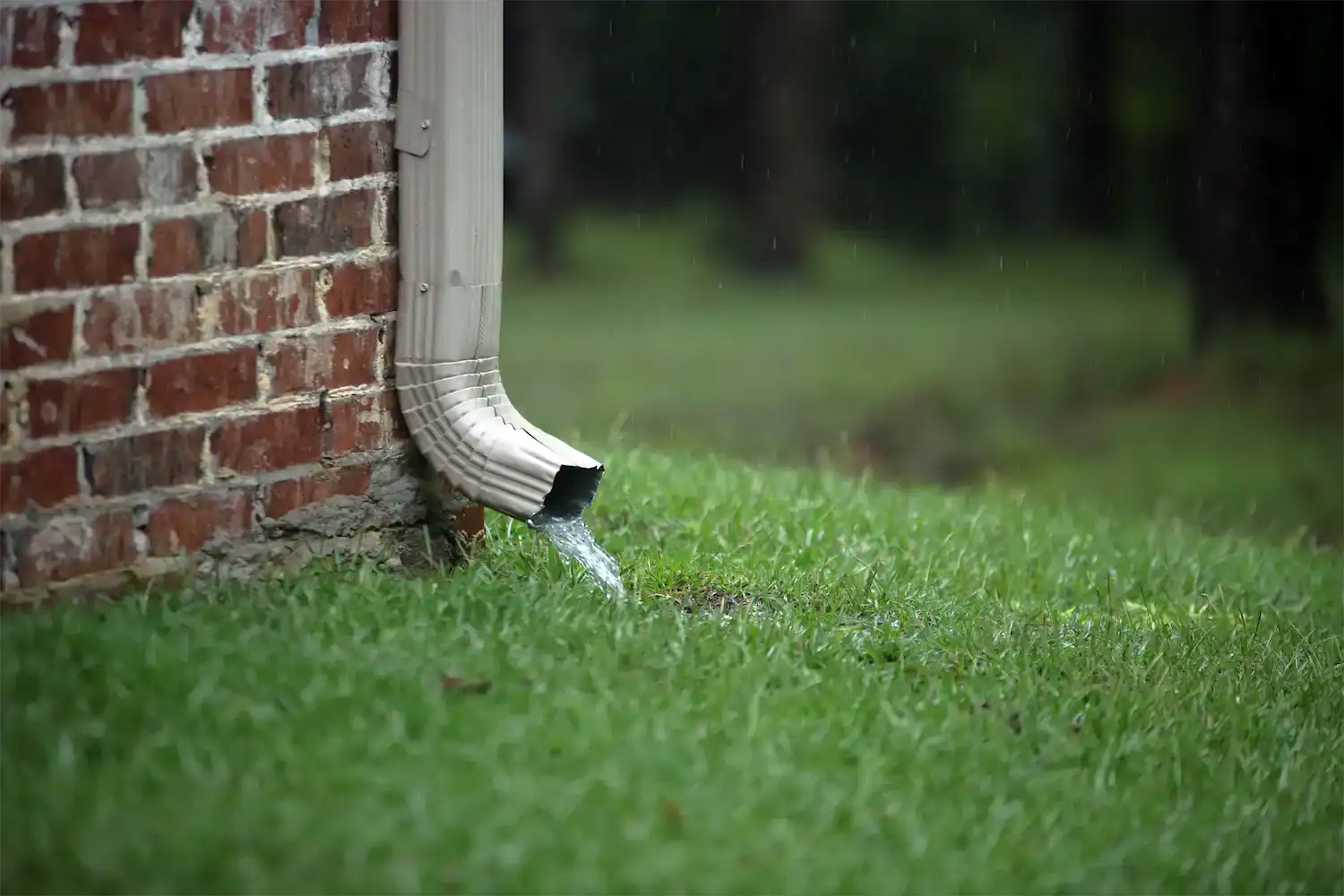
Every millimetre of rain on one square metre of roof produces one litre of water. On a typical house, a 25 mm storm sends a few thousand litres off the roof, and the downspouts release it at just a handful of points. If one of those points is a low spot near the foundation, it fills fast. The usual contributors are:
- Downspouts that discharge too close to the house. See How Far Should a Downspout Extend From Your Home?
- Eavestroughs that overflow because of clogs or lost slope, dropping water in a line along the foundation
- Buried downspout lines that have cracked or collapsed and now leak underground
- Sump pump discharge released right beside the house
- Driveways and walkways that shed water toward the wall
Why clay soil makes it worse
Sandy soil lets water drain through it quickly. Clay does the opposite. Its fine particles pack tightly, so water moves through slowly and the ground stays saturated long after the rain has stopped. Much of the GTA sits on clay-rich soil, which is why a puddle that would vanish in an hour elsewhere can sit for a day or more on a Toronto lot. It also means that adding water to a poorly graded area, through a short downspout for example, quickly overwhelms what the ground can absorb.
The risks of standing water
Foundation and basement. Water pooled against the foundation saturates the backfill, builds pressure against the wall, and looks for any crack, tie hole or gap at the wall-to-floor joint. Damp walls, efflorescence and leaks at the base of the wall are common results.
Frost damage. Saturated soil that freezes expands and heaves. That movement can lift and crack walkways, steps and slabs, and put stress on foundation walls.
Ice hazards. Standing water near entrances and driveways becomes sheet ice in winter.
Landscape damage. Lawns and plants in waterlogged soil struggle and die, and erosion washes away soil and mulch.
Pests. Water that sits for several days gives mosquitoes a place to breed.
Neighbour disputes. Fixing your own drainage by sending water onto the next property only moves the problem, and the City of Toronto’s guidance is clear that water should not be directed onto a neighbour’s lot or the sidewalk.
How standing water is fixed
The right order of work matters. Start with the source, then reshape the ground, and only then consider underground solutions.
1. Redirect roof water. Extend downspouts so they discharge onto ground that falls away from the house, and fix any overflowing eavestroughs. This is the least disruptive step and often solves most of the problem on its own.
2. Regrade near the foundation. Rebuilding the slope with clean, compactable fill, not loose topsoil or mulch, restores the fall away from the wall.
3. Create a swale. A shallow, grassed channel can carry surface water around the house or along a property line to a safe outlet.
4. Correct hard surfaces. Re-levelling or replacing settled walkways and patio slabs removes a common source of water against the wall.
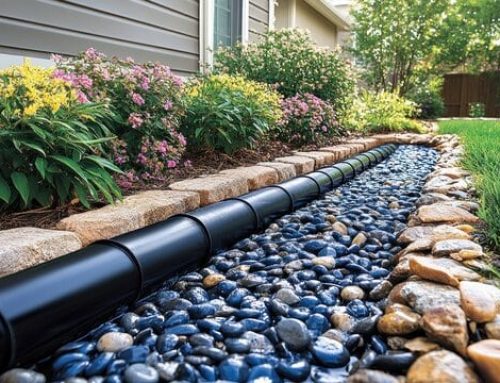
5. Install a French drain where needed. When water is in the soil itself, or arrives from higher ground and cannot be regraded away, a properly built French drain may be the right answer. Our guide What Is a French Drain and When Does a Home Need One? explains when that point is reached.
Frequently asked questions
How long can water sit in my yard before it is a problem?
Short-lived puddles after a heavy storm are normal, especially on clay soil. Water that is still standing a day or more after rain, or any pooling against the foundation wall, points to a grading or drainage issue.
Can I regrade around my house myself?
Topping up a small settled area next to the foundation is often manageable, using fill that compacts and keeping the soil well below siding and window sills. Larger regrading, especially anything that changes flow toward a neighbour, or work around window wells and buried lines, is better planned by a professional.
Does standing water in the back yard put my foundation at risk?
Not necessarily. Water pooling well away from the house is mainly a landscaping and nuisance issue. The concern is water collecting within a couple of metres of the walls or draining toward them.
What if the water is coming from my neighbour’s property?
Talk with your neighbour first, since the fix often benefits both properties. A swale or drain along the property line is a common solution. Municipal rules on drainage between properties vary across the GTA, so it is worth checking with your local municipality if the issue cannot be resolved between you.
Getting water moving again
Standing water is the visible end of a simple problem: water arriving faster than the ground can move it away. Correct where the roof water lands and restore the slope around the house, and most properties drain properly again without anything more involved.
Ontario Downspout Service is a licensed and insured residential drainage specialist serving Toronto and the GTA, and a Best of HomeStars winner for more than ten years. If water keeps collecting around your home, we can help you find the source and recommend the simplest fix that will last, from downspout corrections to French drains where they are genuinely needed.