Downspouts freeze because water sits still inside them. During a Toronto winter, meltwater trickles off the roof a little at a time rather than rushing through, and a slow trickle in a cold metal pipe has plenty of time to freeze. The blockage almost always starts at the bottom, where the downspout meets the elbow or the ground, and then builds upward until the whole pipe is plugged. Once that happens, everything behind it backs up into your eavestrough, and the problem stops being about the downspout.
Why the bottom freezes first
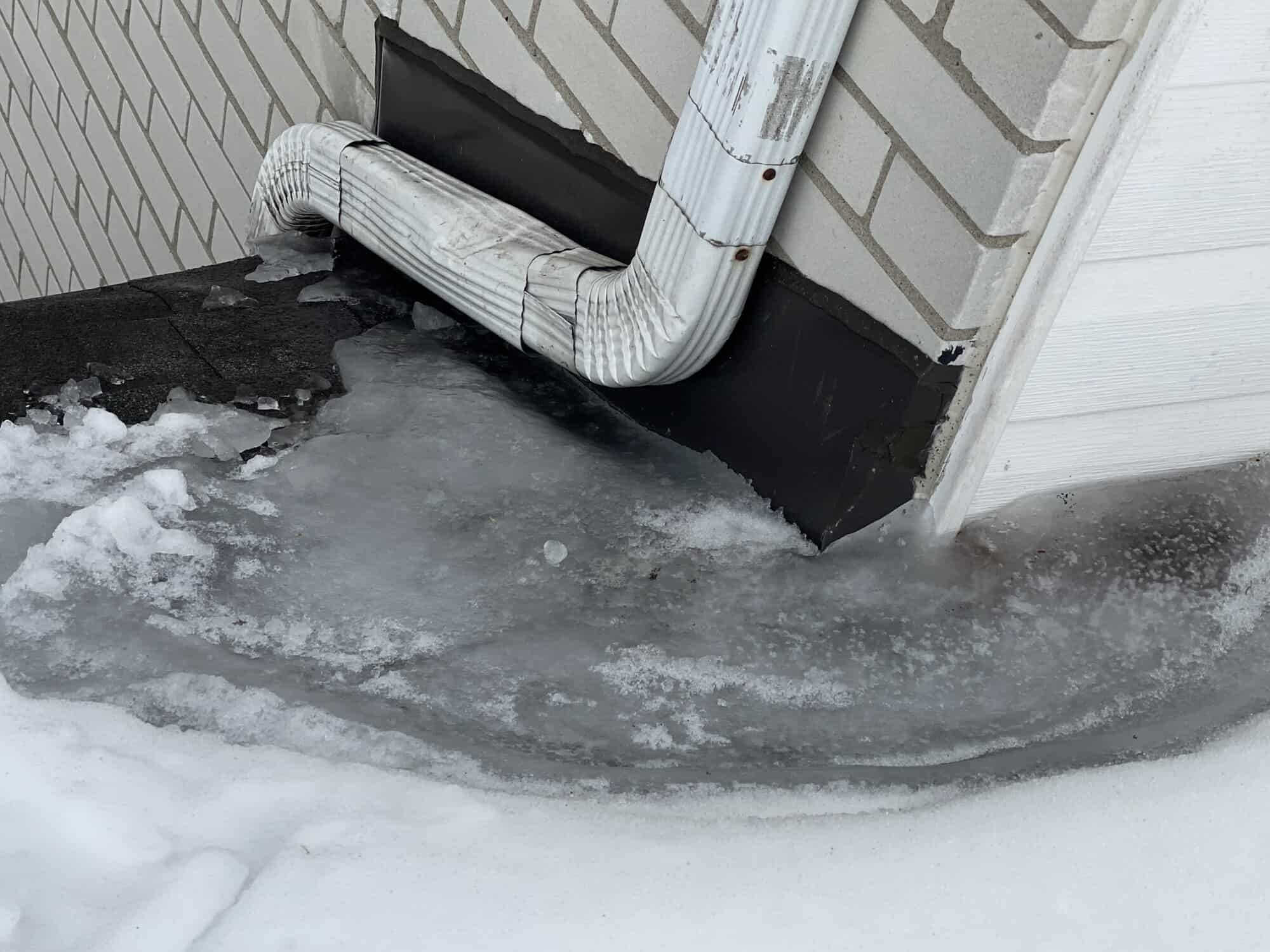
The lowest section of a downspout is the coldest and slowest part of the system. Water arrives there already chilled, the elbow slows it down, and whatever does not drain away simply sits.
Several things make it worse, and most Toronto homes have at least one:
- The outlet is buried in snow. Shovelled snow piled against the house, or a drift along the foundation, seals the end of the downspout. Water backs up behind it and freezes.
- The extension discharges onto a flat surface. Water spreads out, freezes into a sheet, and that sheet grows back up into the pipe.
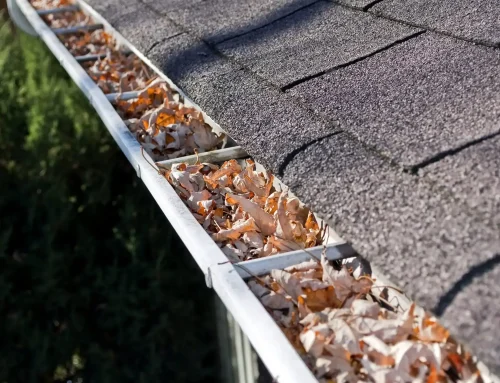
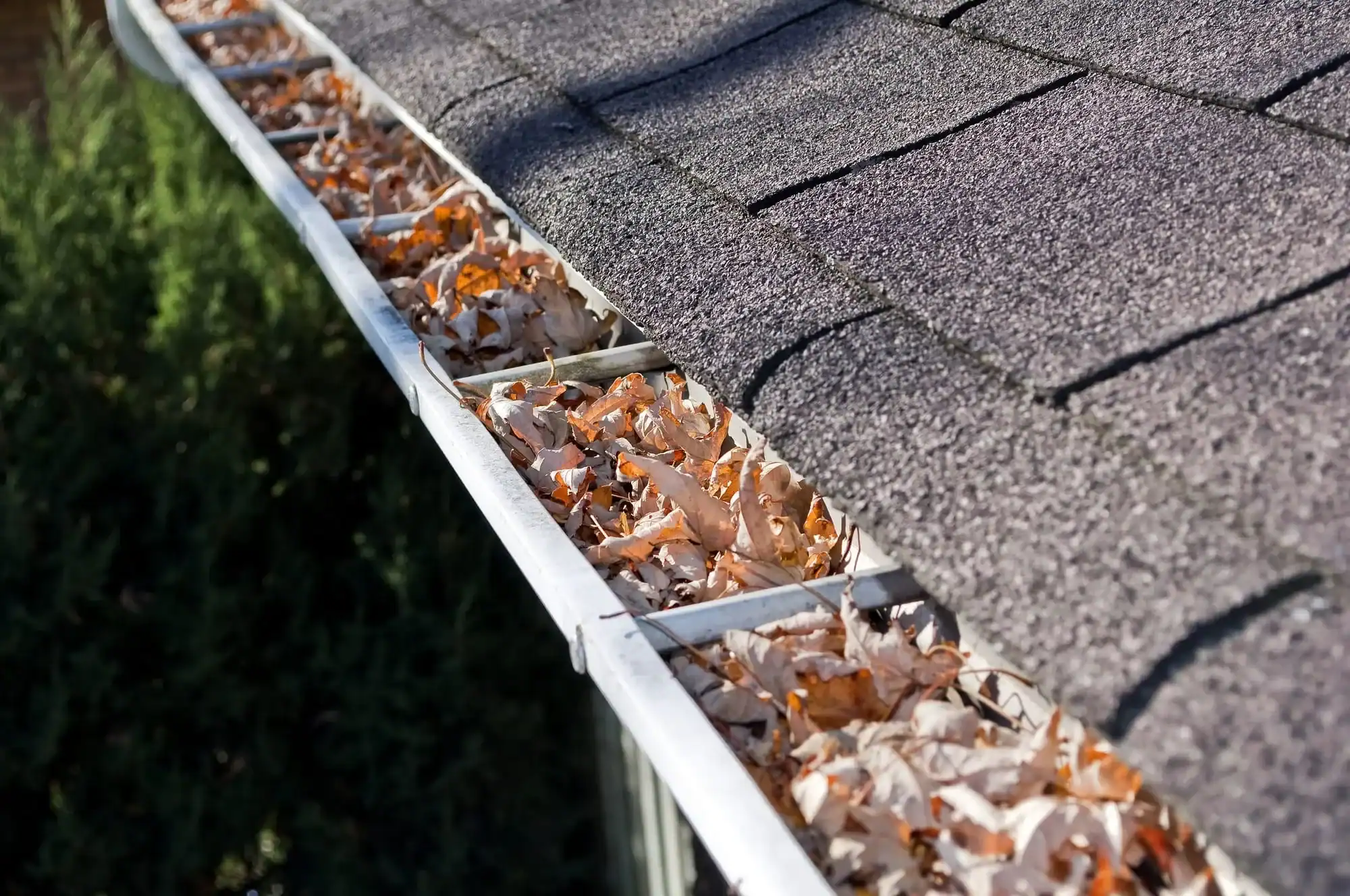
- There is debris in the system. Leaves that washed down in autumn hold water in place instead of letting it pass.
- The downspout connects underground. If the buried line is frozen or blocked, the downspout has nowhere to empty.
What happens once it plugs
A frozen downspout is rarely just a frozen downspout. Water that cannot get down has to go somewhere.
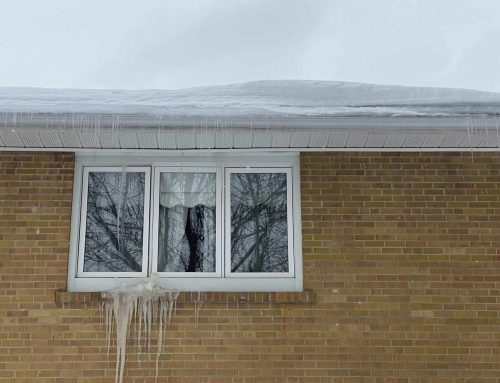
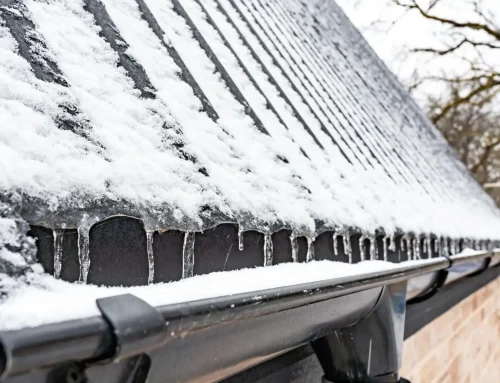
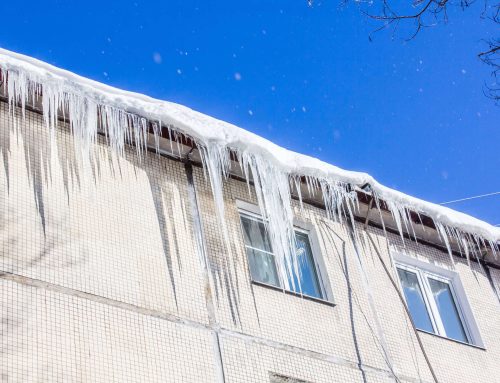
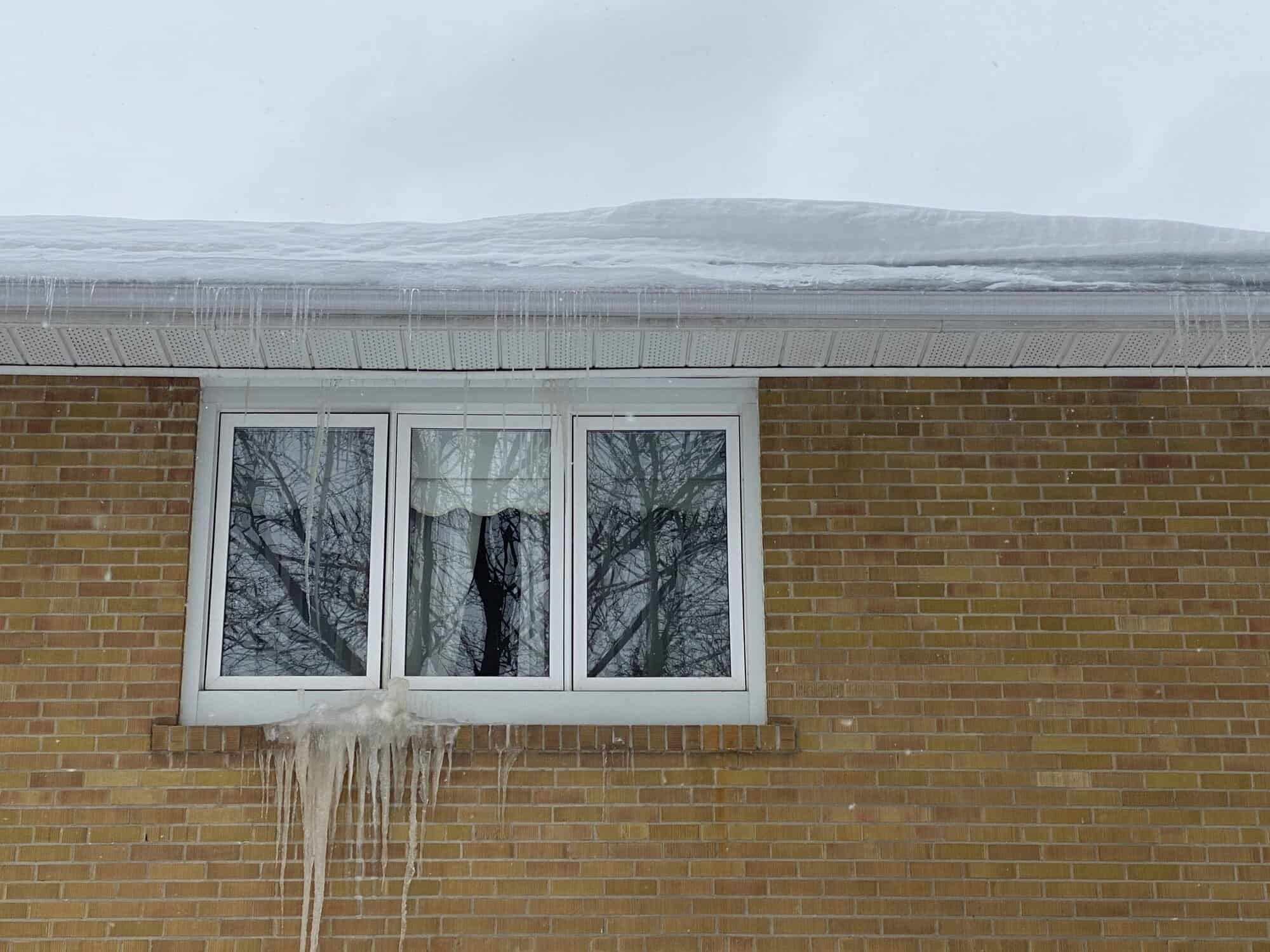
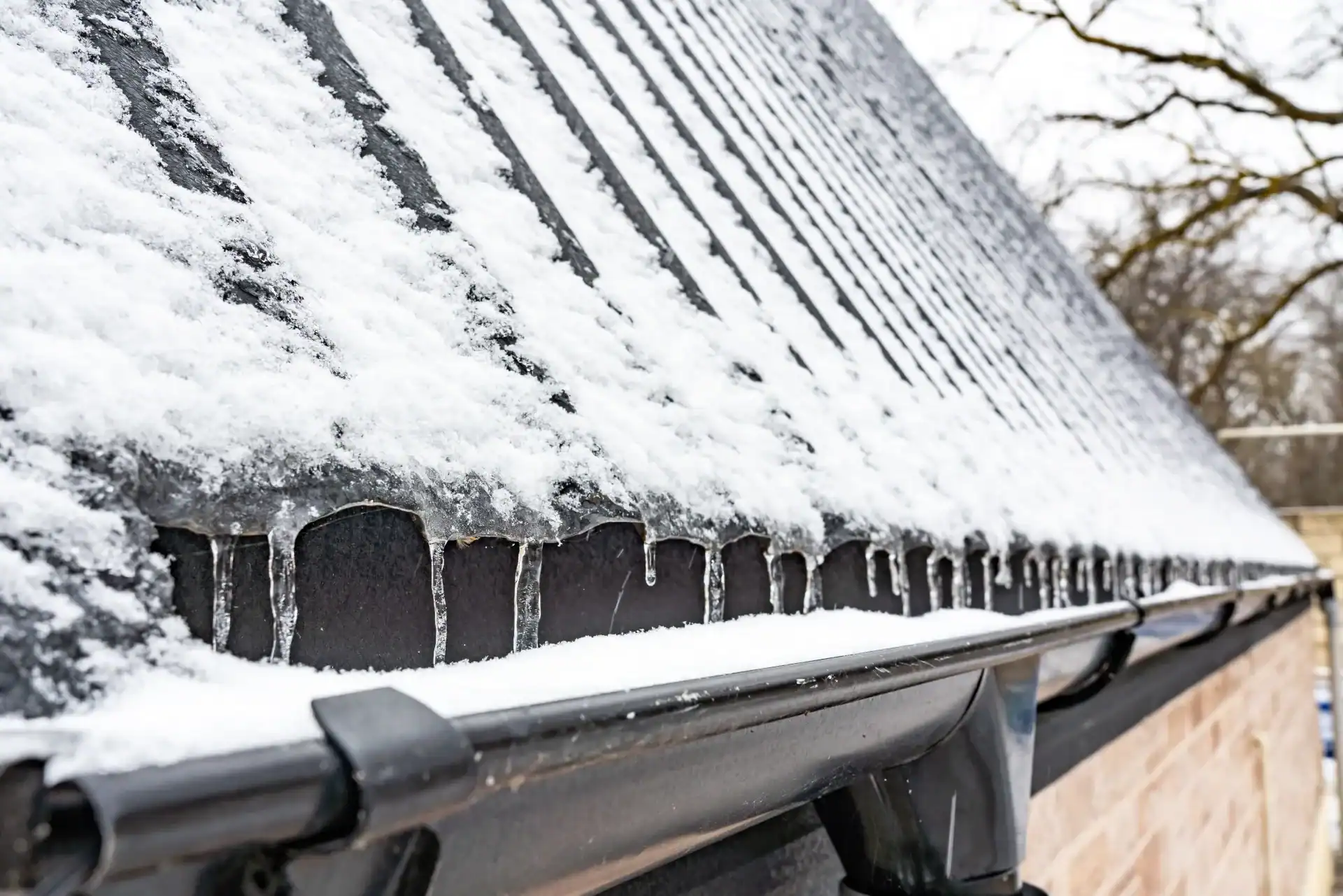
It backs up into the eavestrough and freezes there, adding weight the trough was never meant to carry and pulling fasteners away from the fascia. It overflows the front edge and runs down your siding, where it refreezes on the wall. It spills at the corner and lands next to your foundation, which is exactly where you do not want water going into a freeze-thaw cycle.
The downspout itself can also split. Water expands by roughly nine percent when it freezes, and aluminum downspouts give way at the seam long before the ice does. People often find the damage in spring and assume something hit it.
And an eavestrough full of ice is the start of an ice dam. Meltwater coming off the roof now has nowhere to drain, so it sits at the roof edge and freezes there instead.
Should downspout extensions be up or down in winter?
Leave them down and connected.
Flipping extensions up is a habit from places where nothing melts until spring. Toronto does not work that way. Our winters cross the freezing mark constantly, which means water is moving through your system in January just as it is in October. If your extension is folded up, that meltwater discharges straight against your foundation all winter long.
The one adjustment worth making is where the extension ends. Make sure it discharges onto a slope running away from the house, clear of walkways where a sheet of ice becomes a hazard, and somewhere that will not get buried the first time the driveway is cleared.
How to reduce the risk before winter
- Clear your eavestroughs and downspouts after the leaves finish dropping, not before. Early cleaning misses the last and heaviest fall.
- Check that water actually runs through. A hose test takes minutes and tells you whether the path is clear all the way to the discharge point.
- Extend the discharge well away from the foundation and onto ground that slopes away.
- Keep the outlet clear of shovelled snow through the season. This is the single most common cause and the easiest to prevent.
- Consider heating cable for downspouts that freeze every year. On homes where the problem repeats, de-icing cable running through the trough, down the downspout and past the outlet keeps the path open. Cable that stops at the top of the downspout does not solve this.
What not to do
Do not hit a frozen downspout to break the ice loose. Aluminum dents and splits, and you will be paying for a new downspout to fix a problem that would have thawed.
Do not pour boiling water down it. It refreezes further along and usually makes the plug bigger and harder.
Do not use salt or walkway de-icer inside eavestroughs or downspouts. It corrodes the metal, damages fasteners, and ends up on whatever is planted below.
Frequently asked questions
How do I thaw a frozen downspout?
The safest approach is patience plus clearing the outlet. Dig out any snow packed around the discharge end and disconnect the bottom elbow if you can reach it safely, which often lets the plug drain as it softens. Warm water rather than boiling can help at the bottom. If the pipe is frozen solid along its length or the blockage is out of safe reach, it is worth having someone look at it, because at that point the ice has usually backed up into the eavestrough as well.
Can a frozen downspout cause a basement leak?
Indirectly, yes, and it is one of the more common winter routes. A blocked downspout dumps roof water at the base of your wall instead of carrying it away. During a thaw, that concentrated water soaks the soil right against the foundation and finds its way in through cracks or below grade.
Is it normal for downspouts to freeze every winter?
Common, but not something to accept. A downspout that freezes every year is telling you the water is not clearing properly, usually because of where it discharges, the grade at the bottom, or debris in the system. Those are fixable.
Do gutter guards stop downspouts from freezing?
They help with the debris part of the problem by keeping leaves out. They do not stop water from freezing once it slows down, and some styles let ice build on top of the guard instead. They are worth having, but they are not a solution to freezing on their own.
Getting it sorted before the cold
Nearly everything above is easier to deal with in October than in January, when the system is already full of ice and nothing can be inspected properly.
Ontario Downspout Service is a licensed and insured residential drainage specialist serving Toronto and the GTA. If your downspouts freeze every winter, or you have had water backing up at the roof edge, we can look at how the whole system drains and tell you where it is actually failing.