Repair is usually worth it when the downspout itself is sound and the problem is localised — a separated joint, a loose bracket, a damaged extension, a single dented section. Replacement makes more sense when the material has corroded through, when the downspout is undersized for the roof it serves, when multiple sections are failing at once, or when the eavestroughs above it are already due for replacement. The deciding question is not the age of the downspout but whether the underlying system is still capable of doing its job.
Homeowners often ask this after noticing water at the foundation, and the honest answer is that it depends on what is actually failing. Here is how to work it out.
Problems that are genuinely worth repairing
These are localised faults on an otherwise functional system:
- Separated joints. Sections work apart through freeze-thaw movement. Refastening and resealing restores function.
- Loose or missing brackets. Straps pull away from siding over time. Refastening is straightforward.
- Damaged or missing extensions. The most common issue we see, and among the simplest to correct.
- Dented sections. Cosmetic unless the dent restricts flow. A single crushed section can often be replaced on its own.
- Blocked outlets. Usually a cleaning issue rather than a downspout issue — see eavestrough cleaning.
- Poor discharge placement. Repositioning or extending the discharge point is a correction, not a replacement.
Signs the system has reached the end
These point toward replacement rather than repair:
- Corrosion or pinholes. Once metal has failed in one place, adjacent sections are usually not far behind.
- Repeated failures at different points. Fixing the same system three times in two years is a pattern, not a coincidence.
- Undersized for the roof. If the downspout cannot handle peak flow, repair does not address the cause. See what happens when downspouts cannot handle heavy rain.
- Too few downspouts. Adding capacity is a system change, not a repair.
- Eavestroughs also failing. Replacing both together avoids paying twice for access and ensures the components are properly matched.
- Failed buried connections. Where a downspout feeds degraded clay pipe, patching the visible portion leaves the real problem underground.
Why matched sizing matters
One consideration that tips many decisions toward replacement: eavestroughs and downspouts have to be sized as a pair.
If your eavestroughs were upgraded to a larger profile at some point but the downspouts were left as they were, the system now collects more water than it can discharge. Repairing an undersized downspout preserves a bottleneck. Our post on 6-inch versus 5-inch gutters explains how the two decisions connect.
The same logic applies in reverse. Replacing downspouts without addressing eavestroughs that have lost slope solves nothing, because overflow happens before water ever reaches the downspout.
What Toronto conditions do to downspouts
Local factors shorten service life in specific ways:
- Freeze-thaw cycling works joints apart and loosens fasteners season after season
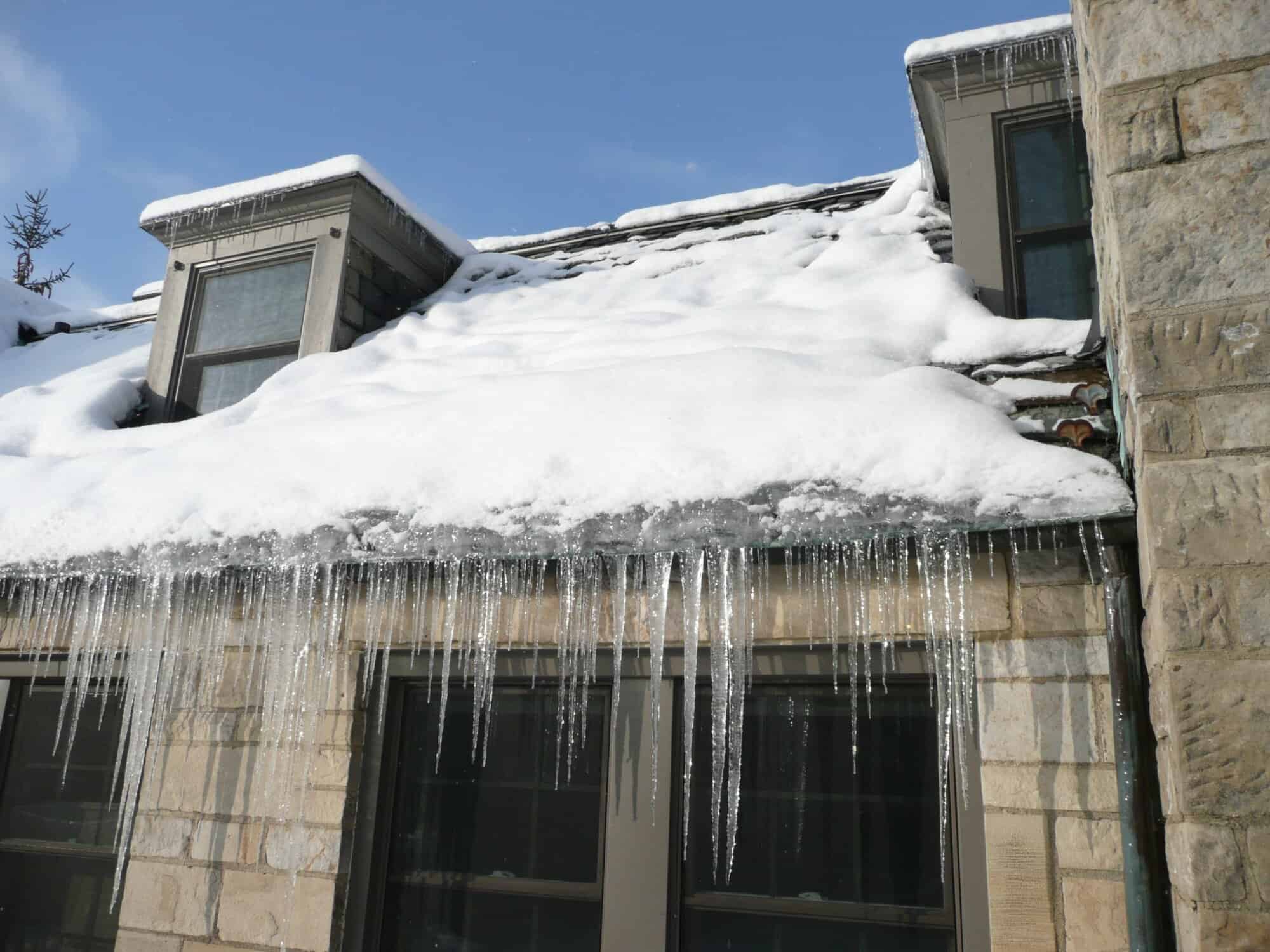
- Ice loading puts weight on brackets never designed for it, particularly where downspouts freeze from the bottom up
- Road salt accelerates corrosion on downspouts near driveways and walkways
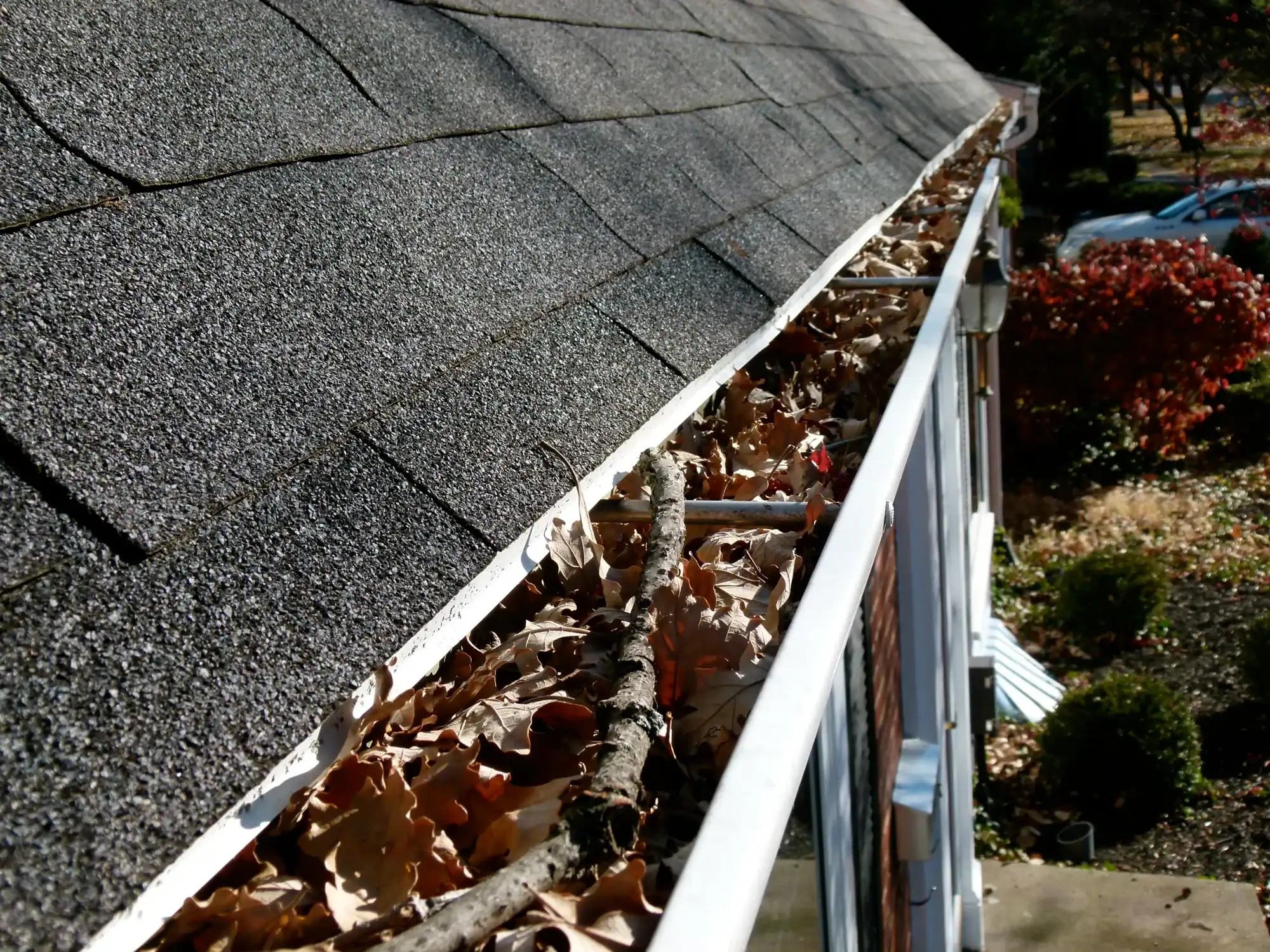
- Heavy leaf fall in mature neighbourhoods keeps outlets blocked and troughs standing full
These stresses tend to affect a whole system at once rather than a single component, which is part of why isolated repairs on an old system often precede further failures.
A practical way to decide
Ask three questions:
Is the failure localised or distributed? One bad joint on an otherwise sound system points to repair. Problems appearing in several places point to replacement.
Is the system correctly sized and configured? If the answer is no, repair preserves a design flaw.
What condition are the eavestroughs in? If they are near the end of their life, coordinating the work makes more sense than replacing components separately.
For related guidance, see when to replace downspouts instead of repairing them.
Frequently asked questions
How long should downspouts last in Toronto?
Aluminum systems commonly last around two decades locally, though hardware, sealant, and extensions typically need attention well before the downspouts themselves. Our post on eavestrough lifespan covers what shortens and extends it.
Can I replace one downspout without doing the others?
Yes, particularly after localised damage. It is worth checking that the replacement matches the others in size, and assessing whether the remaining ones are showing similar wear.
Does repairing downspouts affect appearance?
Replacement sections may not match weathered originals exactly. On a visible elevation this sometimes influences the decision, though it is rarely the deciding factor.
My downspouts look fine but water still reaches the foundation. What now?
The problem is likely upstream or downstream — eavestrough overflow, a blocked outlet, a failed buried line, or grading that returns water to the wall. This post walks through the possibilities.
Assess the system, not the symptom
The most useful approach is to stop evaluating the failed component in isolation. A separated joint on a well-sized, well-maintained system is a repair. The same joint on a corroding, undersized system feeding a degraded buried line is a symptom of something larger.
If you are unsure which situation you are in, we can assess the full system and tell you plainly. See our downspout and eavestrough services and eavestrough repair, or contact us.